
Last updated October 16, 2026
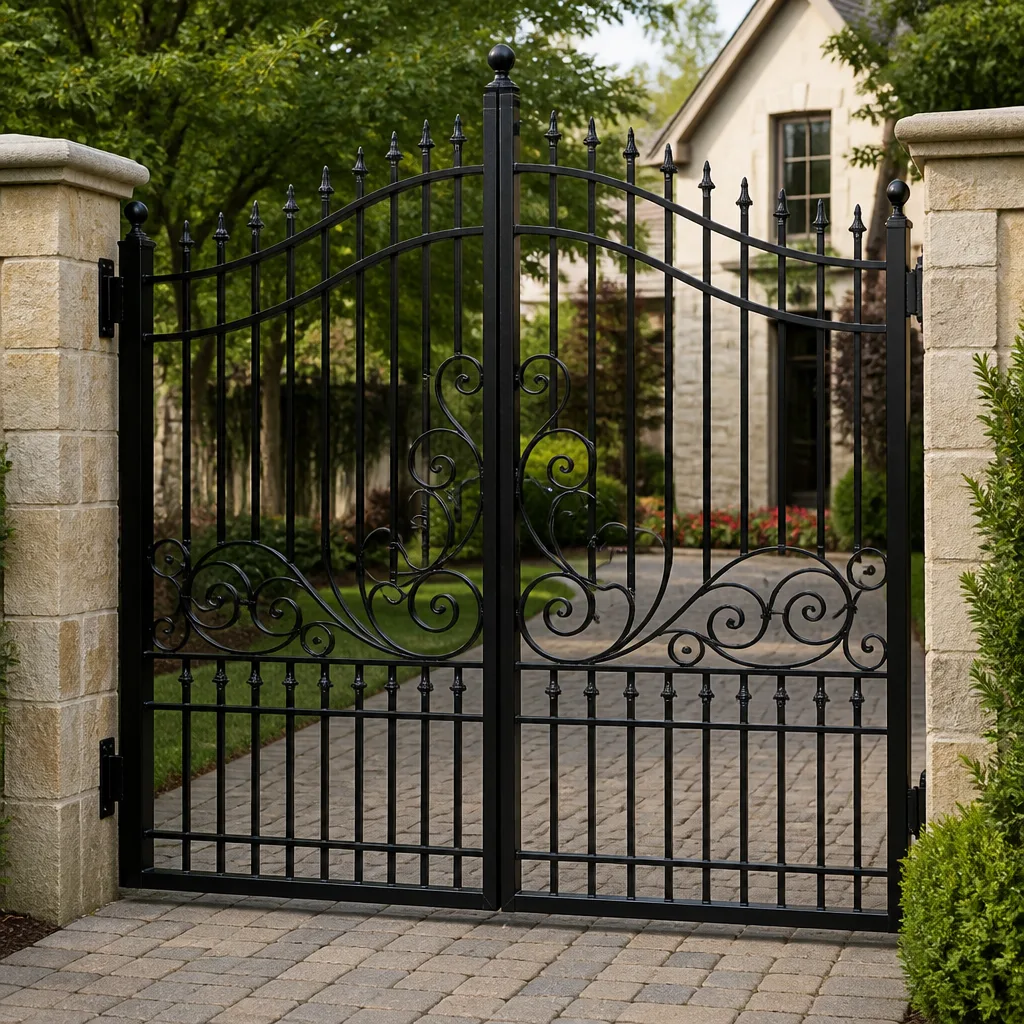 Wrought iron
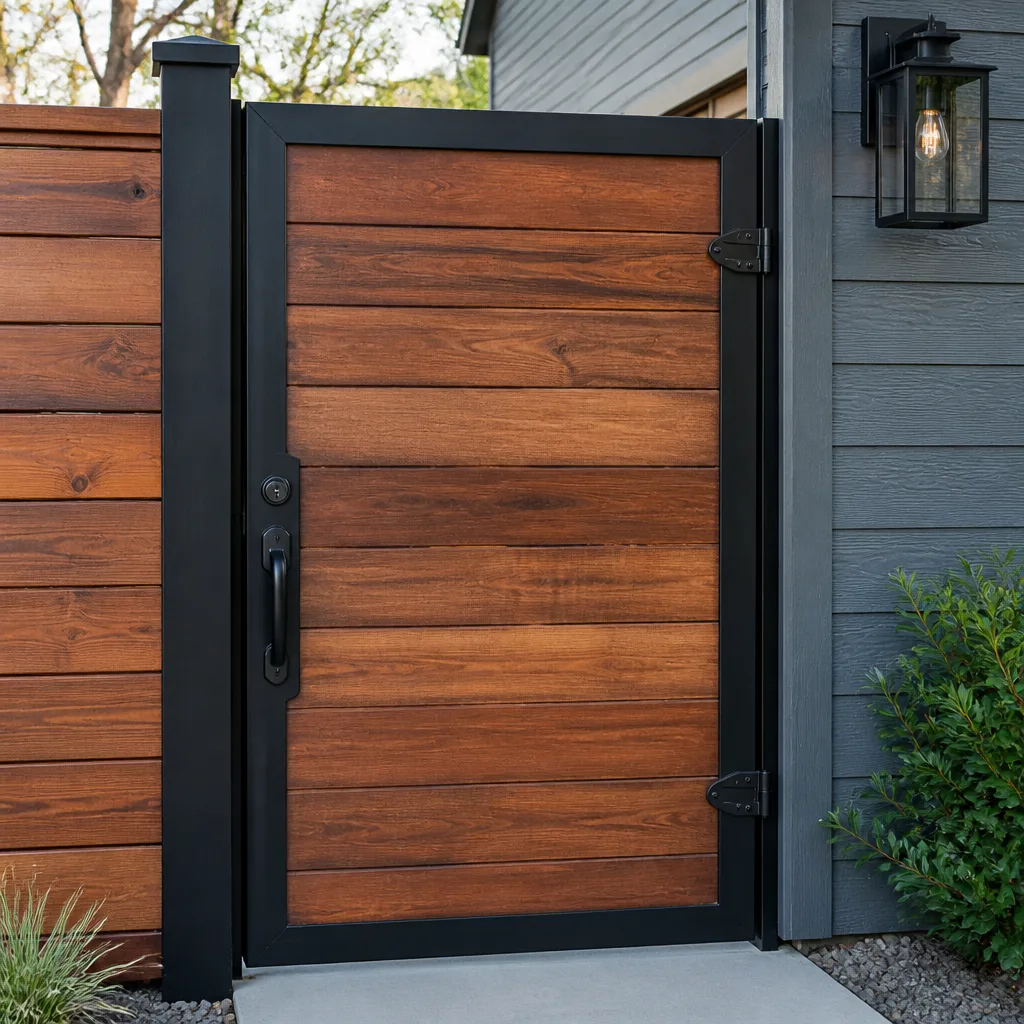 Wood & steel frame
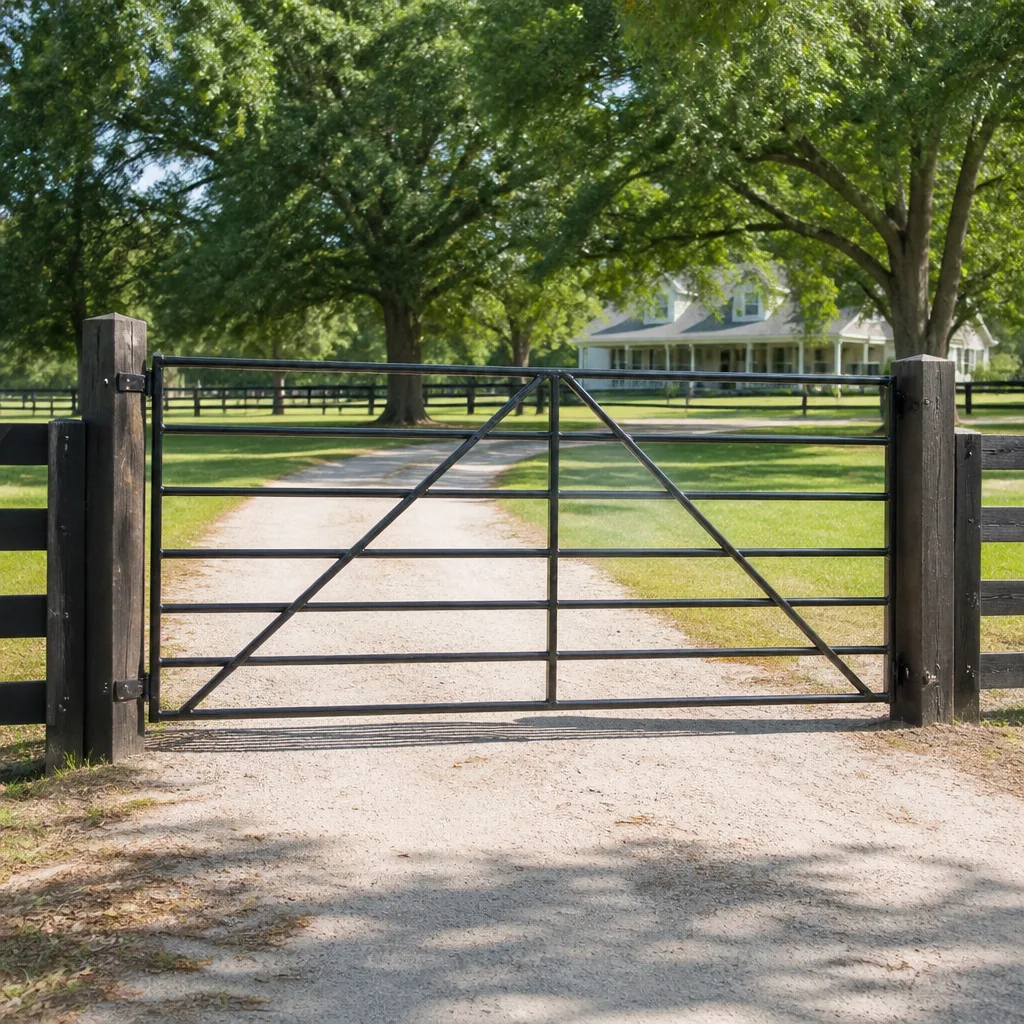 Farm & ranch
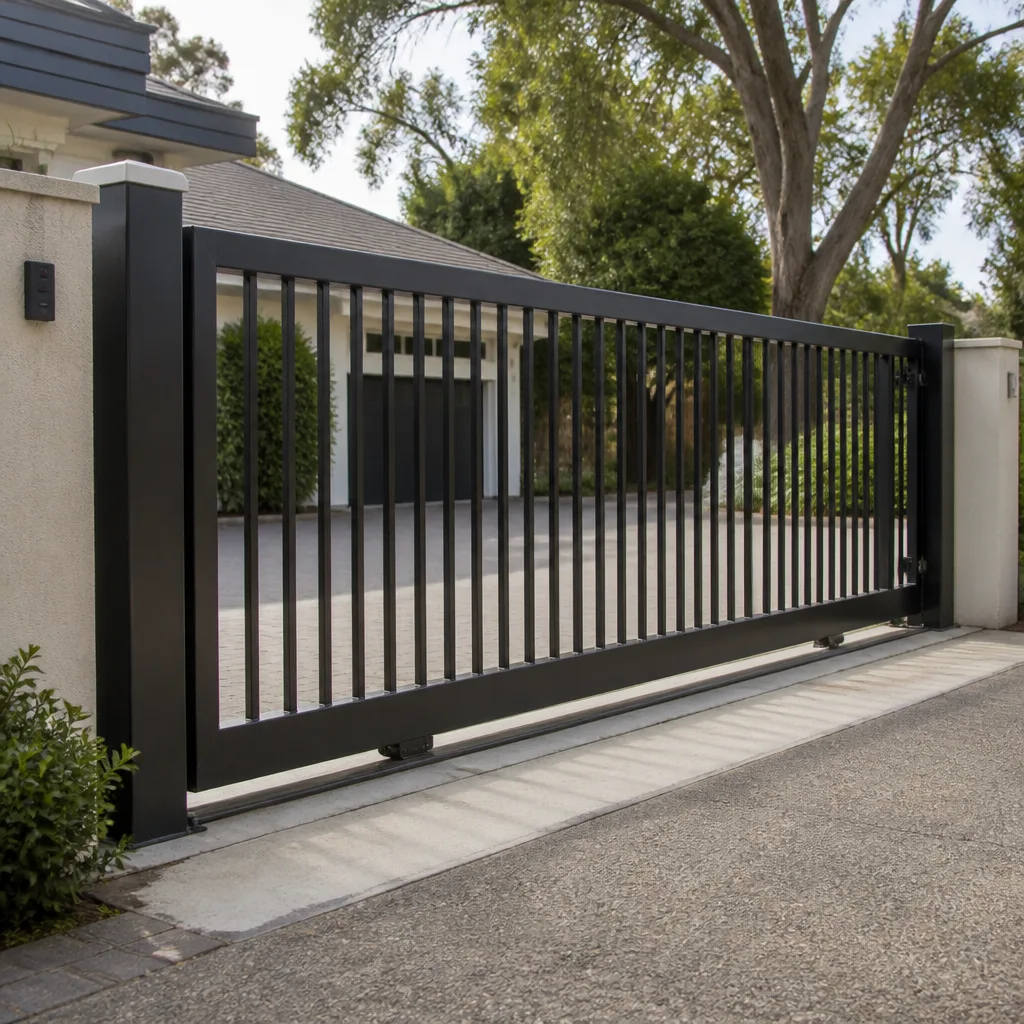 Sliding driveway gates
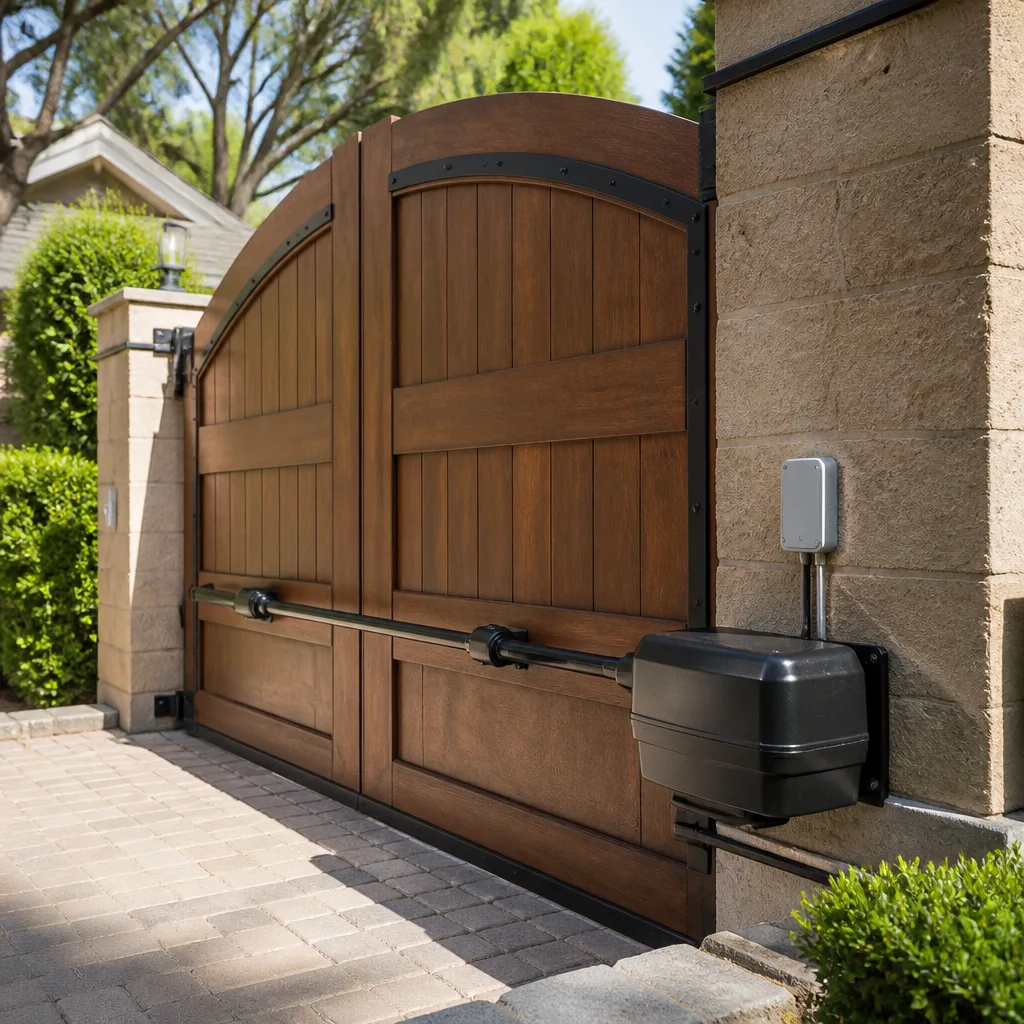 LiftMaster operators
Free on-site gate assessment - hinges, posts, and your LiftMaster or Nice gate operator checked before anything is quoted
The assessment is free and the quote is the invoice.
Get your free estimateGate Repair Warning Signs: A Fort Worth Homeowner’s Reference Guide
A gate that reverses before fully closing is not a sensor misalignment. It is a UL 325 safety reversal triggered by excess motor resistance, which means something is physically wrong with the gate path, not the sensor. That distinction matters because it changes what you do next. This guide translates the specific symptoms your gate shows into the failure they actually indicate, so you can act on the right Gate Repair services before an inconvenience becomes a lockout. Fort Worth soil and weather create failure patterns that differ from other regions, and we have mapped those patterns below.
Quick Answer
The most common gate repair warning signs are slow operation, incomplete travel, grinding or scraping noise, remote range loss, visible sagging, and erratic behavior. Each symptom points to a distinct failure point: a motor drawing too much current, a limit switch failing, a hinge or wheel binding, a receiver or antenna problem, a structural weld failing, or a logic board intermittently shorting. In Fort Worth, clay soil movement after rain and summer heat expansion are the two most frequent environmental triggers we see behind these warnings.
Styles & brands we work with
Table of Contents
- Slow Operation: What a Sluggish Gate Is Actually Telling You
- Incomplete Travel: Why Your Gate Stops Short or Reverses Mid-Travel
- Grinding Noise: Reading the Sound of a Worn Drivetrain
- Remote Range Loss: When the Problem Is Not the Battery
- Sagging: The Structural Warning Most Homeowners Miss
- Erratic Behavior: Intermittent Faults Are More Urgent Than Constant Ones
- Fort Worth Weather and Soil: What Local Conditions Do to Gate Hardware
- Which Warnings to Monitor for 30 Days and Which Need Same-Week Service
Slow Operation: What a Sluggish Gate Is Actually Telling You
A gate that opens or closes noticeably slower than it did six months ago is never just “getting old.” The motor does not slow down on its own. Slower movement means the motor is working against increased resistance, and that resistance has a source: a failing capacitor, a dragging wheel, a hinge losing lubrication, or a gate leaf that has shifted out of alignment on its mounting posts. In Fort Worth, we see slow operation most often on older swing gates after a stretch of dry weather followed by heavy rain, because the clay soil expands and contracts enough to shift the post holding the gate. That shift puts the leaf at an angle the motor was never set to pull.
Here is the symptom-to-cause breakdown we use on every gate repair in Fort Worth:
- Slow in one direction only: Usually a limit switch issue or a mechanical bind in one section of travel. The motor receives a stop signal slightly too early or the arm encounters resistance at one point in the arc.
- Slow in both directions, steady: A motor drawing excessive current due to age, a failing capacitor, or a mechanical drag across the entire path. The motor is working harder to do the same job.
- Slow at start, then normal: Often a cold-start friction problem, more common in winter, or a bearing that needs lubrication and loosens as it moves.
- Slow after rainfall: In Fort Worth, this usually points to post movement in expansive clay or a wheel sinking into softened ground on a slider gate.
The cost to address slow operation depends entirely on which of those causes is present. A hinge lubrication and alignment visit might run $90 to $180. A failing capacitor replacement typically lands between $120 and $250 installed. A shifted post that requires resetting can run $300 to $700 depending on whether the post needs concrete work. The Labor is the smaller cost on most of these; the real cost comes from ignoring the symptom until the motor burns out, at which point you are looking at a gate motor replacement rather than a repair.
Incomplete Travel: Why Your Gate Stops Short or Reverses Mid-Travel
When a gate stops short of the open or closed position, or reverses before it arrives, the gate is telling you its safety system is overriding the command. That is the UL 325 standard at work: the operator is sensing resistance above a programmed threshold and reversing to prevent injury or entrapment. The key insight is that the sensor is rarely the problem. The sensor is doing its job. The problem is whatever is creating the resistance, and that resistance lives in the gate path, the hinges, the wheels, or the motor itself.
Incomplete travel shows up in three patterns, and each one points to a different repair:
- Stops at the same point every cycle, then resumes: A mechanical obstruction or a limit switch failing at one position. The motor is receiving a false stop signal.
- Reverses at a random point each time: Intermittent resistance, often a wheel catching on a rough section of track, a hinge binding when the gate reaches a certain angle, or debris in the path.
- Gets shorter each cycle, stops earlier each time: A motor overheating or a failing start capacitor. The motor can no longer complete the full travel, and the distance it manages shrinks as components heat up.
On gate motor repair in Fort Worth, incomplete travel is one of the most common symptoms we diagnose. Many homeowners assume the safety reverse means “the sensor needs adjusting,” but adjusting the force limit on a gate that is mechanically binding is how motors get burned out. Raising the force threshold to power through resistance is the wrong fix. It turns a $200 mechanical repair into a $600 to $1,200 motor replacement. The correct sequence is: find and remove the resistance first, then verify the safety reverse still engages at the proper force level. That sequence is what The Garrison Standard requires on every service call, because it protects both the equipment and the people using the gate.
Grinding Noise: Reading the Sound of a Worn Drivetrain
Grinding is the sound of metal on metal where there should be lubrication or clearance. It is distinct from a squeak, which is usually a hinge or wheel asking for grease, and distinct from a hum, which is a motor running normally. A grind is a wear signal. It means a bearing is failing, a gear tooth is chipped, a chain has lost tension and is dragging, or a wheel has seized and is being dragged across the track. Each of these is a specific repair with a specific cost, and acting on the first grind is far cheaper than acting on the lockout that follows.
Reading the sound precisely:
- Grind at the same point in travel every cycle: A chipped gear tooth or a section of rack that is worn. The noise appears when the damaged section engages.
- Continuous grind while moving: A bearing running dry, a chain dragging on a worn sprocket, or a wheel that has stopped rolling.
- Grind followed by a stop or reversal: The resistance from the grind is tripping the UL 325 safety reverse. The gate sees the bind as an obstruction.
- Grind only when opening: Often a drive-shaft bearing or a hinge that is loaded only in one direction.
Bearing replacement on a typical Fort Worth swing gate runs $140 to $350 depending on hinge size and access. A chain tension and sprocket service on a slide gate typically lands between $180 and $400. A seized wheel replacement is $100 to $250 per wheel. None of these are expensive relative to the cost of a new operator, but all of them become operator killers if the gate continues running against the resistance month after month. For Seasonal Gate Repair Care for Fort Worth: Year-Round Homeowner’s Guide, see our maintenance recommendations. The Garrison Standard approach is to diagnose the sound mechanically first, then replace the worn part, then verify the gate runs quiet under load before the technician leaves. A repair is not done when the part is in; it is done when the gate runs correctly.
Remote Range Loss: When the Problem Is Not the Battery
Remote range that shrinks from 100 feet to 20 feet, or to “must stand next to the gate and press twice,” is one of the most misdiagnosed symptoms in gate service. Homeowners replace the remote battery, and when that does not help, they assume the remote is bad. In our experience across Fort Worth, the remote is usually fine. The problem is most often the receiver, the antenna, or the power supply feeding the receiver, and the difference matters because replacing remotes one at a time never fixes a receiver that is failing.
Here is the diagnostic order we follow on Carver Gate Repair Fort Worth home calls:
- Battery: Replace it. If range returns, the issue was the remote. This is the cheapest fix and worth ruling out first.
- Antenna position and damage: An antenna that has been knocked down, chewed by rodents, or corroded at the base will cut range sharply. Reposition or replace.
- Receiver sensitivity or age: Receiver boards age, especially in Fort Worth heat. Components degrade and range drops gradually. A receiver replacement runs $120 to $350 installed.
- Interference: New LED lighting, a neighbor’s new gate system, or local radio traffic can step on the receiver’s frequency. Changing frequency or moving the antenna often resolves it.
- Power supply: A receiver getting low or dirty voltage will behave erratically and lose range. This is checked with a multimeter before any parts are replaced.
Range loss is a warning sign because it tends to get worse in stages, and the final stage is a gate that opens only from the keypad or only from a hardwired button. That is a functional inconvenience now and a lockout later if the keypad also fails. The fix is usually a $150 to $400 receiver or antenna repair, well within the cost of a standard service call, and it returns the system to full function the same day.
Sagging: The Structural Warning Most Homeowners Miss
A gate that sags visibly, drags at the latch or the track, or sits lower on one side than the other is a structural problem, not a cosmetic one. It means a weld is failing, a hinge is wallowing out, or a post has shifted. Sagging is the symptom most likely to be ignored because it does not stop the gate from working, at first. The gate still opens and closes. It just looks a little off. But every cycle with a sagging leaf puts additional load on the motor and the remaining welds, and the failure, when it comes, is usually the gate dropping onto the track or coming off its hinge entirely.
In Fort Worth, sagging has two primary causes, and they call for different repairs. The first is post movement in expansive clay soil. The Blackland Prairie soil that runs through much of Tarrant County shrinks during dry months and expands during wet months, and over years that cycle can push a gate post out of plumb. The gate then sags not because a weld broke but because the geometry of the entire installation moved. The fix is resetting the post in concrete with proper depth, typically $400 to $900 depending on post size and access. The second cause is a failed weld at the hinge or frame joint. That is a more localized repair, usually $150 to $350 to grind out and re-weld the joint, then reinforce it if the design allows.
Here is how to tell the difference:
- Sag that worsens after rain, improves after dry weeks: Post movement in clay soil. The soil is moving the post.
- Sag that is constant, with a visible crack at a weld joint: A failed or failing weld. The steel itself has separated.
- Sag that causes dragging only at the latch end: Usually hinge wear. The hinges are elongating under load.
Sagging is a same-month repair, not a same-year repair. The moment a gate starts dragging, the motor is pulling against resistance every cycle, and the latch and hinges are wearing at an accelerated rate. A $250 hinge replacement done now prevents a $1,200 gate and operator replacement done later.
Erratic Behavior: Intermittent Faults Are More Urgent Than Constant Ones
An intermittent fault is a component at its failure threshold. This is a point most homeowners get backwards: a gate that constantly fails is often a simple, stable deficiency, like a broken limit switch. A gate that works fine for three days, then refuses to open at all for one morning, then works again, is a different animal. Something is failing on the edge of its tolerance, and it will not stay there. Heat, cold, moisture, or vibration pushes it over, and then it comes back when conditions change. Intermittent faults are urgent because they tend to become permanent failures on the worst possible day, and because they erode the easiest thing to lose: your assumption that the gate will open when you press the button.
We see this all over Fort Worth, and the pattern is consistent. A gate that fails randomly on hot afternoons usually has a control board with a heat-sensitive component. A gate that fails after rain usually has a corroded connection or a water intrusion point in the operator housing. A gate that fails only when it is cold usually has a capacitor or motor issue that heat masks. The fix is diagnostic work, not parts-swapping. On gate installation in Fort Worth projects and repair work alike, the discipline The Garrison Standard requires is the same: find the component, verify the failure, replace the component, verify the fix. Intermittent problems take longer to diagnose because the technician has to catch the gate in the act or use test equipment to find the marginal component. That diagnostic time is the cheapest insurance you can buy against a complete lockout.
Fort Worth Weather and Soil: What Local Conditions Do to Gate Hardware
Fort Worth is not a neutral environment for gate hardware. Three local factors show up in gate failures more than any others, and recognizing them helps you read your gate’s behavior correctly. The first is expansive clay soil. Much of Tarrant County sits on Blackland Prairie clay that shrinks in summer drought and swells with winter and spring rain. Gate posts set in that soil move over time, and that movement shows up as slow operation, sagging, or incomplete travel, not as a sudden dramatic failure. The second is heat. Fort Worth summers push gate control boards and motors to thermal limits, especially operators in direct afternoon sun with no shade cover. Components that survive cooler climates fail sooner here, and heat-related intermittent faults are common from June through September. The third is storm and hail damage to exposed components. Antennas, keypads, and solar panels on gate operators take direct hits during spring storms, and water intrusion after heavy rain causes corrosion inside operator housings.
What soil movement looks like in gate behavior versus what a failed weld looks like: soil movement produces gradual changes that track with weather. The gate gets harder to open after a rainy week. The latch does not line up the way it did last month. The gate sags a little more each spring. A failed weld produces a sudden change: a crack, a pop, a gate that suddenly drops or goes out of square without a change in weather preceding it. Both are serious. The soil problem usually calls for post resetting. The weld problem calls for structural repair. Calling the right tradesperson for the right failure is what gets it fixed on the first visit.
There is also a meaningful difference between a gate that is hard to push manually and one that is hard to push under power. They indicate different failure points. A gate that opens manually with normal effort but strains under power points to a motor or electrical issue: a failing capacitor, low voltage at the operator, or a motor drawing excessive current. A gate that is hard to push manually, with the motor disengaged, points to mechanical resistance: a seized wheel, a failed bearing, a hinge that has lost lubrication or has wallowed out. If you can disconnect the operator and push the gate by hand, note the effort. That single test narrows down half the possible causes before a technician ever arrives.
Which Warnings to Monitor for 30 Days and Which Need Same-Week Service
Not every warning sign demands an immediate service call. Some symptoms are safe to observe for a short window. Others are tripwires that mean a lockout or a structural failure is close, and waiting on those is the expensive choice. Here is the breakdown we give Fort Worth homeowners, based on what these symptoms actually indicate, and you can find more guides & resources in our blog.
Safe to monitor for 30 days, with documentation:
- Mild slow operation (gate takes a second or two longer than normal): Note the weather and whether the symptom changes. A hinge that needs lubrication is not urgent. A motor that slows further each week is.
- Remote range loss that is stable, not worsening: Replace the battery and confirm the range. If it stays reduced but usable, scheduling service within the month is reasonable.
- Occasional squeak without any grinding or change in movement: Squeaks are lubrication issues. They warrant attention and are safe to monitor briefly.
Require same-week service, no exceptions:
- Grinding noise: Metal wear is occurring every cycle. Every additional week of operation is additional wear on parts that are still replaceable today.
- Incomplete travel or safety reversal: The gate is detecting resistance. If the resistance is structural, the motor and the structure are both degrading.
- Visible sagging or weld cracks: Structural failure does not self-correct. A sagging gate is one bad cycle away from coming off a hinge.
- Erratic or intermittent behavior: The component is at the edge of its tolerance. It will not stabilize. It will fail completely, and usually on a day when the gate is your only way in or out.
- Any new symptom after a storm: Water intrusion and lightning-adjacent surges cause damage that compounds. A post-storm inspection is cheap compared to a post-storm failure.
Common Mistakes to Avoid
- Raising the force limit to “fix” a reversing gate: This overrides the safety reverse and forces the motor to power through the resistance. It burns out motors. Find the resistance instead.
- Replacing remotes one at a time when range shrinks: A receiver or antenna problem will still be there after the third new remote. Diagnose the system, not the symptom.
- Ignoring sagging because the gate still opens: Sagging is a structural failure progressing. Every cycle adds load to the remaining structure. The repair grows more expensive the longer it waits.
- Assuming intermittent problems are “gremlins” that will go away: Intermittent faults are components at the failure threshold. They do not stabilize. They fail completely.
- Lubricating bearings without cleaning them first: Fresh grease over old grit creates a grinding compound. Clean the bearing surface, then lubricate.
- Waiting until the gate stops opening to call: The repair that would have been $200 is now $1,200 because the motor burned out fighting a mechanical problem. The gate tells you before it stops. Listen.
See the difference
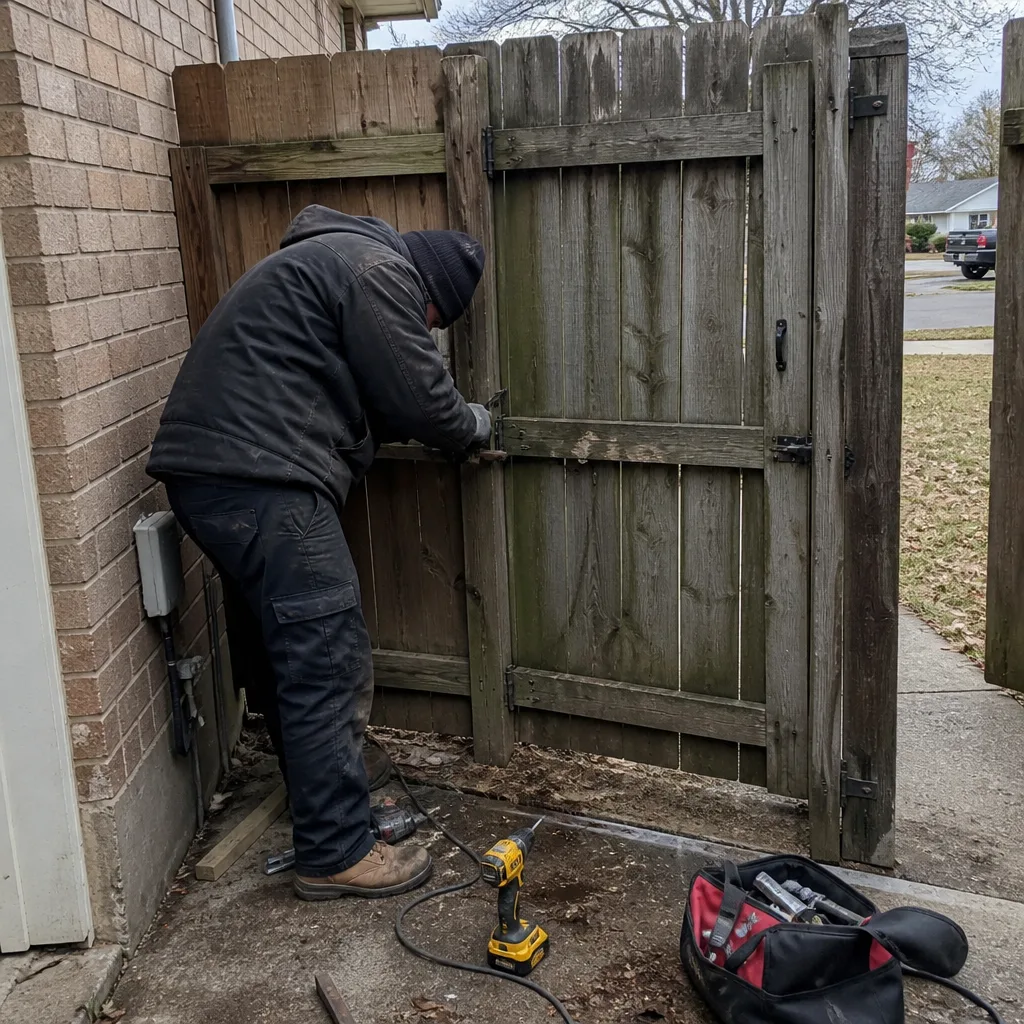 Before
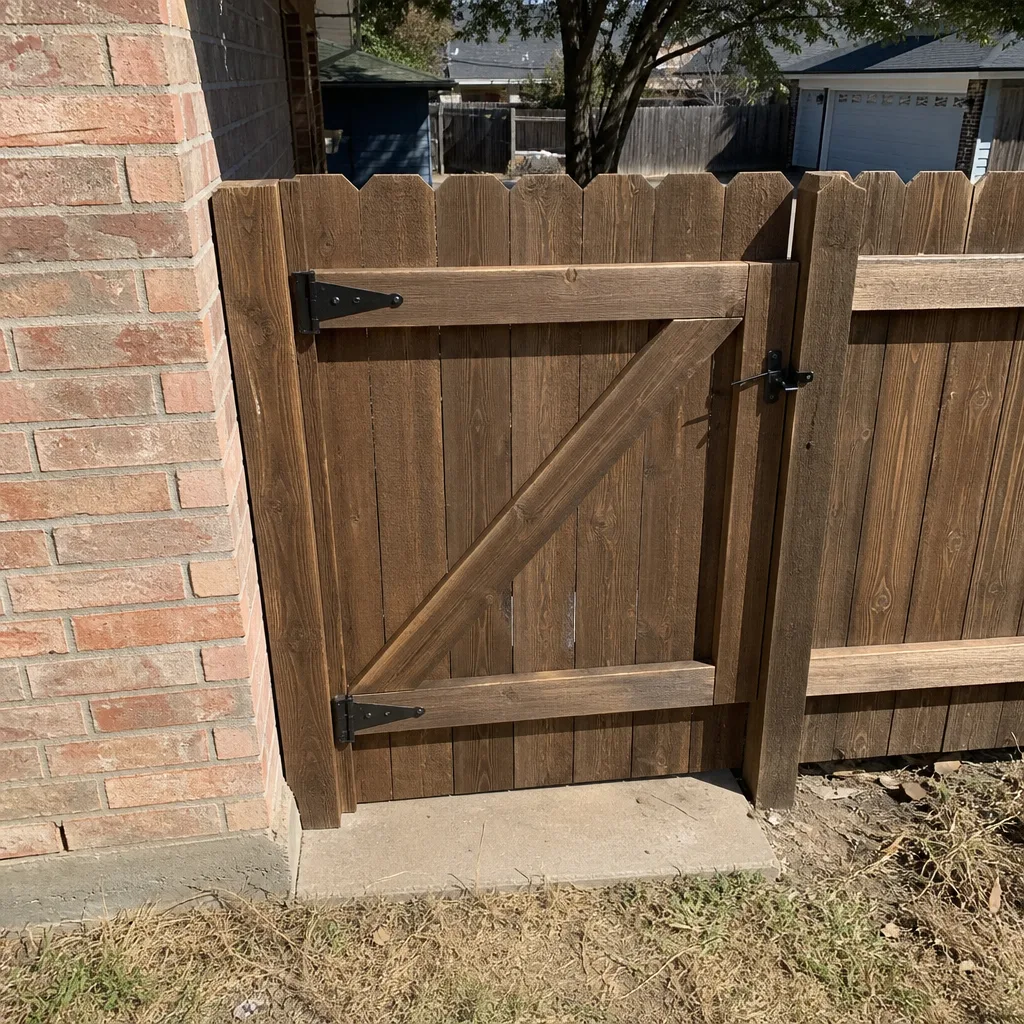 After
After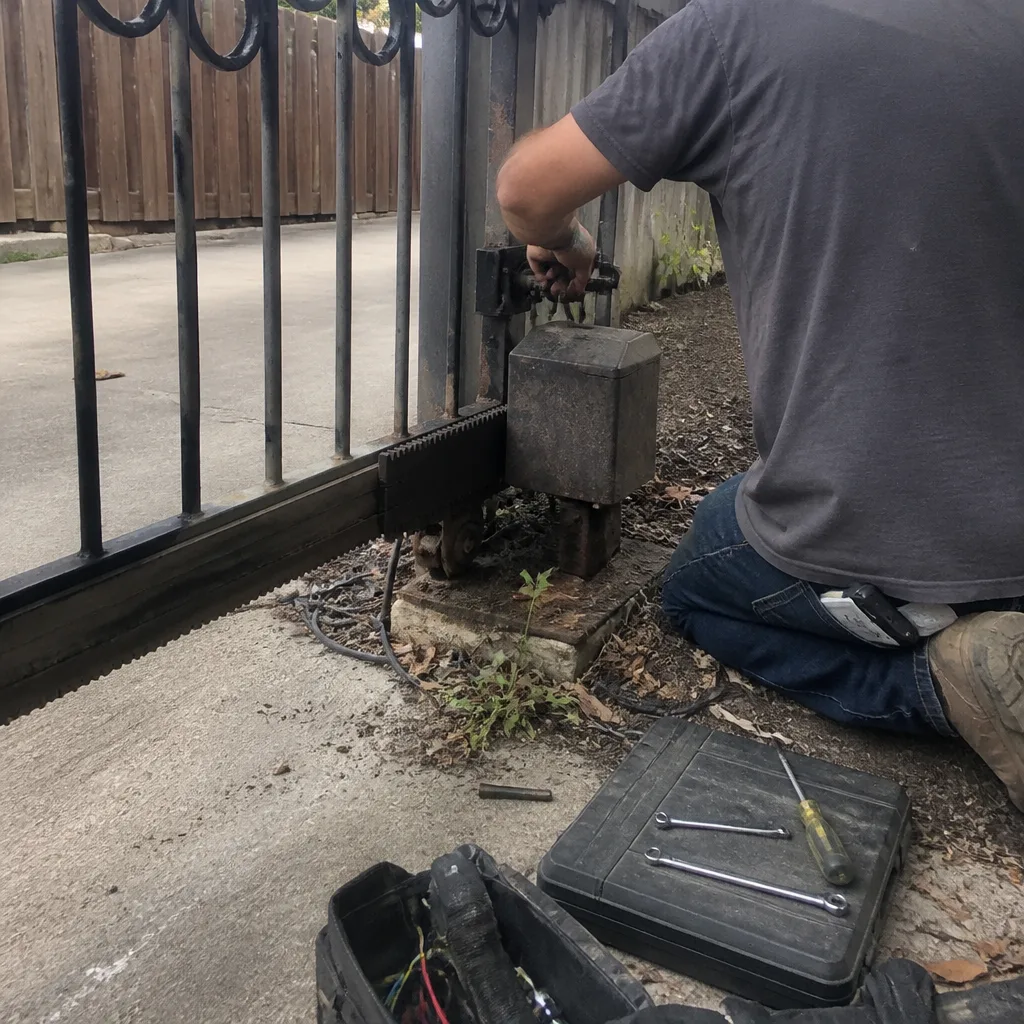 Before
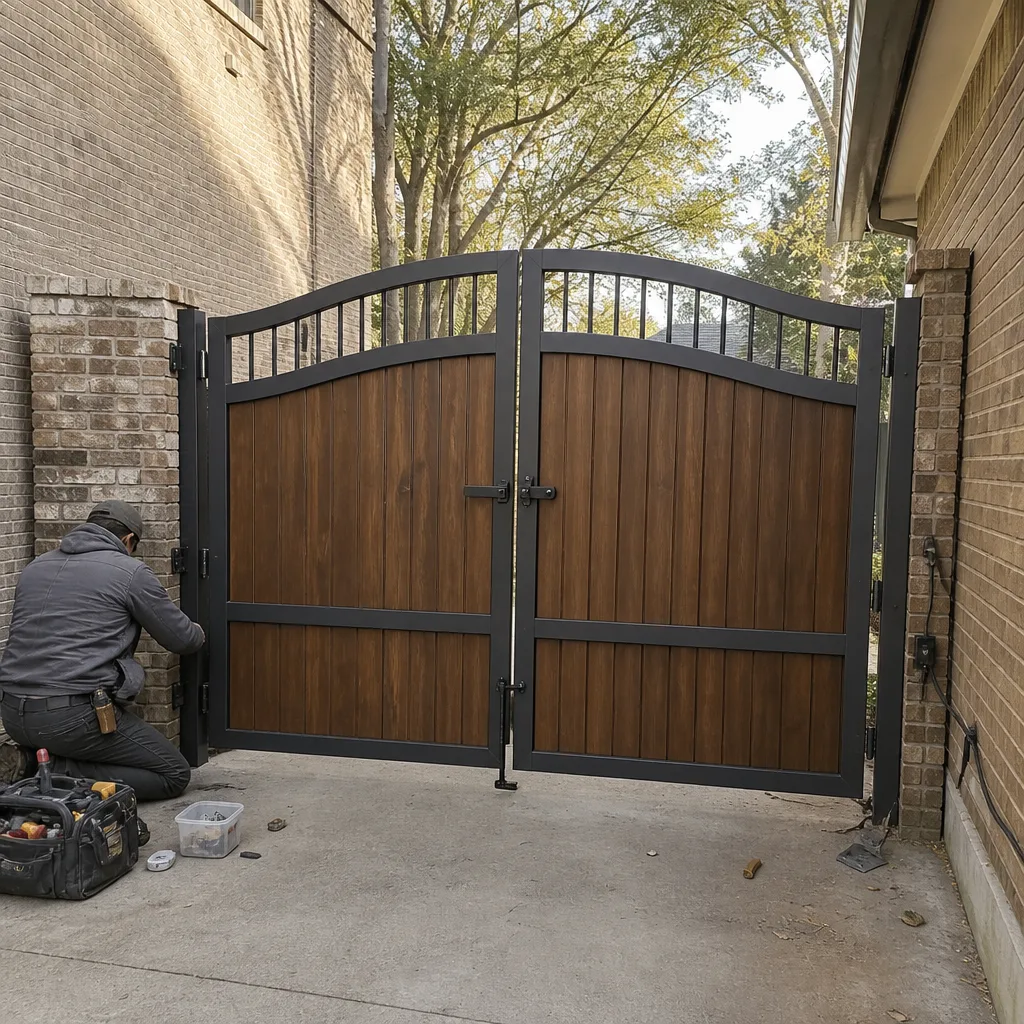 After
After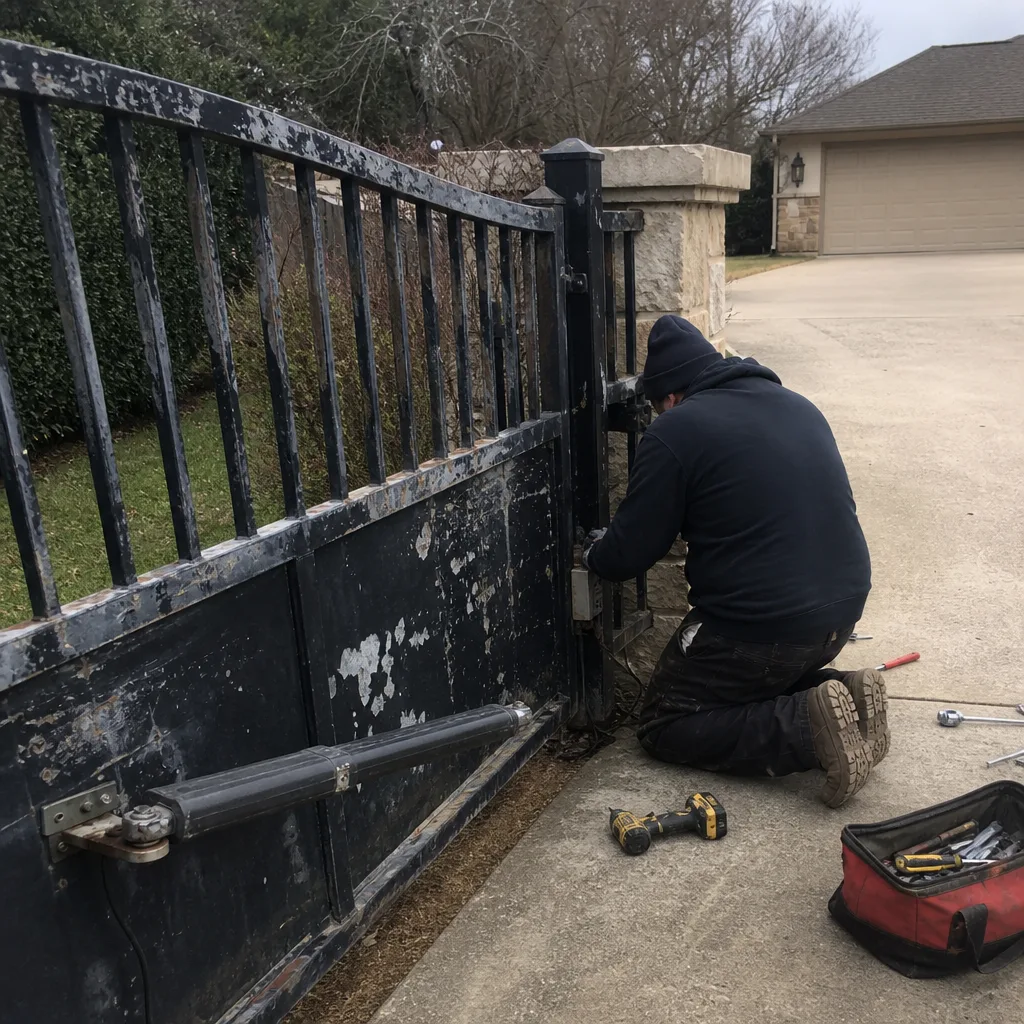 Before
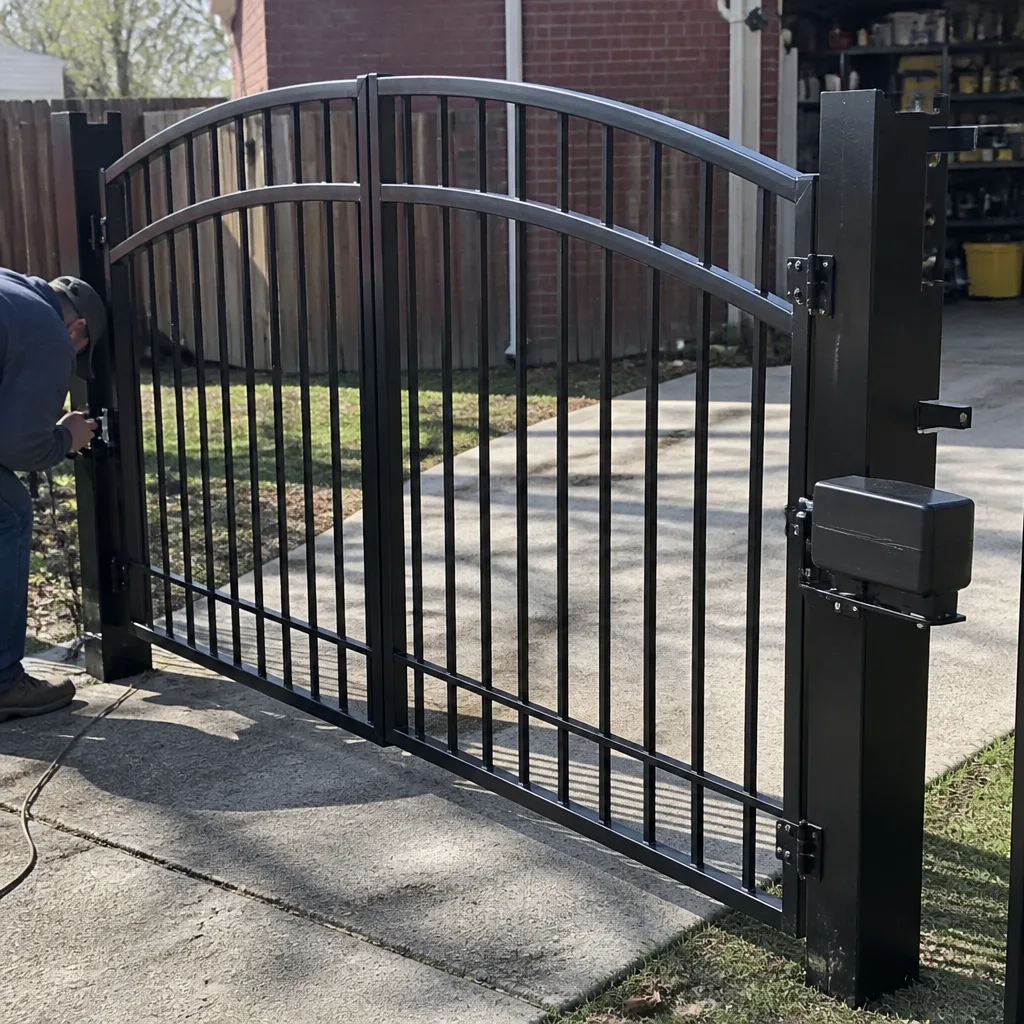 After
AfterWhen to Call a Professional
Call a professional when the symptom indicates active wear, structural movement, or electrical failure. That covers grinding noises, incomplete travel, visible sagging, erratic behavior, and any post-storm change in operation. These are not diagnostic puzzles worth solving from the outside. They require opening the operator, testing voltage and current draw, checking limit switches and force settings, and evaluating the mechanical path under load. That is skilled work with real safety stakes: gate operators carry the force to injure, and the safety reverse systems that prevent that injury must remain functional through every repair. Carver Gate Repair Fort Worth offers free estimates in Fort Worth. Call (817) 840-7067 and a live person answers, 24 hours a day, every day of the year.
Frequently Asked Questions
Most gate repairs in Fort Worth fall between $150 and $450 for the service visit and parts, with more involved work like post resetting or operator replacement running $400 to $1,200 depending on the parts and access involved. Slow operation and hinge work land on the lower end; motor replacement and structural resetting land on the higher end. Carver Gate Repair Fort Worth provides a written price before any work starts, so the number never moves at the door. Call (817) 840-7067 for a free estimate.
Post movement in expansive clay soil is the most common underlying cause of gate repair calls in Fort Worth, showing up as sagging, slow operation, or incomplete travel. The Blackland Prairie clay that runs through Tarrant County shrinks in dry heat and swells after rain, and over years that cycle shifts gate posts out of alignment. The effect is gradual, which is why homeowners often miss it until the motor starts fighting the load.
In most cases, yes. Carver Gate Repair Fort Worth dispatches technicians daily and keeps phone coverage staffed by a live person 24/7. For a gate that will not open or close at all, or that is sagging visibly, we treat that as a priority call and work to get someone out the same day. Call (817) 840-7067 and describe the symptom; the dispatcher will tell you honestly what the soonest available slot is.
A full gate installation in Fort Worth includes site evaluation, post setting in concrete, gate fabrication or assembly, hinge and latch mounting, operator installation if automated, safety reverse setup and testing to UL 325 standards, and cleanup of the work site before the technician leaves. Carver Gate Repair Fort Worth works on Mighty Mule, LiftMaster, FAAC, and BFT operators, among others, and every installation includes a written price before work starts and a written guarantee. Call (817) 840-7067 to schedule a free measure.
Yes. Electrical runs, safety edges, photo eyes, and the UL 325 compliance setup are part of what we install and verify on every automated gate project. The safety reverse system is not an add-on; it is a mandatory part of a code-compliant installation. Our technicians test the safety reverse before leaving the site and document the force setting. That testing is part of The Garrison Standard on every call.
We repair and service Mighty Mule, LiftMaster, FAAC, and BFT operators, along with several other major gate motor brands, so the parts and programming are matched to the system already installed on your gate. The brand matters less than the diagnosis: the same symptom can have different causes across different operator designs. A technician trained across multiple brands can diagnose the failure accurately the first time. Call (817) 840-7067 to describe your system and get a free estimate.
The Bottom Line
A gate does not fail silently. It slows, it grinds, it sags, it stops short, it changes range, and it becomes erratic, and each of those signals names a specific failure point that can be repaired for a known cost if addressed early. The expensive repairs are the ones that waited. Fort Worth soil and heat create predictable failure patterns, and a homeowner who can read those patterns can make the right call on the right timeline. Most gate repairs run $150 to $450, and the discipline of a written price before work starts is what protects you from the moving number. If you need help choosing a provider, read our How to Hire a Gate Repair Contractor in Fort Worth: A Step-by-Step Guide. Written by Lonnie Burke, Owner at Carver Gate Repair Fort Worth, serving Fort Worth since 2008.