
Last updated October 16, 2026
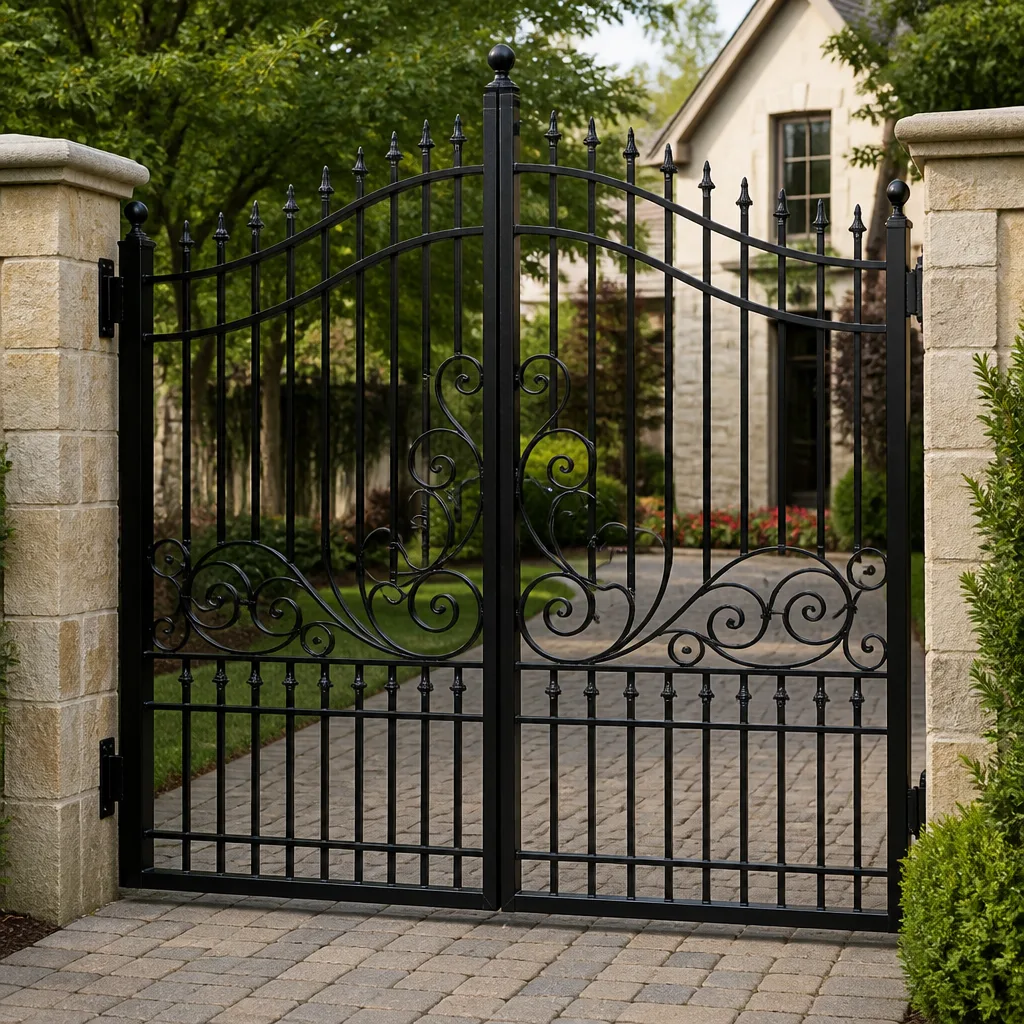 Wrought iron
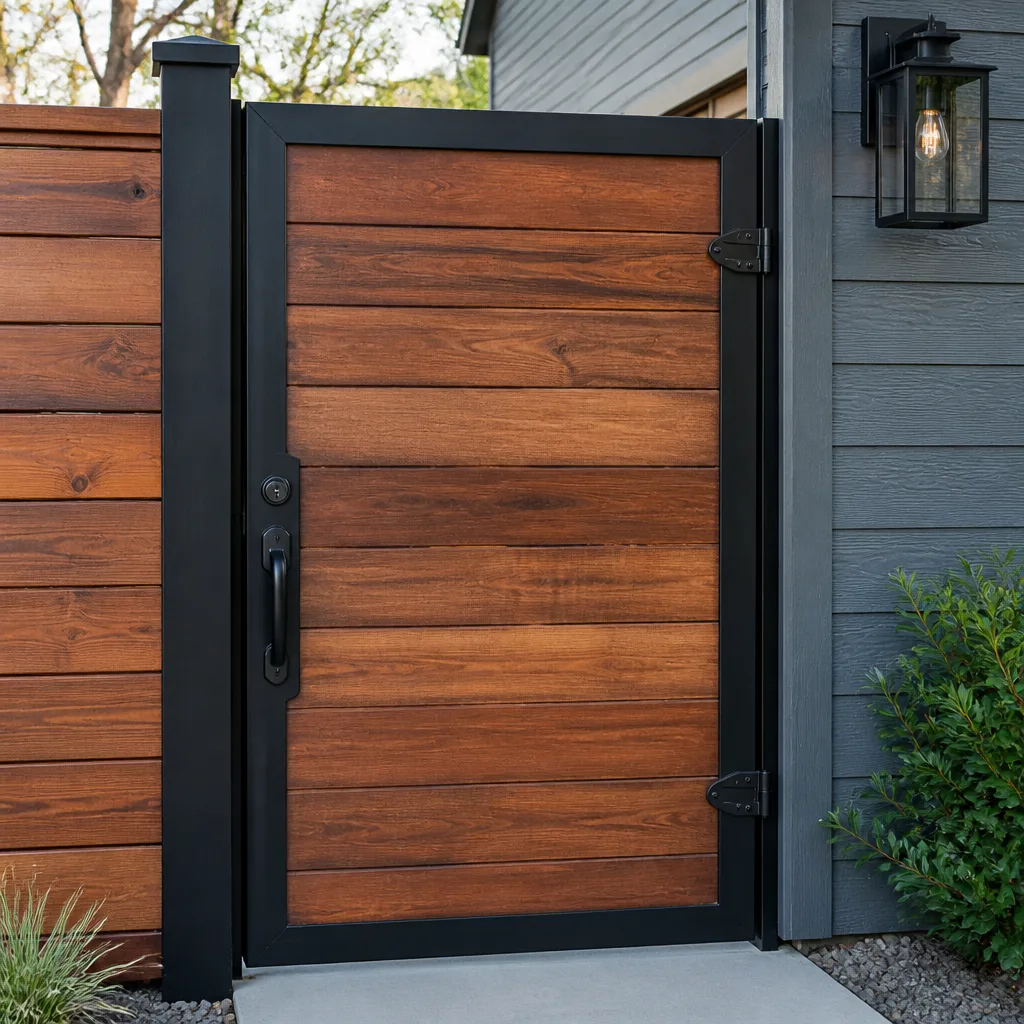 Wood & steel frame
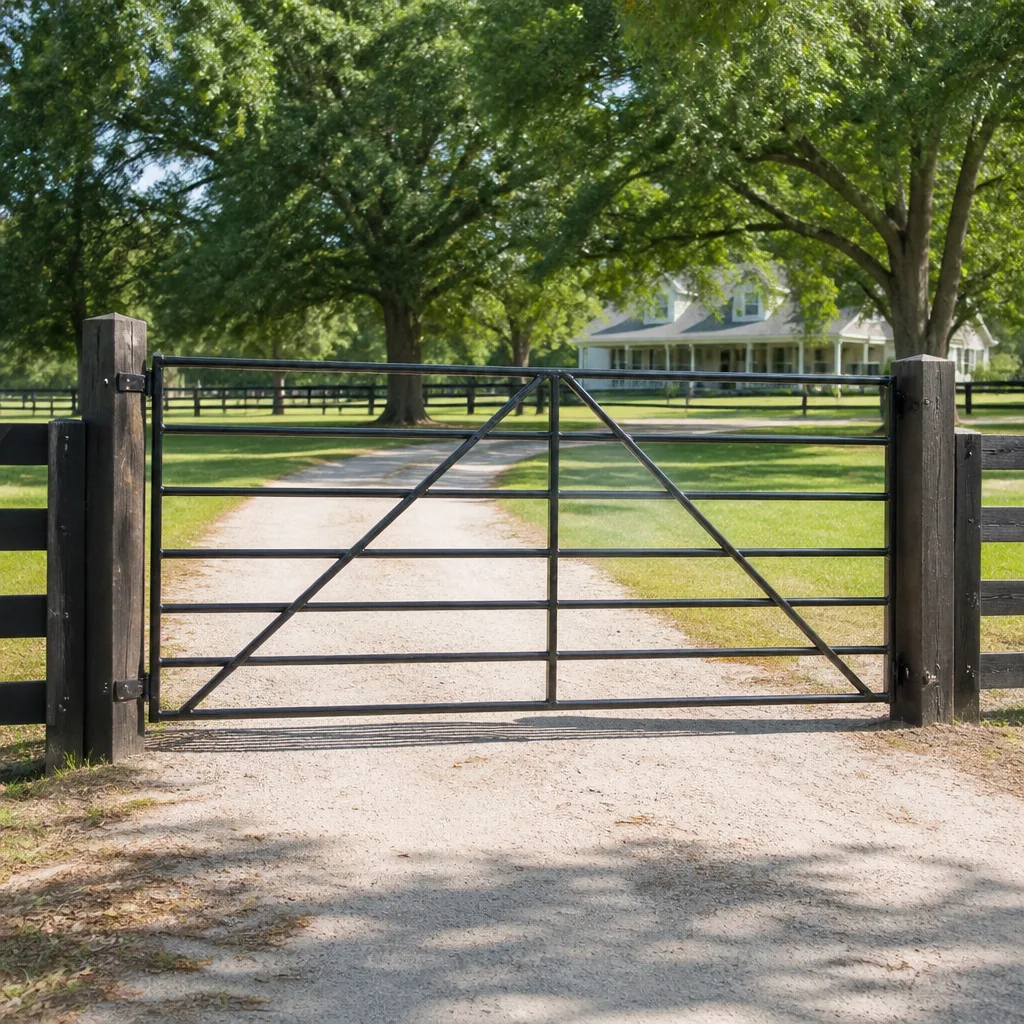 Farm & ranch
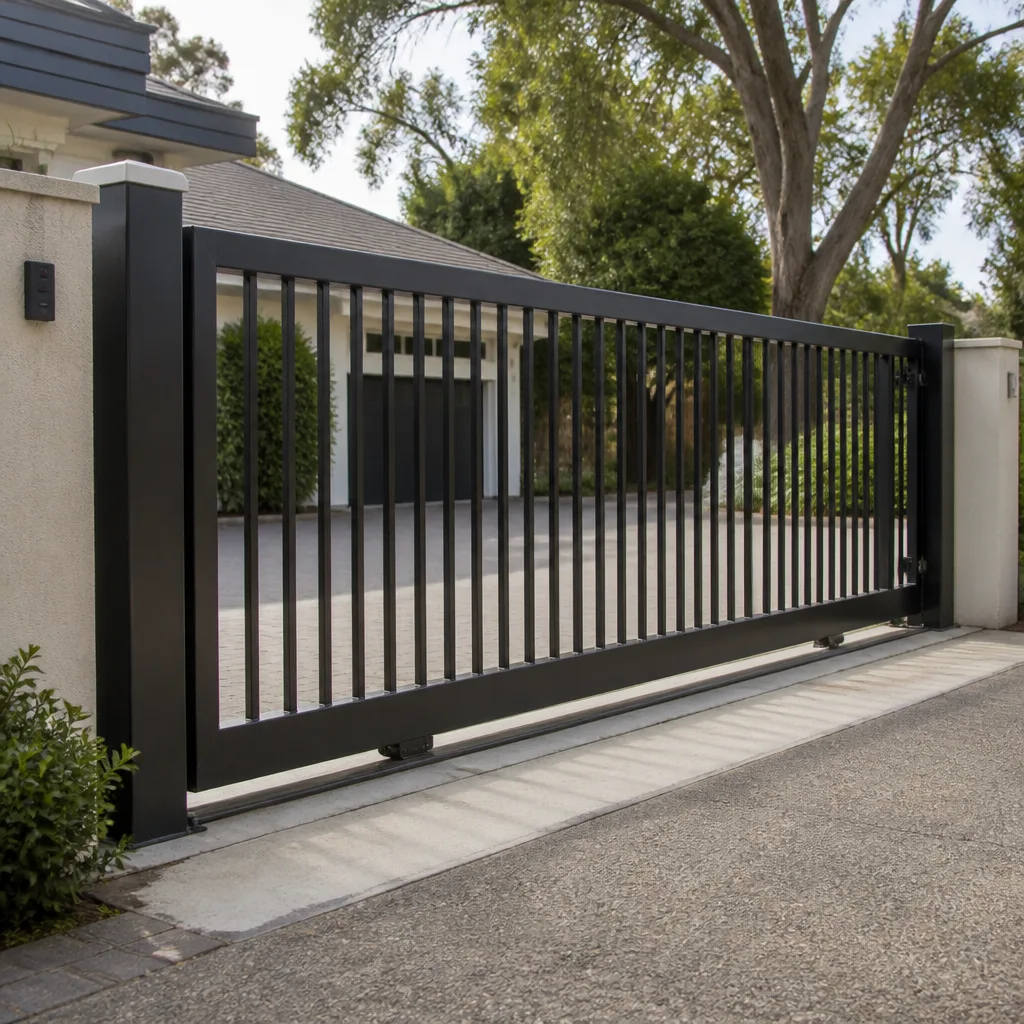 Sliding driveway gates
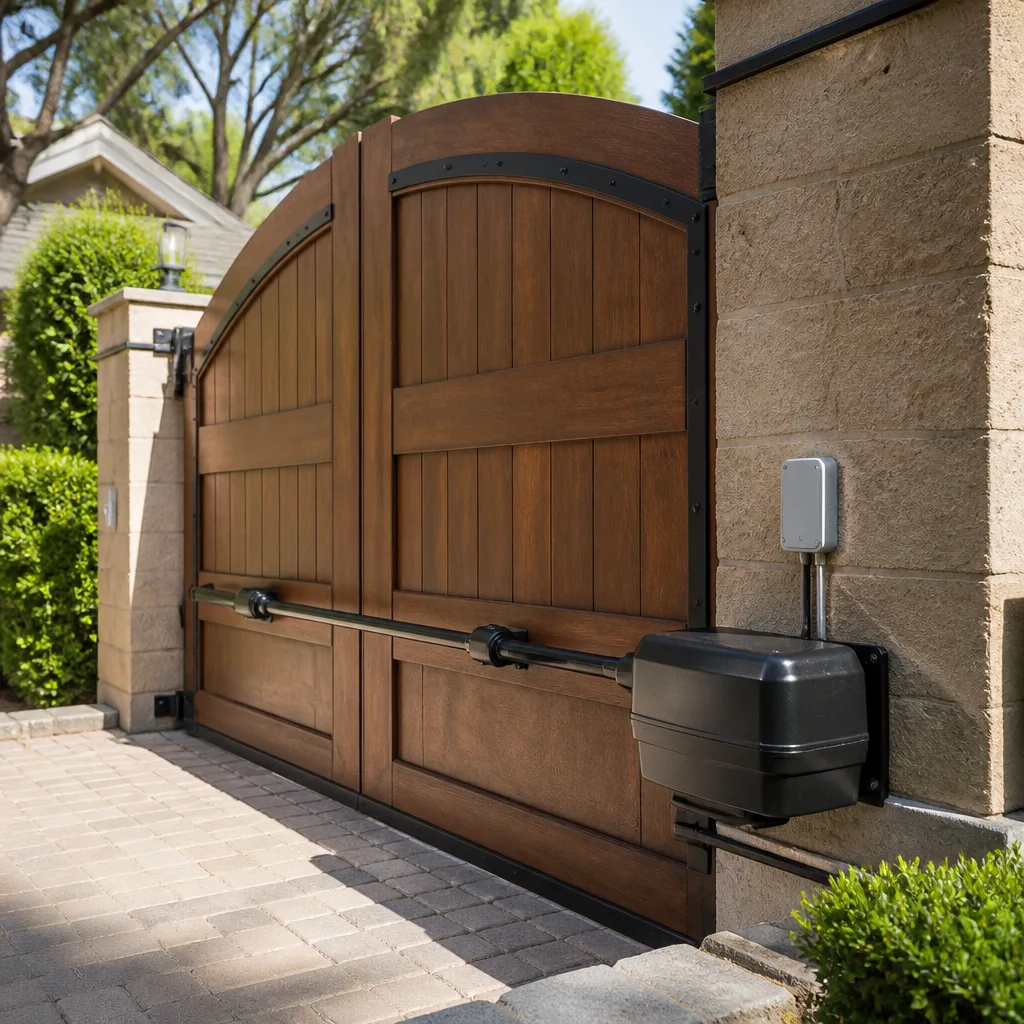 LiftMaster operators
Free on-site gate assessment - hinges, posts, and your LiftMaster or Nice gate operator checked before anything is quoted
The assessment is free and the quote is the invoice.
Get your free estimateGate Repair Maintenance Checklist for Fort Worth Homeowners
Most gate maintenance checklists tell you to “inspect the hinges.” None of them tell you that a hinge pulling away from the post by more than 1/8 inch under load is already failing and will bind the gate within one season. That’s the difference between a checklist that produces paperwork and one that produces a decision. In Fort Worth, where summer heat bakes gate hardware and spring storms saturate post footings, a gate that gets checked twice a year will outlast one that gets checked only when it stops moving. This guide gives you observable pass/fail criteria for every inspection point on a residential gate, so you’ll know whether to tighten, replace, or call our Gate Repair services before a minor issue turns into a full gate rebuild.
Quick Answer
A Fort Worth homeowner should inspect their gate twice a year: once in late March before storm season and once in late September before cold fronts arrive. The inspection covers hinges, post plumb, gate sag, operator force settings, safety reversals, loop detectors, and battery backup. A gate passes when hinges show less than 1/8 inch of pull-away under load, posts remain within 1/4 inch of plumb, and safety reversals engage within 2 seconds of contact. Most repairs cost $150 to $400 when caught early; a full gate rebuild after post failure can exceed $2,500.
Styles & brands we work with
Table of Contents
- Quarterly vs. Bi-Annual: What to Check When
- Hinge Inspection: The 1/8-Inch Rule
- Post Plumb and Gate Sag: Measuring What Matters
- Operator Force Settings: Too Strong Is a Problem
- Safety Reversal Testing: The 2-Second Standard
- Loop Detector Checking: Testing Without Voiding Warranty
- Battery Backup Condition: Testing Before the Outage
- Fort Worth-Specific Items: Rain Events and Galvanic Corrosion
Quarterly vs. Bi-Annual: What to Check When
Some gate components degrade on a quarterly cycle in North Texas; others only need attention twice a year. The split comes down to what heat does versus what freeze-thaw cycles do. Fort Worth summers push surface temperatures on dark metal gates past 140 degrees, which accelerates grease breakdown in hinges and softens the plastic gears inside older gate operators. Winter cold snaps, by contrast, stress the welds and fasteners as metal contracts at different rates than the concrete it sits in.
Here’s the split we recommend for Fort Worth homeowners:
Quarterly checks (March, June, September, December):
- Hinge pull-away measurement with a pry bar or manual gate push
- Operator force setting verification by hand-testing gate resistance
- Safety reversal engagement time
- Battery backup voltage under test load
- Visual scan for rust blooms at weld points and bolt heads
Bi-annual checks (late March and late September):
- Post plumb measurement with a 4-foot level
- Gate sag measurement at the latch point
- Loop detector response and sensitivity adjustment
- Full lubrication of hinges, chain, and articulating arms
- Galvanic corrosion inspection where aluminum frames meet steel posts
The quarterly items are the ones most likely to catch a failure in progress before it becomes a call for a full gate repair in Fort Worth. The bi-annual items are slower-moving but cost more when neglected for a full year. If you only do one thing from this list, do the quarterly hinge and safety reversal checks. Those two catch roughly 70% of the failures we see on residential gates in neighborhoods like Ridglea Hills and Wedgwood before they require a service call.
Hinge Inspection: The 1/8-Inch Rule
A hinge is not either working or broken. It fails gradually, and the failure shows up as a measurable gap between the hinge plate and the post or gate frame. The number to remember is 1/8 inch. A hinge that pulls away from its mounting surface by more than 1/8 inch when the gate is at full open or under light hand pressure is already failing. It will bind the gate, usually within one season.
Here’s how to test it:
- Open the gate fully and lock it in place if there’s a stop pin.
- Grip the gate at the far edge and gently push backward against the hinges.
- Watch the hinge plates where they attach to the post and to the gate frame.
- If either plate moves or shows a gap wider than the thickness of a credit card, the hinge is loose or the fasteners are failing.
What causes this in Fort Worth specifically? Two things. First, the post itself may be moving. Second, and more common in this area, the original installer used self-tapping screws instead of through-bolts. Self-tappers hold fine for a few years, but the constant expansion and contraction from summer heat loosens them. Once a screw hole wallows out, retightening does nothing. The fix is usually to re-drill for a larger through-bolt or to install a backing plate. On a heavy steel gate, this is a two-person job because the gate needs to stay level and supported while the hinge plate comes off. If you see a gap larger than 1/8 inch, stop using the gate daily and call for Gate Repair Warning Signs: A Fort Worth Homeowner’s Reference Guide. A hinge that lets go while the gate is swinging drops hundreds of pounds onto whatever is in its path.
For gates with wooden posts in older Fort Worth neighborhoods like Arlington Heights, add a wood rot check to every hinge inspection. Push a flat screwdriver into the post wood around each hinge bolt. If it sinks more than 1/4 inch, the wood has lost structural integrity and the post will not hold a hinge much longer. That’s a post replacement, not a hinge fix.
Post Plumb and Gate Sag: Measuring What Matters
Post plumb and gate sag are two separate measurements that interact. A plumb post is straight up and down. A gate with no sag hangs level at the latch side. When a post drifts out of plumb, the gate sags. When the gate sags, the latch stops meeting the striker and the operator has to work harder to close it. Drivers in Fort Worth learn this the hard way when a gate that closed for years suddenly stops latching after a heavy rain.
Post plumb measurement:
- Place a 4-foot level vertically against the face of the hinge post.
- Check both planes: the plane in line with the gate swing and the plane perpendicular to it.
- A post that is out of plumb by more than 1/4 inch over the 4-foot level length requires attention.
- Out of plumb in the swing plane is more urgent because it directly causes gate sag.
Gate sag measurement:
- Measure the height of the gate at the hinge side from the ground to the bottom rail.
- Measure the same point at the latch side.
- The difference is the sag. More than 1/2 inch indicates a structural issue, usually a combination of hinge wear and post drift.
What causes post drift in Fort Worth? Water. The clay-heavy soil in much of Tarrant County expands when saturated and shrinks when dry. A post set in a narrow concrete footing will heave and shift over multiple wet-dry cycles. When we drill new post footings in this market, we go deeper than the minimum and use wider footings than the original installation typically had. That’s why measuring a post right after a heavy rain event and again two weeks later tells you how much movement that footing is experiencing. If the post moves more than 1/4 inch between those two readings, the footing is failing and the fix is a new pour, not a shim behind the hinge.
Sag on a welded steel gate may also mean the welds themselves have started to stretch. Look at the inside corners of the gate frame, especially the lower latch-side corner. Hairline cracks or paint flaking in thin lines along the weld bead are early signs. On aluminum gates, sag sometimes shows up as a bent lower rail. Both of these require more than a hinge adjustment.
Operator Force Settings: Too Strong Is a Problem
A gate operator that applies too much force is more dangerous than one that applies too little. Too little force means the gate stalls mid-travel. Too much force means the gate keeps pushing after it contacts a vehicle, a person, or a pet. The force setting on a gate operator is adjusted with a potentiometer or digital setting inside the control box, and it should be set to the minimum force required to move the gate smoothly through its full travel.
The test is simple:
- Close the gate and let the operator do the work.
- While it closes, place a gloved hand against the leading edge and push back gently.
- The gate should stop and reverse within 2 seconds of meeting resistance.
- If the gate keeps pushing through your resistance, the force setting is too high.
For a reference point, a properly adjusted swing gate operator on a residential gate in Fort Worth should reverse under roughly 15 to 40 pounds of resistance, depending on the gate weight and operator model. LiftMaster and Elite operators have visible force adjustments; DoorKing operators, common on older Fort Worth installations, use a dial inside the cover. If you’re unsure which way to turn the dial, set it to the lowest number that still moves the gate through its full travel in both directions without stalling. If you cannot find a setting that moves the gate reliably without excessive force, the problem is mechanical: a binding hinge, a sagging gate, or a worn gearbox.
Adjusting force settings on your own is not a warranty problem for most brands, provided you don’t open the motor housing itself. But the gate edge sensors and any entrapment protection devices are safety components. If those are not functioning, the operator is out of compliance regardless of how low you set the force dial. That’s a call for a professional, not a checklist item.
Safety Reversal Testing: The 2-Second Standard
The safety reversal is the single most important safety feature on an automatic gate. It’s what prevents the gate from pinning a child, a pet, or a vehicle. Most residential gate operators installed in the last decade have an inherent entrapment sensor built into the motor that detects increases in current draw and reverses the gate. Older operators may rely solely on external photo eyes or edge sensors. Either way, the test is the same and it should be done quarterly.
How to test without voiding your operator warranty:
- Start with the gate fully open.
- Press the close button and stand clear.
- Place a solid object in the gate’s path at mid-travel. A 5-gallon bucket filled with sand works well.
- Watch how the gate reacts when it contacts the object.
- The gate should stop and reverse direction within 2 seconds.
- Run the test twice: once with the object near the hinge side and once near the latch side.
If the gate does not reverse within 2 seconds, stop using the operator as an automatic gate. Put it in manual mode if the operator has one, and treat the gate as a manual gate until the sensor or force setting is corrected. The reversal test load is specified by UL 325, and operators from LiftMaster, Mighty Mule, and Elite are all designed to pass this test when installed and adjusted properly. A gate that fails this test is not a “minor” issue. It’s a safety device that has stopped doing its job.
One caveat for older DoorKing and Viking operators installed before the current safety standards: some of these units do not have the same reversal sensitivity. If you have an operator from the early 2000s in a home in Fort Worth’s older gated communities, test it more often.
Loop Detector Checking: Testing Without Voiding Warranty
A loop detector is a wire loop installed under the driveway that senses the metal mass of a vehicle and signals the operator to open or hold the gate. In Fort Worth, loop detectors fail in two predictable ways: the saw-cut in the concrete lets water in and corrodes the wire, or the sensitivity setting drifts and the detector stops picking up smaller vehicles. Homeowners discover the problem when the gate opens for a full-size pickup but not for a compact sedan.
Testing a loop detector yourself does not void the operator warranty, because the loop is a separate component from the operator itself.
- Drive a vehicle slowly over the loop area, which is usually marked by a rectangular saw-cut pattern in the concrete leading up to the gate.
- Have someone stand at the gate operator and watch for a signal light on the detector board.
- Test with two vehicles if you have them: a large vehicle like a truck or SUV, and a small one like a sedan or motorcycle.
- If the large vehicle triggers the gate and the small one does not, the sensitivity setting needs to be increased slightly.
- Wait for the gate to fully close, then drive over the loop again immediately. The gate should hold open without closing on the vehicle.
Adjusting loop detector sensitivity is done on the detector module inside the operator cabinet, which is usually a small silver or black box with dials or buttons labeled SENS. Turn the adjustment in very small increments, no more than a quarter-turn at a time, then retest. If you’re not comfortable working inside the control cabinet, skip this and call someone. There is live 120-volt wiring in that cabinet, and touching the wrong terminal is not worth saving the cost of a service call.
One more loop-related check: look for cracks in the concrete along the saw-cut where the loop wire runs. In Fort Worth’s clay soil, the concrete at a driveway approach moves. If the saw-cut has opened into a crack wider than 1/4 inch, the loop wire is probably already broken and the loop will fail intermittently. That’s not a sensitivity adjustment; that’s a loop replacement.
Battery Backup Condition: Testing Before the Outage
Most Fort Worth homeowners discover a dead battery backup during a power outage, which is exactly when they need it. The backup battery on a gate operator sits in the control box and keeps the gate operational during a grid outage. In North Texas, power outages happen from spring storms, summer brownouts, and the occasional ice-related grid event. A gate operator with a dead backup becomes a static barrier during an outage, which is a problem if you need to get a vehicle out.
Testing your battery backup every six months takes ten minutes:
- Locate the operator’s circuit breaker or disconnect switch. This is separate from the battery.
- Cut power to the operator using the breaker or switch, not by unplugging wires inside the cabinet.
- Try to operate the gate using the normal remote or keypad.
- If the gate opens and closes at normal speed, the battery is holding charge and the transfer circuit is working.
- Test the gate three or four times in a row to confirm the battery can handle repeated cycles.
- Restore power and confirm the operator returns to normal operation.
If the gate does not operate at all on battery, or if it moves slowly and stalls, the battery has failed or reached the end of its service life. Most gate operator backup batteries are sealed lead-acid or gel-cell batteries with a lifespan of 2 to 4 years in Fort Worth conditions. Heat is the killer. A battery sitting in a black metal control cabinet on a west-facing wall in July experiences internal temperatures above 130 degrees. That accelerates sulfation and shortens the battery life.
Some LiftMaster and Mighty Mule operators have a battery test button or an indicator light that shows battery status. Check the owner’s manual for your specific model and run the test quarterly if the operator has one. If the operator does not have a test function, use the power-cutout method above every six months and mark it on your calendar. A replacement battery for most residential operators costs between $40 and $120 depending on the model, and it’s a straightforward swap for anyone comfortable working with a screwdriver and a voltmeter. Just make sure to kill AC power first.
Fort Worth-Specific Items: Rain Events and Galvanic Corrosion
Two maintenance items matter for Fort Worth gates specifically: checking post footings after heavy rain and inspecting aluminum frames for galvanic corrosion where they contact steel posts. Both come directly from local soil, local weather patterns, and how gates get built in this market.
Post footing check after heavy rain: Fort Worth gets its heaviest rain in April, May, and October. A single storm event can drop 3 to 5 inches, which saturates the clay soil and causes it to expand. A gate post set in a narrow, shallow footing will heave upward during saturation and settle back as the soil dries. After any rain event of more than 2 inches in 24 hours, walk out to your gate and check three things:
- Does the gate still latch without lifting or pushing? If it needs a shove, the post moved.
- Run the post plumb check described earlier. A shift of more than 1/4 inch after one rain event means the footing is in trouble.
- Look for fresh soil cracks radiating away from the post footing in a star pattern. That’s evidence the soil is moving the footing in cycles.
We’ve seen post footings in Fort Worth neighborhoods like Benbrook and White Settlement that fail after three or four wet-dry cycles in a single spring. The gate still works, the post just isn’t straight anymore, and every cycle moves it a little more until the gate binds or the operator strips its gearbox fighting the sag.
Galvanic corrosion on aluminum gates: If your gate has an aluminum frame and it’s bolted directly to steel posts or steel hinge plates without an insulating barrier, you have a galvanic cell. In the presence of moisture, the aluminum corrodes sacrificially to the steel. This shows up as white, powdery oxidation around the bolt holes and along the contact edge where aluminum meets steel. Fort Worth’s humidity and the salt content in the air from construction runoff and pool splash accelerate it.
Check every hinge bolt and every point where the aluminum gate contacts steel hardware. If you find white powder, the fix is to disassemble the joint, clean the aluminum, install a plastic or rubber isolation washer, and re-bolt using coated fasteners. Left unaddressed, galvanic corrosion weakens the aluminum around the bolt holes until the gate pulls free under its own weight. This is not a cosmetic issue. It’s a structural one that progresses faster in Fort Worth than in drier climates.
Common Mistakes to Avoid
- Lubricating without cleaning first. Spraying fresh grease over old, gritty grease creates a lapping compound that accelerates wear. Wipe the hinge pin clean with a rag before applying lubricant.
- Testing safety reversals once and calling it good. A reversal that works on the first test can fail on the second if the sensor is intermittent. Always test twice, minimum.
- Ignoring a loosening hinge because “the gate still opens.” Every cycle with a loose hinge wallows out the bolt hole further. By the time the gate stops working, the fix went from a bolt replacement to a hinge plate rebuild.
- Setting the operator force higher to fix a sagging gate. This is the equivalent of fixing a flat tire by inflating it more. The sag is the problem; the force increase just hides it while stressing the operator and creating a safety hazard.
- Waiting until after a storm to test the backup battery. The time to test is before the storm, when you still have a few days to order a replacement if it’s dead.
- Assuming the loop detector is fine because the gate opens. An intermittent loop that works for trucks but not cars is a failing loop. Catching it early means a sensitivity adjustment; catching it late means re-cutting concrete.
- Skipping the post plumb check because it takes too long. It takes four minutes. A failing post footing spotted early is a few hundred dollars in concrete work. One caught by a gate that won’t open anymore can mean a full post replacement and gate re-hang, often over $1,500.
See the difference
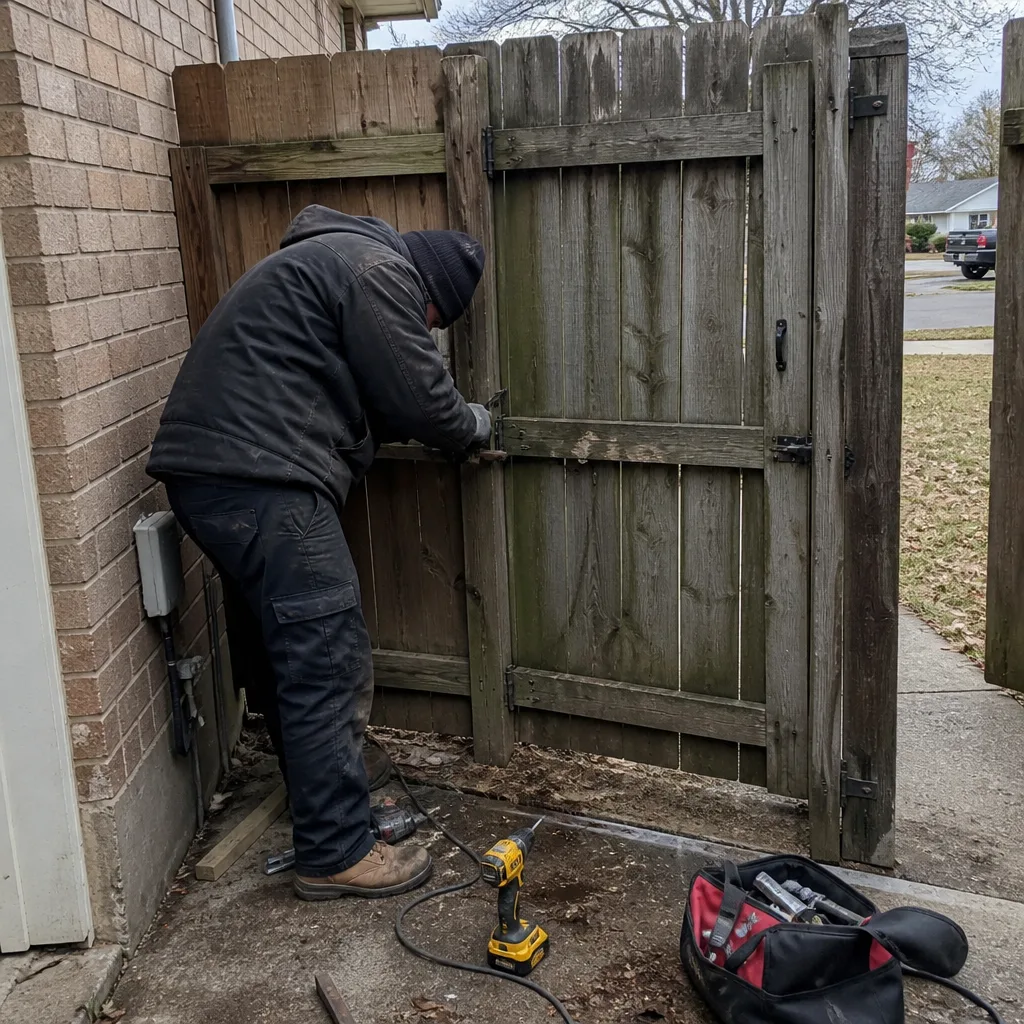 Before
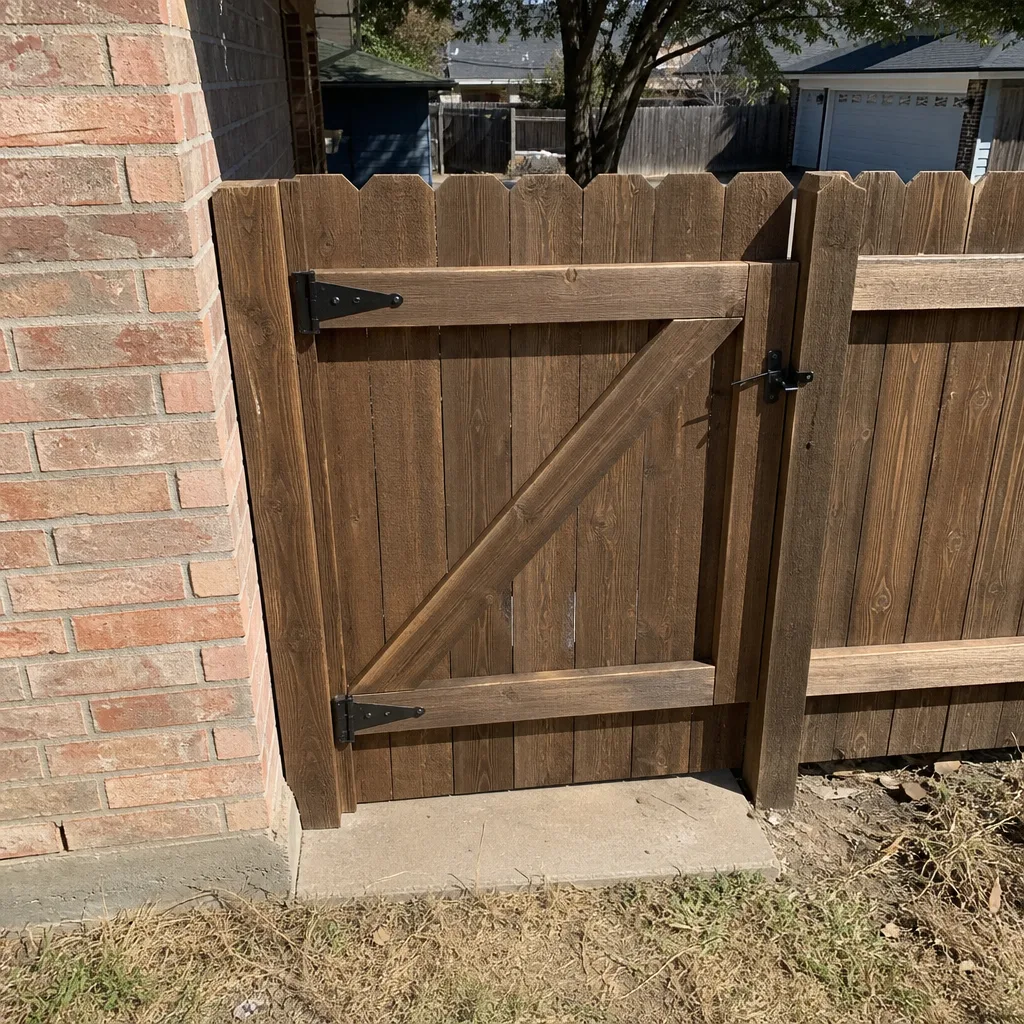 After
After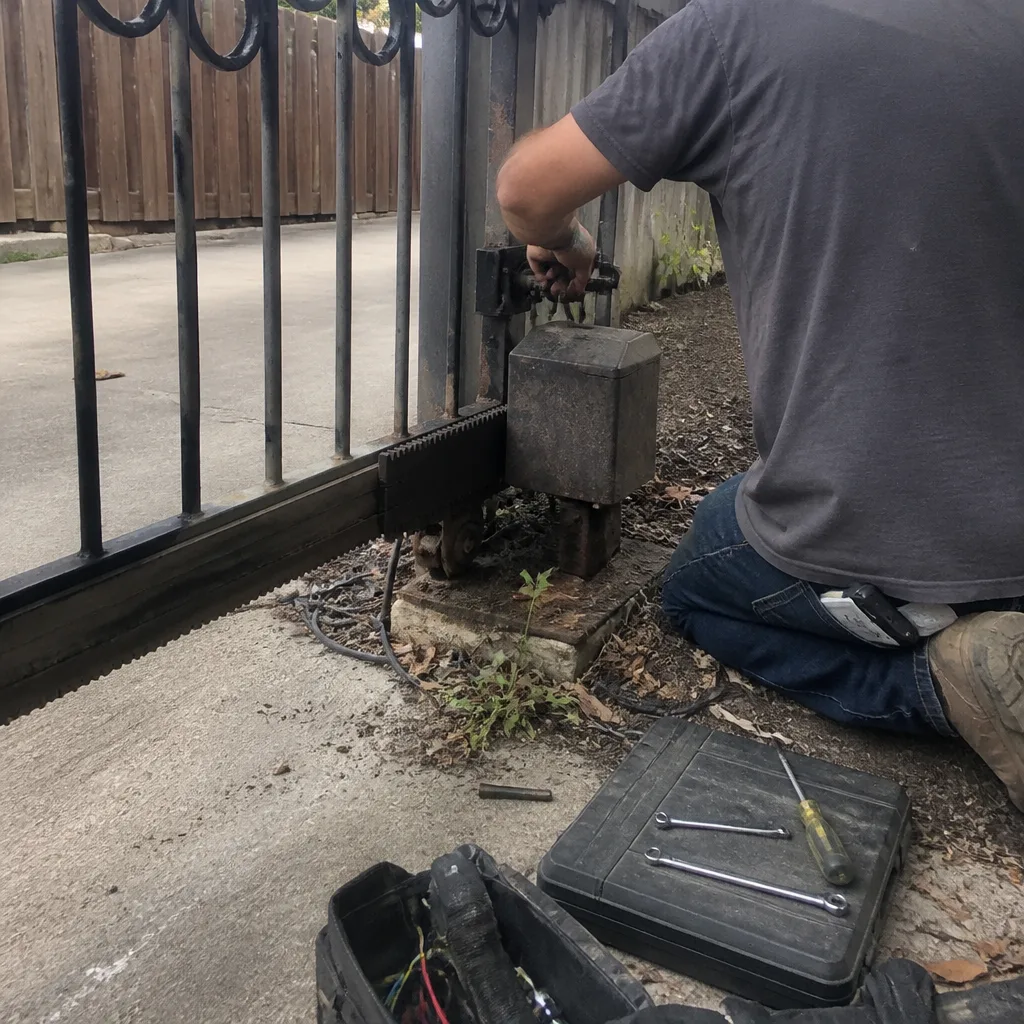 Before
 After
After Before
 After
AfterWhen to Call a Professional
Some maintenance findings are true fixes you can handle with basic tools. Others require a technician who works on gates every day. Call a professional if you find: a hinge pulling away more than 1/8 inch under load, a post out of plumb by more than 1/4 inch, a safety reversal that fails the 2-second test, a backup battery that will not hold through four test cycles, or a loop detector that will not hold the gate open consistently. These are not adjustment problems; they are Gate Repair Permits, Codes & Inspections in TX: What You Need to Know with safety implications.
Carver Gate Repair Fort Worth offers free estimates on all gate repairs, and a written price comes before any work starts. Our technicians are background-checked and uniformed, and we answer the phone around the clock. Call (817) 840-7067 if your checklist turns up anything that needs a closer look.
Frequently Asked Questions
Lubricate hinges every three months during spring and summer when heat breaks down grease faster; twice a year is sufficient during fall and winter. Always clean the hinge pin with a rag before applying new lubricant, or the fresh grease will trap grit and cause faster wear. A good lithium or moly-based grease works best for Fort Worth’s temperature swings.
For more guides & resources, see our blog. Most gate repairs in Fort Worth cost between $150 and $400, covering hinge replacement, force adjustment, battery replacement, and loop detector sensitivity corrections. A larger job like a post replacement or full gate re-hang runs $1,500 to $3,500 depending on the gate weight, post depth, and whether concrete needs to be broken out. Call (817) 840-7067 for a written quote; estimates are free and the price is set before any work starts.
Yes. Use a 5-gallon bucket filled with sand placed in the gate path at mid-travel, and time how long the gate takes to stop and reverse after contact. If it takes longer than 2 seconds, or if the gate does not reverse at all, stop using the automatic function and call a professional. This test does not void your operator warranty.
Measure the height difference between the hinge side and latch side of the gate. If the difference is more than 1/2 inch, the sag is structural and will require hinge replacement, post repair, or both. Do not correct sag by cranking up the operator force; that hides the symptom while creating a safety risk.
Check post plumb with a 4-foot level after any rain event over 2 inches. Movement of more than 1/4 inch means the footing is heaving, and fresh cracks radiating from the base of the post confirm it. This is common in Fort Worth’s expansive clay soil, and early intervention before the post shifts permanently is far cheaper than a full post replacement.
Yes. Our technicians are trained on nine major gate motor brands including LiftMaster, DoorKing, Elite, and Mighty Mule, so we match the repair to the system already installed. Every repair includes a written guarantee good for a full year, and a free second visit if the repair fails inside that window. Call (817) 840-7067 for details.
The Bottom Line
A Fort Worth gate needs two inspections a year and four quick quarterly checks, not because gates are fragile but because our climate punishes them. Heat kills grease, clay soil shifts posts, and power outages expose dead backup batteries. The checklist above gives you specific numbers: 1/8 inch for hinge pull-away, 1/4 inch for post plumb, 1/2 inch for gate sag, 2 seconds for safety reversals. If your gate passes all of those measurements, it will likely keep working until the next inspection. If it fails any of them, call gate motor repair in Fort Worth before the problem compounds. A gate that gets measured stays working; a gate that gets ignored becomes a project. For a written price and a background-checked technician who will go through this same checklist with you, call (817) 840-7067. If you’re thinking about a new gate entirely, see our gate installation in Fort Worth page for what the process looks like from measurement to final walkthrough.
Written by Lonnie Burke, Owner at Carver Gate Repair Fort Worth, serving Fort Worth since 2008.