
Last updated October 16, 2026
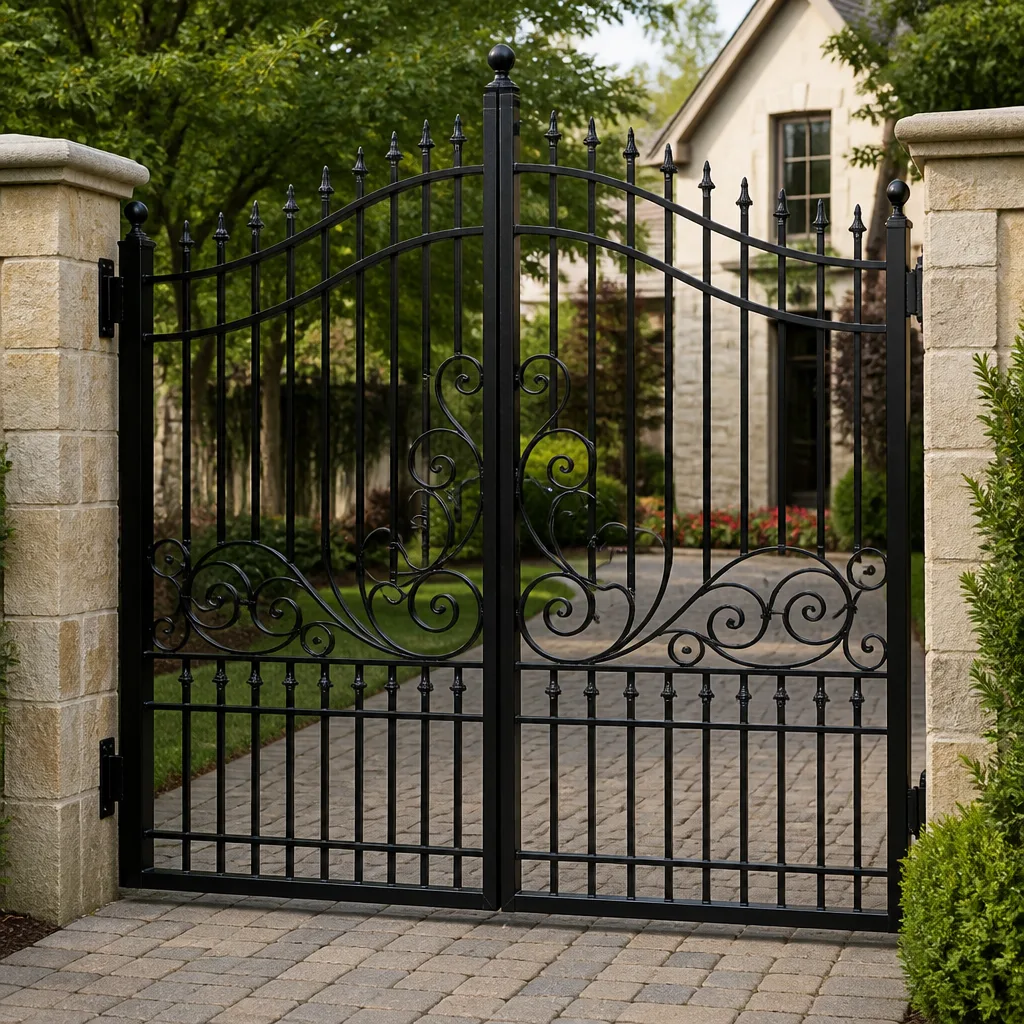 Wrought iron
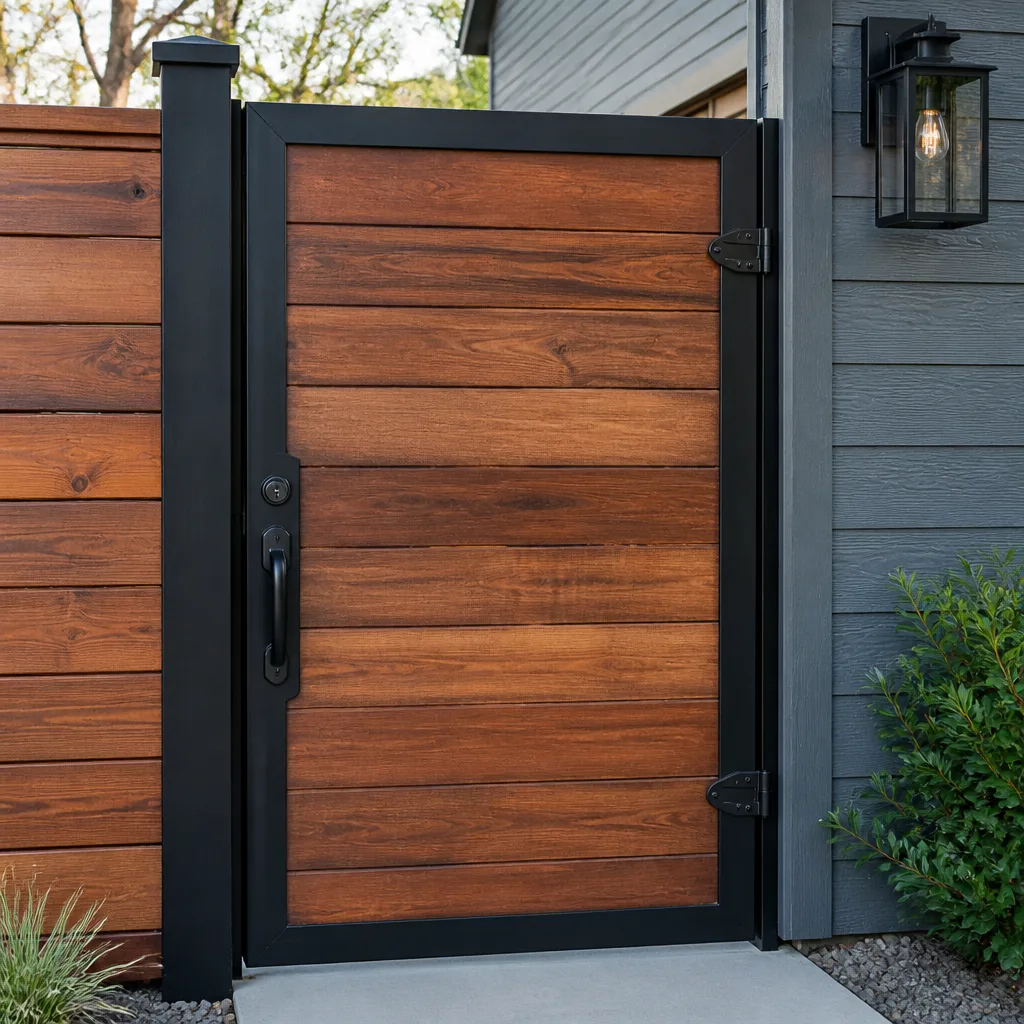 Wood & steel frame
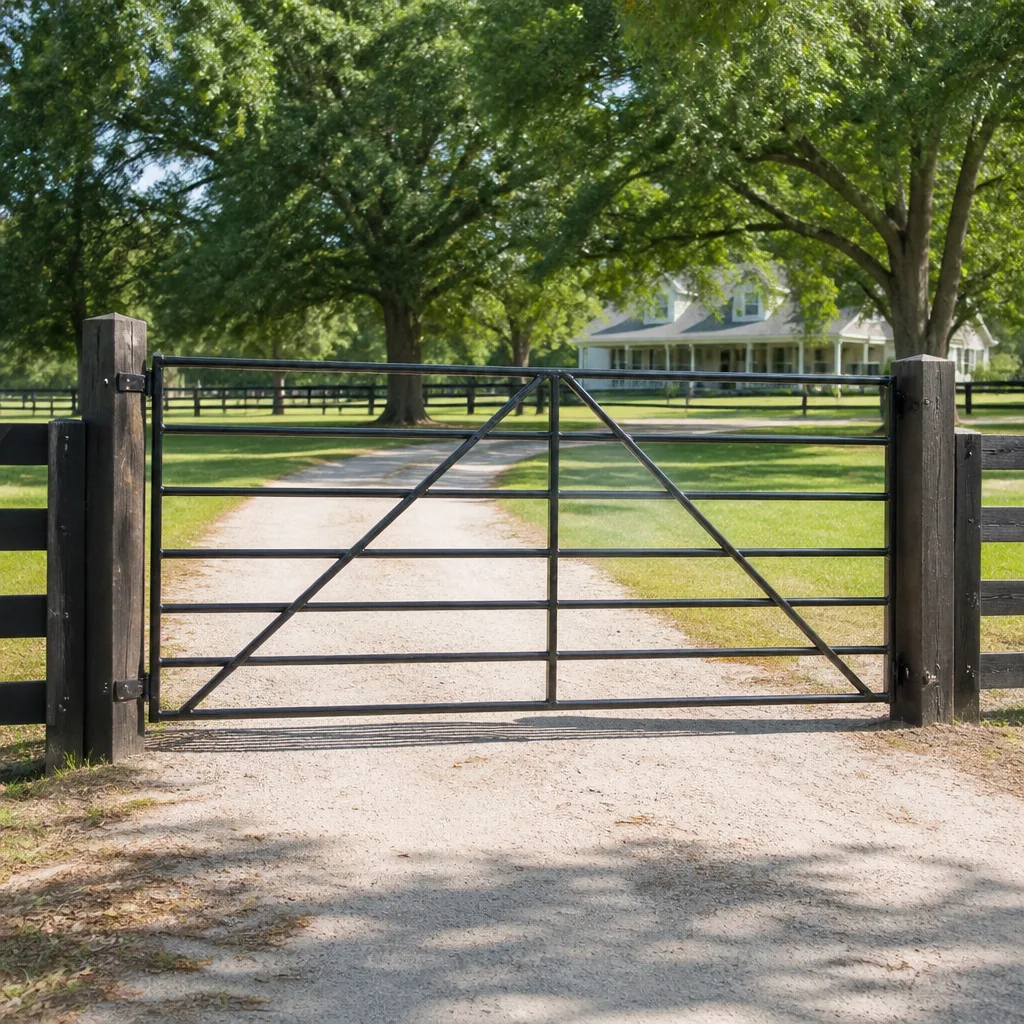 Farm & ranch
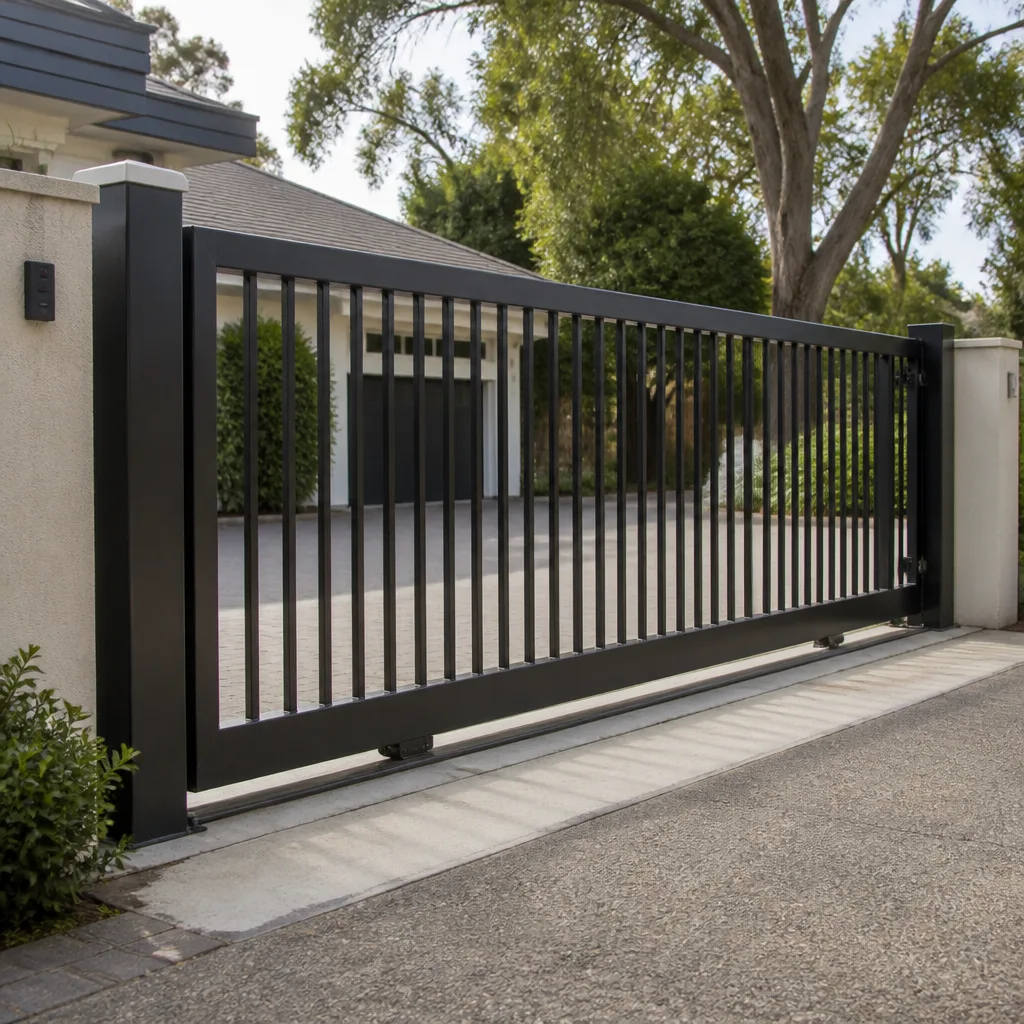 Sliding driveway gates
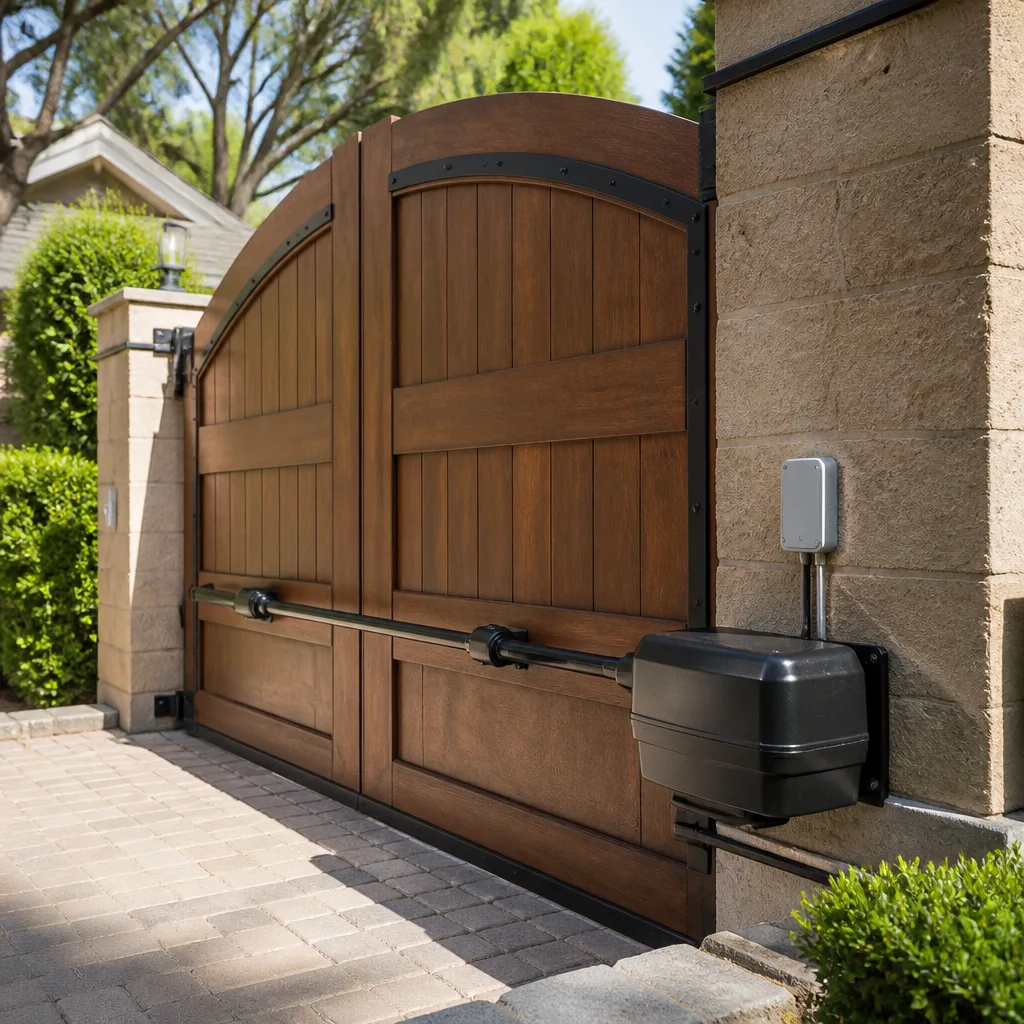 LiftMaster operators
Free on-site gate assessment - hinges, posts, and your LiftMaster or Nice gate operator checked before anything is quoted
The assessment is free and the quote is the invoice.
Get your free estimateGate Repair Cost Breakdown: The Fort Worth Homeowner’s Reference for 2026
The single largest source of gate repair overcharges isn’t labor rates. It’s parts markup, which in the gate industry commonly runs 40 to 80 percent above retail with no disclosure to the homeowner. A $38 limit switch becomes a $68 line item. A $220 control board becomes $385. And because most quotes bundle labor, parts, and diagnostic fees into one number, you never see the markup at all. This reference separates every cost component a Fort Worth homeowner will encounter in 2026 so you can evaluate any quote on its specifics, not its bottom line.
Styles & brands we work with
Quick Answer
Gate repair in Fort Worth typically costs between $145 and $1,900 depending on the component and scope. Individual parts like hinges and keypads run $95 to $450 installed, swing operators run $850 to $2,800, and structural repairs like post resets run $450 to $1,400. The swing factor is almost always parts markup, not labor, so a written fixed-price quote with line items is the single best protection a homeowner can carry into any gate repair conversation.
Table of Contents
- The Twelve Most Common Gate Repairs in Fort Worth and What They Cost
- Operator Replacement by Brand Tier: What the Motor Really Costs
- How to Read a Quote: Trip Fees, Programming Fees, Disposal Fees, and Surcharges
- Parts Markup in the Gate Trade and How to Verify It
- Repair vs. Replace: The Cost Crossover Point
- Fixed-Price Quotes vs. Time-and-Materials: Which Protects You
- What Fort Worth Climate and Soil Do to Gates
- Common Mistakes to Avoid
- When to Call a Professional
- Frequently Asked Questions
- The Bottom Line
The Twelve Most Common Gate Repairs in Fort Worth and What They Cost
Here are the repairs we see most often across gate repair in Fort Worth, with itemized cost ranges that reflect 2026 pricing in this market. These figures separate parts and labor so you can see what you’re actually paying for.
| Repair | Typical Parts Cost | Typical Labor Cost | Total Range |
|---|---|---|---|
| Hinge replacement (single gate, welded or bolted) | $25 – $85 per hinge | $95 – $185 | $145 – $320 |
| Post reset (concrete footer, single post) | $45 – $110 | $350 – $700 | $450 – $1,400 |
| Weld repair (cracked frame or picket) | $15 – $55 | $85 – $165 | $145 – $480 |
| Keypad replacement (wired or wireless) | $60 – $230 | $45 – $95 | $105 – $325 |
| Limit switch replacement | $35 – $120 | $55 – $110 | $90 – $230 |
| Loop detector replacement (exit loop) | $85 – $260 | $110 – $220 | $195 – $480 |
| Photo eye sensor alignment or replacement | $35 – $170 | $45 – $120 | $80 – $290 |
| Swing arm actuator replacement | $220 – $520 | $110 – $260 | $330 – $780 |
| Slide gate chain or belt replacement | $45 – $190 | $85 – $185 | $130 – $375 |
| Control board replacement | $180 – $540 | $110 – $240 | $290 – $780 |
| Wheel or roller replacement (slide gates) | $30 – $140 per wheel | $85 – $175 | $115 – $450 |
| Full gate frame straightening | $25 – $90 | $180 – $420 | $205 – $510 |
These are Fort Worth ranges. A hinge replacement on a light ornamental gate in Wedgwood will land at the bottom of the spectrum. A post reset for a heavy steel driveway gate in the clay-heavy soil of north Fort Worth, where frost heave and expansive soils work against concrete footers every year, often pushes toward the top.
What separates a clean repair from a messy one is whether the technician isolates the cause instead of treating the symptom. A gate that drags at the latch may look like a hinge problem. In our experience, it’s frequently a post that’s moved a half-inch, which means replacing hinges buys you a few months and then the same call comes around again. That is why the Carver Gate Repair Fort Worth home process starts with the mechanism, not the part that’s easiest to replace.
Operator Replacement by Brand Tier: What the Motor Really Costs
Gate motors, called operators in the trade, fall into three price tiers. The tier is determined by duty cycle, which is how many open-close cycles per day the unit is engineered to handle, and by the control logic built into the board.
Tier 1: Residential-grade operators ($280 – $650 parts, $850 – $1,200 installed). These are built for driveways that see 10 to 25 cycles a day. Mighty Mule dominates this tier in Fort Worth, and for good reason: the hardware is functional, widely available, and the remotes pair easily with most existing accessories. What you trade away is the board logic. These units are “dumb” by comparison, with limited diagnostic feedback when something fails. That’s acceptable for a gate that moves four times a day. It’s a frustration for one that cycles thirty times between 6 and 9 a.m.
Tier 2: Commercial-duty residential operators ($550 – $1,300 parts, $1,200 – $2,200 installed). LiftMaster and FAAC live here. The LiftMaster line, particularly the LA400 and LA500 units, are common replacements on Fort Worth properties where the original builder installed a lighter operator and demand has outgrown it. The boards carry self-diagnostics, meaning the unit will often tell the technician exactly which component failed rather than forcing a guess. That speed of diagnosis is the difference between a $180 repair and a $700 replacement in some cases.
Tier 3: Heavier swing and slide operators ($1,100 – $2,800 parts, $1,900 – $3,800 installed). BFT and LiftMaster commercial units serve this tier. We see these on acreage properties around Benbrook, Aledo, and the edges of Tarrant County where gates are long, heavy, or both. The submersible-rated BFT swing arms hold up well in Fort Worth’s May flooding season, which matters when the operator is mounted at grade where water pools.
If you are replacing an operator, ask which tier the replacement falls into and why. A technician who specifies a Tier 3 unit for a 12-foot ornamental gate that cycles six times a day is overselling you. A technician who sells a $300 Mighty Mule for a 22-foot steel monster that runs all day is setting you up for a failure in 18 months.
How to Read a Quote: Trip Fees, Programming Fees, Disposal Fees, and Surcharges
Quotes from gate companies in Fort Worth generally take two forms: a single number with the scope described below it, or a line-item breakdown. The first form is where hidden costs hide.
Here’s what to look for in any quote:
- Trip fee or diagnostic fee. Many companies charge $45 to $95 just to show up. Some apply that fee toward the repair if you proceed; some don’t. Ask which. A company that charges a trip fee and then applies it to the job is being reasonable. A company that charges a trip fee, then a diagnostic fee, then a separate programming fee for the same visit is itemizing the same 40 minutes three different ways.
- Programming fee. For keypad or remote programming, this should be part of the labor line. Seeing it itemized separately at $50 to $75 is a redundant line item unless the job involves multiple remotes being added after the repair is complete.
- Disposal fee. Some shops charge $25 to $50 to haul away the failed motor or old gate section. This is legitimate if disclosed up front, but it should appear on the quote, not on the invoice as a surprise.
- After-hours surcharge. Service outside standard hours commonly runs time-and-a-half or a flat $75 to $150 premium. If you call at 11 p.m. because your gate is stuck open, that surcharge is fair. If you call at 4 p.m. on a Tuesday and a surcharge appears, it isn’t.
- Permit and code compliance line items. Fort Worth requires permits for certain gate installations, particularly driveway gates that fall under fire-access rules in new subdivisions. If your quote includes a permit line, verify the permit number after the job. If a company adds “code compliance” as a line item without a permit number, that is padding.
A quote that is honest tells you what’s being replaced, what brand of part is going in, what the labor covers, and what happens if it fails. A quote that is a single number with no breakdown is a starting position for a negotiation you didn’t agree to. At Carver Gate Repair Fort Worth, every customer receives a written price before any work starts, and that price is the price. There is no surcharge that wasn’t on the paper.
Parts Markup in the Gate Trade and How to Verify It
Gate repair companies buy parts at wholesale and sell them to you at retail. That’s standard practice across every service trade. The problem in the gate industry is the size and the opacity of the markup.
A control board that costs the company $110 wholesale may retail for $180 to $270 depending on brand and availability. A technician who charges you $290 for that board and then adds a “sourcing fee” of $65 has marked up the part 220 percent over cost. That is where gate repair gets expensive, and it’s the reason the gate repair Bill in Fort Worth feels larger than the plumbing bill or the electrician’s bill by comparison. The parts are few, specialized, and easy to blur.
Here’s how to verify a parts price in five minutes:
- Ask the technician for the retail part number. Every limit switch, control board, keypad, and photoreceptor in a gate system has a manufacturer part number stamped or labeled on it. A legitimate technician will write it on the quote or show it to you during diagnosis.
- Look up the retail price online. Amazon, supply-house websites, and the manufacturer’s own catalog list retail prices for most components.
- Apply the standard trade markup. A 30 to 60 percent markup over retail is within normal range for a service company. That markup covers the truck stock, the warranty, and the fact that the part is in the truck when you need it. More than 60 percent over retail should trigger a direct question: “Why is this part priced at $340 when the manufacturer lists it at $140?”
- Watch for the “proprietary system” excuse. No mainstream gate operator brand is proprietary in the way a dealer-exclusive automotive part is. LiftMaster, Mighty Mule, FAAC, and BFT parts are all available through normal supply channels. A technician who claims parts are “factory-only” and therefore marked up 150 percent is not being straight with you.
We practice what we recommend. Every written quote from Carver Gate Repair Fort Worth includes the brand and part number of what we’re replacing. You can verify the price before you sign, and we encourage you to. A repair bill should never be a surprise, and in our experience, most Fort Worth homeowners are tired of exactly that.
Repair vs. Replace: The Cost Crossover Point
There is a point in every gate’s life where fixing it costs more per year than replacing it. The crossover point for most residential gate systems is simple to calculate: every repair you’ve made in the last three years is a number, and those numbers are trending.
Here’s the rule we give Fort Worth homeowners:
- Operators: If the operator has needed two or more non-routine repairs in 24 months, or if the unit is more than 10 years old and needs a control board replacement, replace the operator. A board replacement at $400 to $600 on a 12-year-old motor often buys 18 months before the gearbox or limit switch fails next. A new operator at $1,200 to $2,200 installed carries a fresh warranty and a known service life. The crossover happens when the cumulative repair cost for a single unit exceeds 50 percent of the replacement cost inside two years. At that threshold, replacement is the economically sound decision.
- Gate frames: If the frame is rusted through in more than two places, or if a weld repair on one section reveals thin metal throughout, replacement beats repeated welding. Fort Worth’s humidity, combined with our alkaline soils, accelerates corrosion on steel gates that sit close to grade. You can weld a frame section back together for $250, but a fourth weld on the same gate in five years tells you the steel is done. New gate installation in Fort Worth typically runs $1,500 to $6,000 for a standard residential driveway gate depending on material and size. That’s a number worth weighing against a fifth or sixth weld bill.
- Hinges and hardware: Hardware is almost never worth replacing piecemeal. If two hinges have failed, the third and fourth are the same age and material. Replace all four at once. The incremental parts cost is small; the second service call is expensive.
We tell Fort Worth customers this because we’d rather you spend money once. A gate that’s repaired correctly once is less expensive over five years than a gate that’s repaired inadequately three times. That math doesn’t change, whether it’s a swing gate in Arlington Heights or a slide gate in Sendera Ranch.
Fixed-Price Quotes vs. Time-and-Materials: Which Protects You
Fixed-price means the number you sign is the number you pay, whether the job takes an hour or four. Time-and-materials means you pay for actual hours worked plus actual parts, with the parts usually marked up. Both models have a legitimate place, but they protect different parties in different scenarios.
Fixed price protects the homeowner. When you have a fixed written quote, the risk of the job running long sits with the company, not with you. A gate repair that was quoted at $480 and still costs $480 when the technician finishes at 7 p.m. is exactly what you agreed to. Fixed-price quotes also force the company to diagnose properly up front, because they can’t make up for a bad diagnosis by adding hours on the back end.
Time-and-materials protects the company. It’s reasonable for open-ended work, like restoring a gate where the technician can’t know what he’ll find behind the post until the concrete is broken out. In that case, a not-to-exceed number is the honest version of time-and-materials. You agree to pay for actual hours and actual parts up to a stated cap. If the cap is reached, work pauses and you have a conversation.
What does not protect the homeowner is a “verbal ballpark” followed by an invoice that’s 60 percent higher. A verbal estimate is not a quote. In Fort Worth, where residential gates run the gamut from 20-year-old welded steel to new aluminum systems, a technician who won’t put a number in writing before starting work is telling you something you should hear.
The Garrison Standard, which we operate under at every Carver Gate Repair location, is built on this: a written price before any work starts, on every job. Not a ballpark. Not a range. A number, written down, that you sign before we turn a wrench. That is what a quote should feel like.
What Fort Worth Climate and Soil Do to Gates
Fort Worth sits on what geologists call the Eagle Ford Shale, overlaid in most residential areas by expansive clay soils. That soil expands when wet and contracts when dry, which means two things for gates: posts move on a seasonal cycle, and concrete footers poured too shallow will crack or tilt within a few years of installation.
The practical result is that post resets and hinge adjustments are more common in Fort Worth than in markets with sandy or rocky soils. A post that was plumb in March may be out by August after a dry summer, and out the other direction after an October rain. Footers need to go below the movement zone, typically 24 to 30 inches in this region, or the gate will fight the post every time the soil shifts.
Summer heat is the other factor. Fort Worth routinely sees 40-plus days above 100 degrees in July and August. Gate operator boards are rated for operating temperature ranges, and cheaper units mounted in direct sun on a west-facing wall will experience heat-related board failures faster than units mounted in shade or spec’d for Texas heat. When we replace operators in Fort Worth, we account for where the unit sits and whether it has ventilation. That’s a repair decision that carries a longevity consequence most quotes ignore.
If you’re comparing gate installation in Fort Worth bids, ask each company what depth they pour for post footers and whether they account for soil movement. If they look at you blank, keep looking. If they answer with a number and explain why it matters here, that’s a professional who knows this ground.
Common Mistakes to Avoid
- Accepting a single-number quote with no breakdown. A number like “$1,400” doesn’t tell you whether you’re paying for a motor, a post, or a markup. Demand line items. A legitimate company will produce them without hesitation.
- Paying a diagnostic fee that’s not credited toward the repair. Some shops charge $89 to show up and then charge full labor on top. Ask before you book whether the diagnostic fee is applied to the work.
- Replacing hinges on a gate whose post has moved. In Fort Worth’s expansive clay, a sagging gate is often a post problem disguised as a hinge problem. Treat the cause or you’ll redo the repair within a year.
- Hiring based on the lowest bid without comparing scope. A $600 repair that replaces only the failed part is not cheaper than an $800 repair that replaces the failed part and the mate to it. Compare scope, not just price.
- Approving work from a verbal estimate. If the price isn’t in writing, the price can change. If the change is verbal, you have no recourse. Get the fixed price on paper before the wrenches come out.
- Skipping regular inspection on an automated gate. A $120 annual check catches a $400 failure early. Gates don’t break all at once, usually. They wear progressively, and the wear is visible if someone knows what to look for.
- Trying a DIY repair on a gate under tension. Swing gates carry significant weight, and slide gates carry momentum. A gate that fails mid-operation can do real damage to a person. If you’re not trained on gate mechanics, call a professional. This is not a light socket.
When to Call a Professional
Call a professional when the gate no longer opens and closes smoothly, when the motor runs but the gate doesn’t move, when you hear grinding or smell burning from the operator, or when the gate has been hit by a vehicle. These are all symptoms with mechanical causes, and guessing at them turns a $200 fix into a $900 repair when the wrong part gets replaced first. If the gate is off its track, the hinges are broken, or the post is visibly leaning, do not try to force the gate open or closed. A gate that drops while you’re working under it is a serious injury risk, and a post that’s compromised can fail without warning. Carver Gate Repair Fort Worth offers free estimates in Fort Worth. Call (817) 840-7067 and a live person will answer, day or night.
Frequently Asked Questions
Gate repair in Fort Worth runs from about $145 for a simple hinge replacement to $3,800 for a heavy-duty operator replacement, with most common repairs landing between $200 and $900. The exact price depends on the component, the brand, and the condition of the surrounding hardware. Call (817) 840-7067 for a written quote specific to your gate, and the estimate is free.
A gate motor or operator replacement in Fort Worth costs between $850 and $3,800 installed, depending on the duty cycle of the replacement unit and the brand. A residential Mighty Mule operator installation typically lands at $850 to $1,200, while a LiftMaster or BFT commercial-duty unit runs $1,900 to $3,800. The motor itself is half the cost; the other half is labor, mounting hardware, and programming.
In most cases, yes. Carver Gate Repair Fort Worth answers calls 24/7 and dispatches background-checked, uniformed technicians on same-day schedules for repair work. Repairs that need a specialty part ordered may take a day or two for the part to arrive, but the diagnosis and written quote happen the same day we arrive.
Ask for the retail part number on every component being replaced, then look up the retail price online. Standard markup for gate parts is 30 to 60 percent over retail. Anything beyond that, especially anything over 100 percent, should be questioned directly. Carver Gate Repair Fort Worth includes part numbers on every written quote, so you can verify before you approve.
A legitimate gate repair quote in Fort Worth should list the specific parts being replaced, the brand and part number of each part, the labor cost, any permit or disposal fees, and the total fixed price. It should also state the guarantee period in writing. If any of those elements is missing, the quote is incomplete. Every Carver Gate Repair Fort Worth quote includes a written price, a written guarantee for a full year, and no undisclosed fees.
Replace the gate or operator when cumulative repair costs over two years exceed 50 percent of replacement cost, or when the same repair has been done twice in 24 months. For operators older than 10 years needing a major component like a control board, replacement is usually the better long-term decision. For structural failures like post movement that is getting worse year over year, new installation is often the only permanent fix.
The Bottom Line
Gate repair pricing in Fort Worth is opaque because the industry has made it that way. Single-number quotes hide parts markups, redundant fees, and short guarantee periods. The homeowner’s defense is simple: demand a written, line-item quote with part numbers, verify the parts markup, and understand the difference between a repair that’s worth making and a repair that’s throwing money at an old problem. For additional help, see our Gate Repair Maintenance Checklist for Fort Worth Homeowners. When you find a company that operates this way, you’ve found one that respects the fact that it’s your gate, your money, and your call. That’s the standard we’ve worked to since 2008, and it’s how we’ll work on your gate in Fort Worth.
Written by Lonnie Burke, Owner at Carver Gate Repair Fort Worth, serving Fort Worth since 2008. Explore more guides & resources from our team.
See the difference
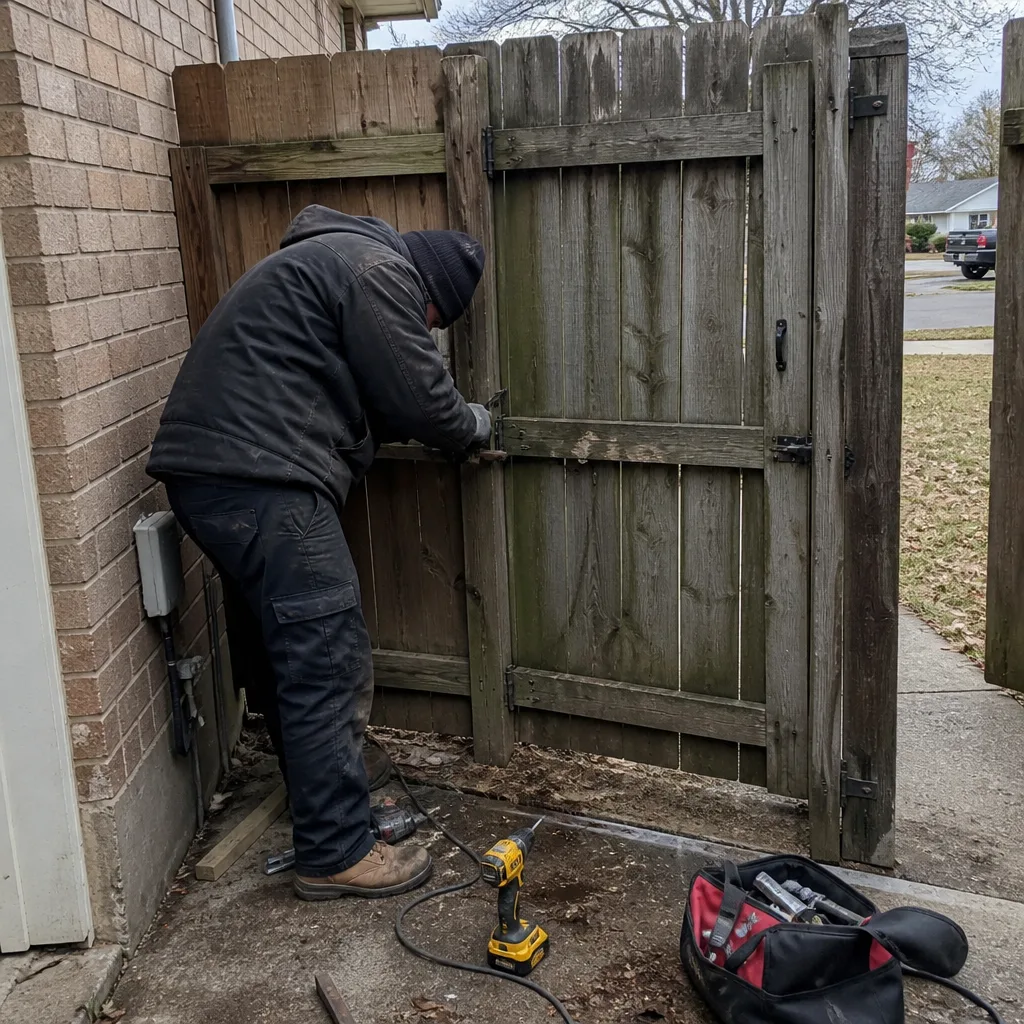 Before
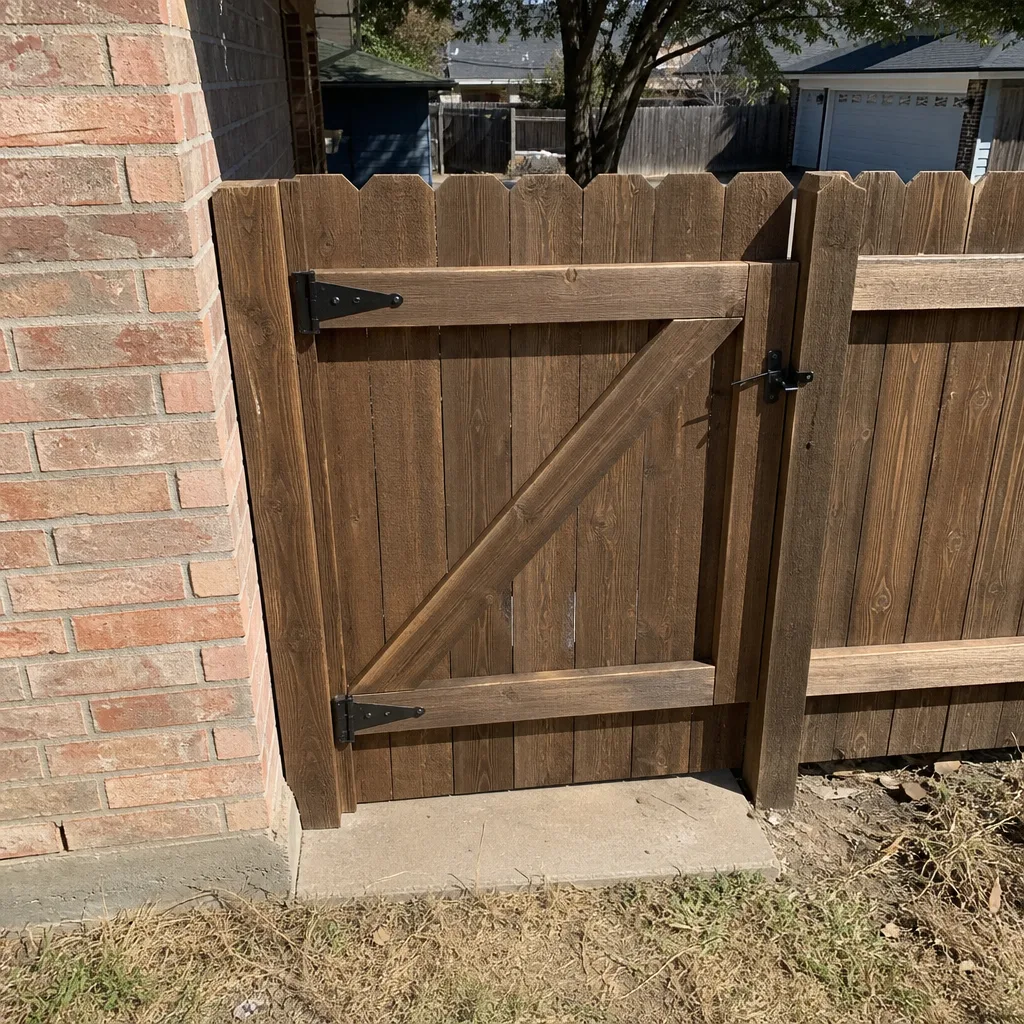 After
After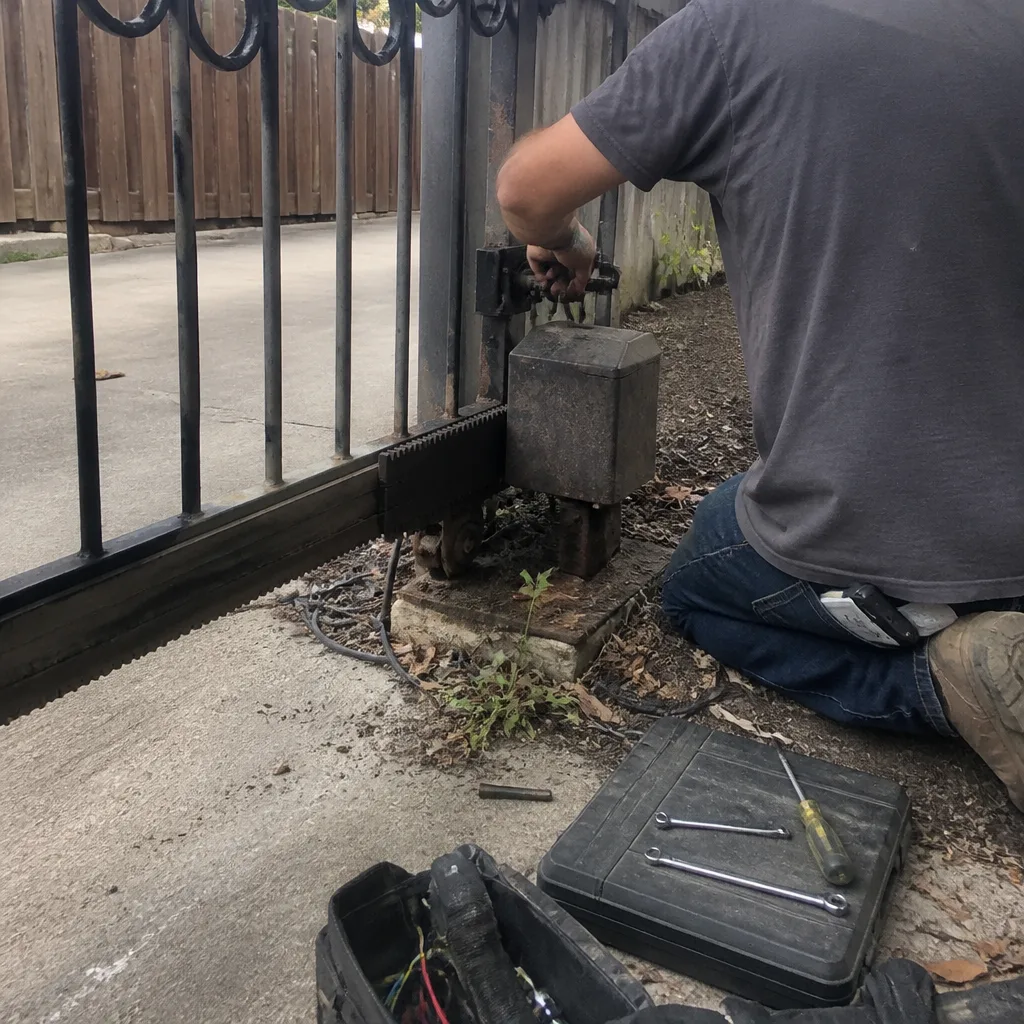 Before
 After
After Before
 After
After