
Last updated October 16, 2026
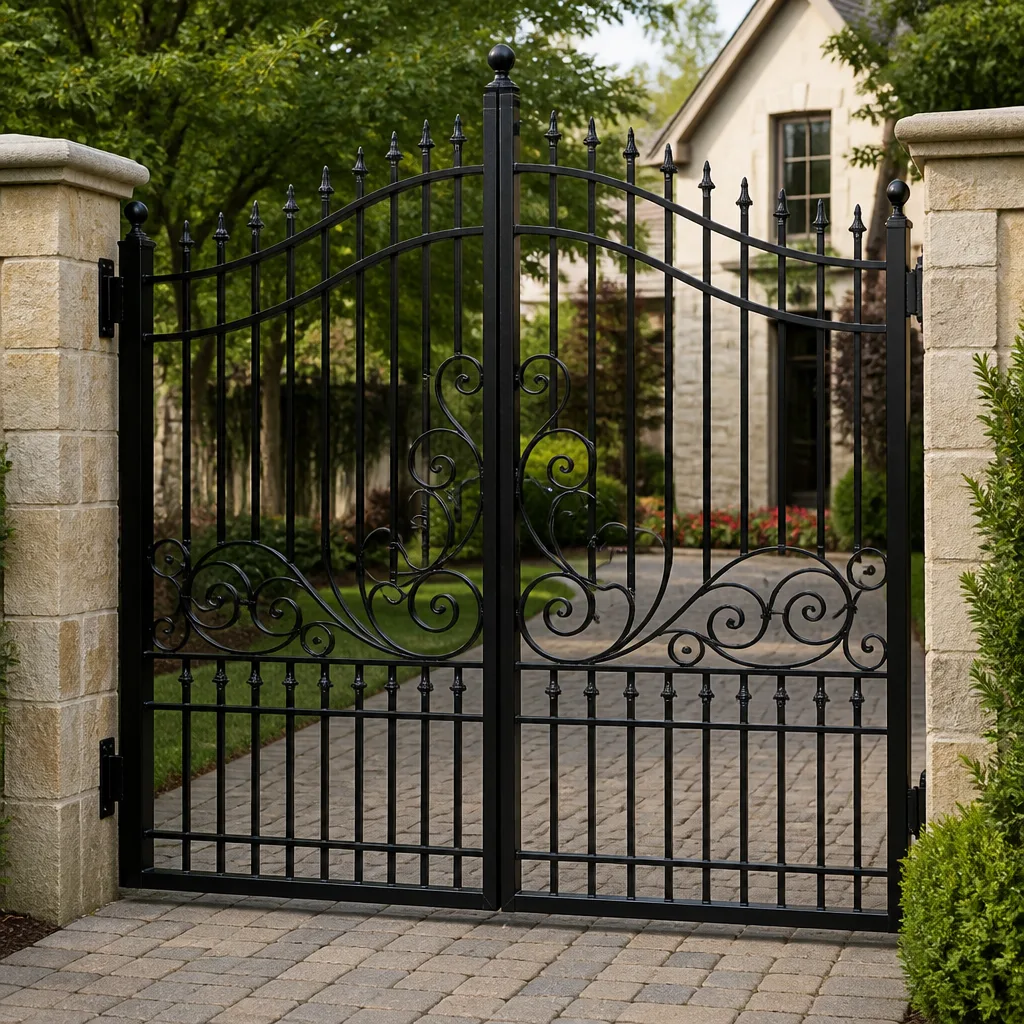 Wrought iron
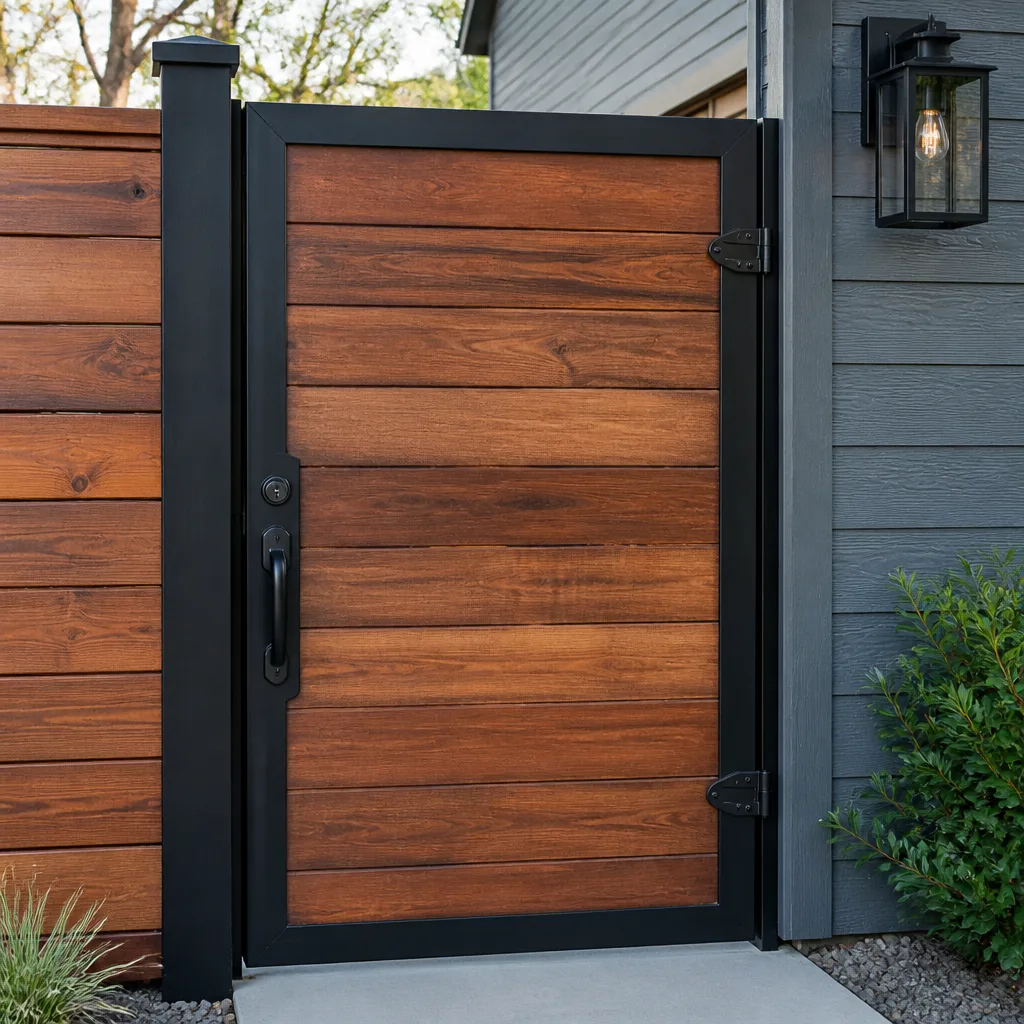 Wood & steel frame
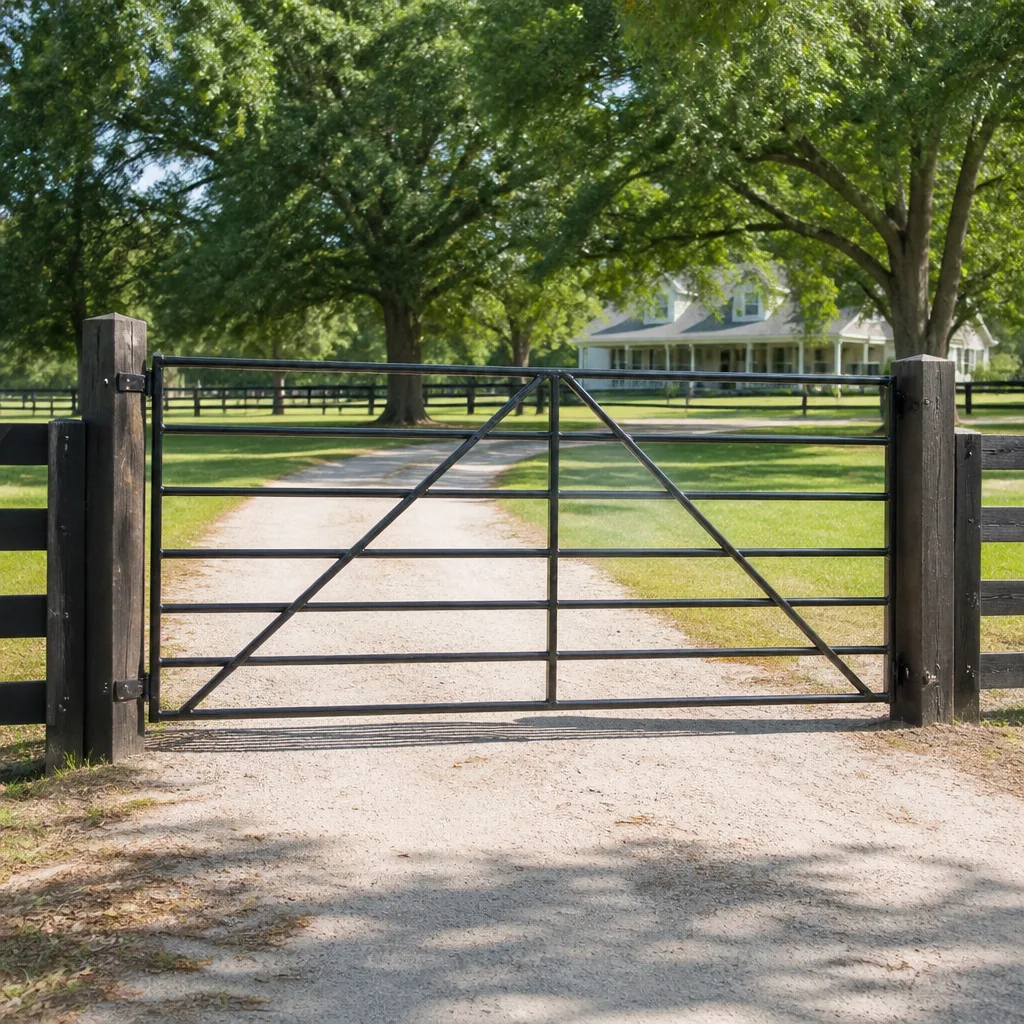 Farm & ranch
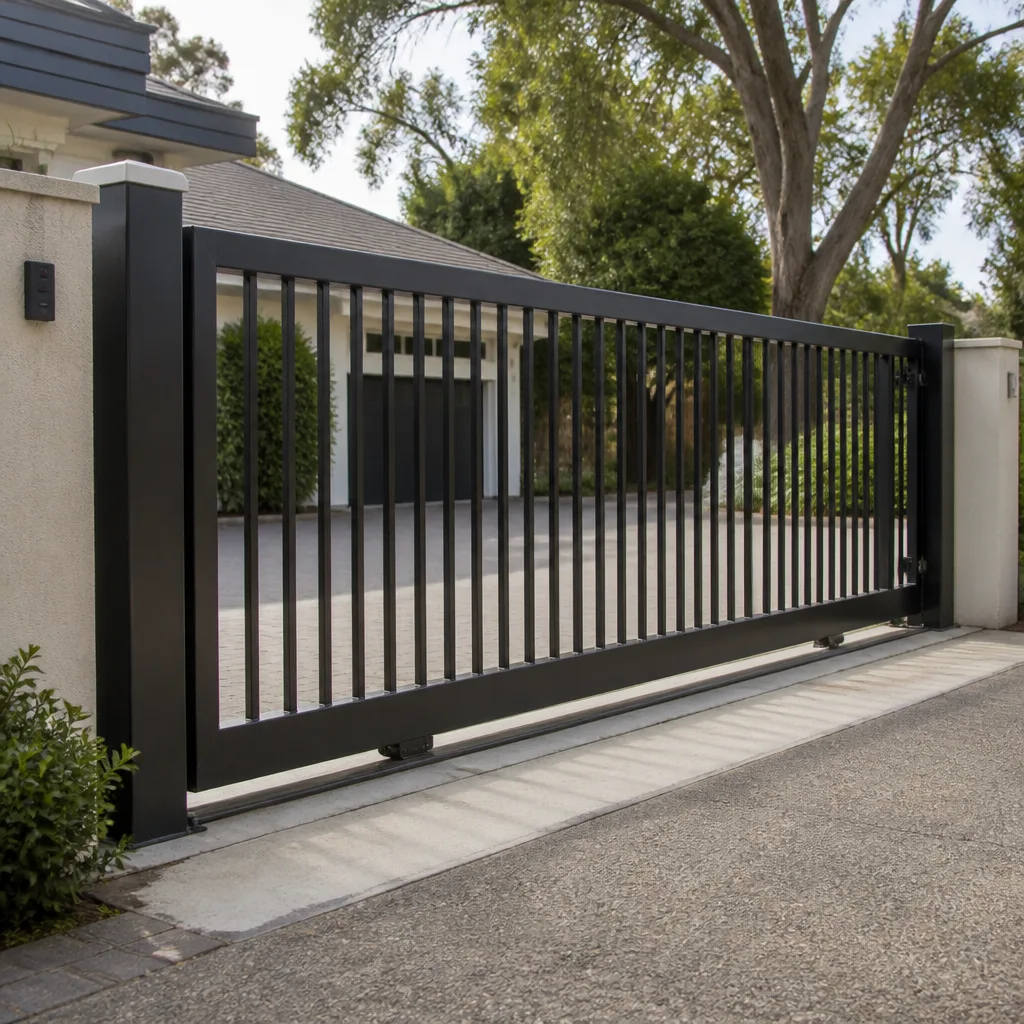 Sliding driveway gates
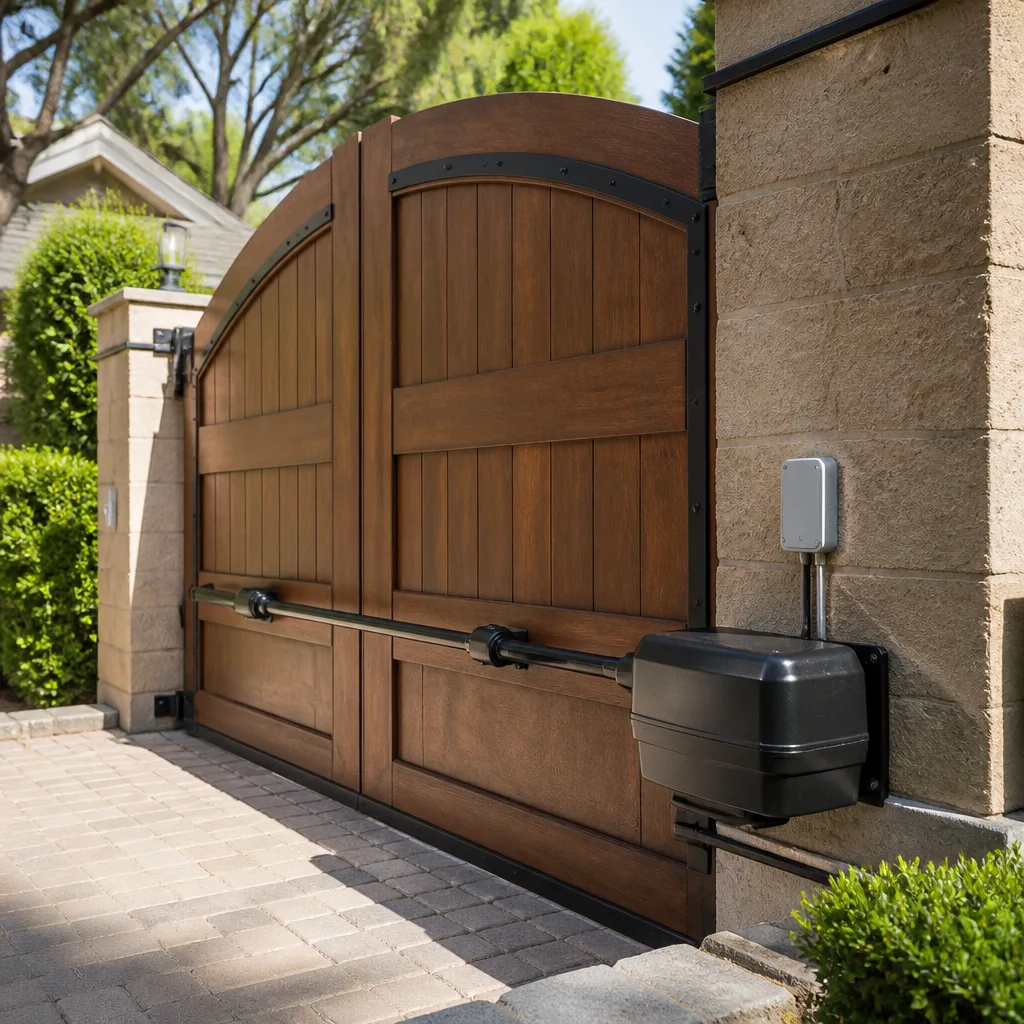 LiftMaster operators
Free on-site gate assessment - hinges, posts, and your LiftMaster or Nice gate operator checked before anything is quoted
The assessment is free and the quote is the invoice.
Get your free estimateDIY vs Professional Gate Repair: The Fort Worth Homeowner’s Decision Guide
Replacing a gate keypad is a legitimate DIY job. Adjusting a gate operator’s force limits without a UL 325 entrapment test afterward is not; it can defeat the safety reversal and create a liability the homeowner owns, not the contractor. That distinction, between what looks simple and what quietly carries serious risk, is the entire ballgame in Fort Worth, and it’s why our Gate Repair services focus on safety-first assessments. Homeowners here deal with specific conditions, from clay soil that shifts gate posts to summer heat that cooks circuit boards in unventilated operator boxes. This guide draws the line by repair type, not by generalization, so you know exactly what you can safely handle with basic tools and what belongs in the hands of a trained technician.
Styles & brands we work with
Quick Answer
Most gate repairs fall into three tiers. Safe DIY work includes battery replacement, remote pairing, and minor lubrication. Conditional DIY work, like limit switch adjustment, is fine if you perform proper UL 325 entrapment testing afterward. Professional-only work includes structural welding, operator force calibration, and any electrical run that touches line voltage. In Fort Worth, the practical question is not “can I do this?” but “what happens if I do it wrong?” and the answer on professional-tier repairs is usually a $900 consequence from a $40 attempted fix, as detailed in our Gate Repair Cost Breakdown: The Fort Worth Homeowner’s Reference for 2026.
Table of Contents
- Tier One: Gate Repairs You Can Safely Do Yourself
- Tier Two: Conditional DIY Repairs That Require Testing
- Tier Three: Professional-Only Gate Repairs
- UL 325 and Why It Matters in Fort Worth
- When DIY Work Voids a Warranty (and How to Document It)
- Texas Code: Where a Licensed Electrician Is Required
- Parts Availability in the Fort Worth Market
- Common Mistakes to Avoid
- When to Call a Professional
- Frequently Asked Questions
- The Bottom Line
Tier One: Gate Repairs You Can Safely Do Yourself
Some gate repairs are genuinely simple, low-risk jobs that a homeowner with basic tools can complete in under an hour. The key is recognizing which repairs belong in this tier and which ones only look like they do. In Fort Worth, we see homeowners confidently handle these tasks all the time, and the results are usually fine. The failures happen when someone in this tier drifts into the next one without realizing the line exists.
Battery Replacement
Gate operator backup batteries typically last 2 to 3 years in Fort Worth’s climate. The heat accelerates chemical degradation, so a battery that would last 4 years in a milder market often fails at year 2 here. Replacing one is straightforward: disconnect power to the operator, remove the old battery, install the new one, reconnect, and test the gate under battery power. If the gate does not open fully on battery alone, the battery was not the problem. The repair itself carries no meaningful safety risk, but do disconnect AC power before touching the battery terminals. A brief spark is common and harmless; it does not mean you did anything wrong.
Remote Pairing and Keypad Reprogramming
Reprogramming a remote or keypad on LiftMaster, Linear, Ghost Controls, and most other operators is a 5-minute job that requires nothing more than the operator’s manual and a small step ladder. The process usually involves pressing a learn button on the operator, then pressing the remote button within a 30-second window. Keypads follow a similar process with a PIN entry. If the operator’s learn button is inaccessible because the control board is mounted high inside a metal housing, that is still a safe DIY job, just an awkward one. The one thing to confirm before starting: make sure you have the correct manual for your exact operator model. Programming steps differ between brands, and a Ghost Controls remote will not pair using BFT’s procedure.
Minor Lubrication
Gate hardware, wheels, hinges, and chains, benefit from lubrication once or twice a year in Fort Worth, a key step in any Gate Repair Maintenance Checklist for Fort Worth Homeowners. The dry climate combined with occasional heavy rain means metal parts alternate between dusty and wet. A dry film lubricant works better than grease on most gate components, because grease attracts the fine dust that blows through Tarrant County in the summer and turns into abrasive paste. Lubricate only the moving contact points: wheels on the track, hinge pins, chain links, and the threaded rod on a linear actuator. Do not lubricate the motor, control board, or limit switch contacts. Those require no lubrication, and oil on a limit switch will cause intermittent operation that is difficult to diagnose later.
Tier Two: Conditional DIY Repairs That Require Testing
This tier is where the trouble starts. Conditional DIY repairs are jobs a skilled homeowner can perform, but only if they understand the safety system involved and are willing to test it correctly afterward. Skip the test, and you have not saved money; you have created a hazard and accepted the liability for it.
Limit Switch Adjustment
The limit switch tells the operator where the gate should stop, both fully open and fully closed. Over time, particularly on gates in Fort Worth where clay soil causes posts to shift by fractions of an inch each year, the gate may stop slightly short or travel too far. Adjusting a limit switch on most operators is a mechanical adjustment: loosen a set screw, reposition the switch, tighten it back down. The adjustment itself is simple. The complication is what happens after the adjustment.
Any time you change the gate’s travel distance, you must run a UL 325 entrapment test. UL 325 is the safety standard governing automatic gate operators, and it requires that the gate reverse when it encounters an obstruction, both on the close cycle and the open cycle. A homeowner who adjusts a limit switch and skips the reversal test has effectively disabled the gate’s safety system. If a child or pet is entrapped by that gate, the homeowner, not the manufacturer, not a contractor, is the party who owns that liability. This is the single most common DIY mistake we see in Fort Worth, and it is the one with the worst potential outcome.
Remote Control Board Swap
Swapping a control board is physically straightforward: disconnect power, unplug wire connectors, remove mounting screws, install the new board, reconnect everything. Where it becomes conditional is in the setup. Modern control boards from Linear, BFT, and Viking require configuration after installation: setting the open and close force, programming the travel limits, and pairing remotes. If the board’s default force settings are too high for your gate’s weight, the gate can crush something before it reverses. Perform the same UL 325 entrapment test after a board swap as after a limit switch adjustment. If you are not comfortable performing that test, this job moves from tier two to tier three.
Photo Eye Realignment and Cleaning
Photo eyes are the little black sensors mounted near the base of the gate on each side of the opening. They shoot an invisible beam across the gate path; if the beam is broken, the operator refuses to close the gate. Dirt, spider webs, and grass clippings from Fort Worth lawns frequently block the beam and cause the gate to reverse immediately or refuse to close. Cleaning the lens and realigning the sensor so both indicator lights are solid is a reasonable DIY task. The conditional part: some photo eyes are wired into the operator as a normally-open circuit, and some as a normally-closed circuit. Bypassing the photo eye entirely, by splicing the wires together to “trick” the operator into closing, is a safety defeat. It disables a UL 325 safety device and creates the same liability scenario as skipping the reversal test. If the sensor will not align after cleaning, the fix is replacement, not bypass.
Tier Three: Professional-Only Gate Repairs
These repairs are not do-it-yourself territory. They require specialized tools, specific training, or a license that most homeowners do not hold. Attempting them is how a $40 parts bill becomes a $900 consequence.
Structural Welding
Steel gates in Fort Worth take a beating from wind and the occasional hailstorm, and hinges, frame joints, and post brackets eventually crack or separate. Repairing structural steel requires a welder, proper eye protection, and the judgment to know whether the metal is worth saving or needs replacement. A homeowner with a flux-core welder from Harbor Freight can make two pieces of metal stick together; what they often cannot do is make a repair that holds under the repeated stress of a 600-pound gate swinging open and closed a dozen times a day. Bad welds fail, and when they fail, the gate drops. A falling gate is a serious injury waiting to happen. This is professional work, full stop.
Operator Force Calibration
An automatic gate operator’s force setting determines how hard the gate pushes before it stops and reverses. Set too low, and the gate stops halfway through its travel, frustrating and unsafe for vehicles. Set too high, and the gate will crush whatever is in its path before the reversal kicks in. Calibrating force correctly requires a force gauge, which measures the actual pounds of pressure at the leading edge of the gate. UL 325 specifies maximum force values, and a proper calibration brings the gate in under those limits while still closing reliably. No homeowner has a force gauge, and guessing at the setting is exactly how entrapment injuries happen. In our experience in Fort Worth, force miscalibration is the second most common safety defect we find on gates, right behind bypassed photo eyes.
Line Voltage Electrical Runs
Any gate operator that runs on 120V or 240V requires a dedicated circuit, properly run conduit, and a disconnect switch that meets code. This is not low-voltage work. Running new line voltage, upgrading a panel, or installing a new outlet for an operator is licensed electrician territory in Texas. The gate company handles the low-voltage side: the operator wiring, the sensors, the keypad, the loop detector. The line voltage side belongs to a state-licensed electrical contractor. Some Gate Installation in Fort Worth projects require both trades to coordinate, and a reputable gate company will tell you that upfront rather than having one technician do work outside their license.
Operator-Specific Parts Sourcing
Some gate operators are sold exclusively through dealer networks, which means the parts are not available to the public. BFT, for example, distributes through authorized channels, and certain control boards and gearbox assemblies simply cannot be bought over the counter or online. A homeowner attempting a board replacement on a BFT system may find the part is unobtainable, or that the only source is a dealer who requires professional installation. This is not a skill question; it is a supply-chain reality. Fort Worth homeowners with BFT, Viking, or certain Linear models frequently discover this mid-repair, after the gate is disassembled and the driveway is blocked. That is a bad position to be in, and it is avoidable by checking parts availability before starting.
UL 325 and Why It Matters in Fort Worth
UL 325 is the safety standard that governs automatic gate operators in the United States. It has been in effect since 2000, with significant revisions in 2010 and again in 2018. The standard requires that every automatic gate operator reverse when it encounters an obstruction, and it mandates specific entrapment protection devices depending on the gate type, swing or slide, and the installation environment. When you buy a gate operator from LiftMaster, Linear, Ghost Controls, or any other manufacturer, the UL 325 label on the unit means the operator, as installed, meets the standard. The critical phrase is “as installed.” An incorrectly adjusted force setting, a bypassed photo eye, or a missing reversing edge means the installation no longer meets the standard, regardless of what the label says.
Why this matters in Fort Worth specifically: this is a city of automatic gates. Neighborhoods like Mira Vista, Montserrat, and the gated sections of Ridglea Hills and Bellaire have hundreds of automatic gates, many installed 10 to 20 years ago and now aging. An operator installed in 2005 may predate the current UL 325 requirements entirely. When a homeowner or a handyman performs a repair on one of these older systems, they may inherit a safety compliance problem without knowing it. The legal liability for an entrapment injury on a gate that does not meet UL 325 falls on the property owner. That is not alarmist language; that is how courts have interpreted entrapment cases in Texas. A professional gate company that works to the Garrison Standard runs a full UL 325 compliance check on every repair, and the homeowner gets documentation that the gate, as repaired, meets the standard. That documentation is worth something if an incident ever occurs, and it is not the kind of thing a DIY repair produces.
When DIY Work Voids a Warranty (and How to Document It)
Most gate operator manufacturers include a clause in the warranty that excludes damage caused by unauthorized repairs, improper installation, or failure to follow the manufacturer’s instructions. What homeowners often miss is how broadly “unauthorized repairs” gets interpreted. Replacing a battery or a remote does not void a warranty. Rewiring the control board, swapping a capacitor, or adjusting the internal force trim pot, on some models, does. Before starting any repair on a gate operator that is still under warranty, read the warranty document. Look for language about “authorized service” or “qualified technician.” If the repair you are planning falls under that language, performing the work yourself may void the remaining warranty coverage on the entire operator, not just the component you touched.
Documentation matters here. If you perform a tier-one DIY repair on a gate that is still under warranty, keep a record. Take photos before and after. Note the date, the part number, and the procedure you followed. Save the receipt for the part. This documentation serves two purposes. First, if a future warranty claim is denied because of your DIY work, you have evidence of exactly what you did and when. Second, if the gate later fails and you call a professional, the technician can see the repair history and diagnose the problem faster. A Gate Motor Repair in Fort Worth technician who arrives at a gate with a recent DIY board swap and no documentation has to work backwards, testing every connection to figure out whether the problem is the new part, the installation, or something else entirely. That diagnostic time is billable, and it is avoidable. Keep the records.
One more nuance worth understanding: a professional’s warranty on their own repair work is separate from the manufacturer’s warranty on the operator. At Carver Gate Repair Fort Worth, we back every repair we perform with a written guarantee, good for a full year. If the repair fails inside that year, the second visit is free. That guarantee is possible because we control the parts sourcing, the installation quality, and the documentation. A homeowner who performs a DIY repair and then calls us when it fails gets no such protection; we did not do the work, and we cannot guarantee work we did not perform. That is not a sales tactic. It is the difference between a repair with accountability and a repair without one.
Texas Code: Where a Licensed Electrician Is Required
Texas draws a clear line between low-voltage work and line-voltage work. Low-voltage work, generally defined as systems under 50 volts, does not require an electrical license. Most gate operator control wiring, photo eye wiring, keypad wiring, and loop detector wiring falls into the low-voltage category. A gate technician can perform that work without an electrician’s license, and in Fort Worth, that is standard practice. The line-voltage side is different. Running new 120V or 240V circuits, installing disconnects, upgrading panels, and pulling permits for that work requires a state-licensed electrician. Texas does not offer a homeowner electrical permit for line-voltage work on a property that is not the homeowner’s homestead, and even for a homestead, the work must still meet code.
The practical takeaway for a Fort Worth homeowner: if the repair requires opening a breaker panel, running new conduit, or touching anything on the supply side of the operator’s power cord, that is electrician territory. If the repair is on the control side of the operator, that is gate technician territory. The two trades overlap on some projects, and the sequencing matters. On a new gate installation, for example, the electrician runs power to a junction box near the operator location, and the gate company connects the operator to that box. On a motor replacement, the existing circuit usually carries the load, and no electrician is needed. Any reputable gate company will tell you upfront whether your project requires an electrician, and they will not send an unlicensed technician to do electrical work. That is how it should work, and it is a question worth asking before you hire anyone.
Parts Availability in the Fort Worth Market
Fort Worth has a decent supply of generic gate hardware. Wheels, hinges, brackets, and chain are available over the counter at several industrial supply houses and farm supply stores in the area. Tractor Supply and similar retailers carry gate hardware, chain, and some operator accessories, particularly for the Mighty Mule and Ghost Controls lines that are popular on rural properties. These generic parts work fine for non-motorized gates and for the mechanical components of motorized ones. Where the market gets thin is on brand-specific operator components. BFT control boards, Linear gearboxes, and Viking limit switch assemblies are not sitting on a shelf in Fort Worth. They are ordered from manufacturer distributors, often with lead times of 3 to 10 business days, and some are only sold to authorized dealers.
This matters for the DIY question because parts availability shapes the repair timeline. A homeowner who needs a specific control board for a BFT swing operator may find that the part is not available online at retail, or that the only online source is a gray-market reseller with questionable authenticity. Waiting 2 weeks for a part that may or may not be genuine is a frustrating place to be, especially when your gate is stuck open and your driveway is unsecured. A professional gate company with dealer relationships has access to the distribution channel that the public does not, and they can source the part faster and with warranty protection. In Fort Worth, where the gate is often the primary perimeter security for a property, a gate that sits inoperative for 2 weeks is more than an inconvenience. It is a security gap that most homeowners do not want open.
For the tier-one repairs, the parts story is simple: batteries, remotes, keypads, and lubricant are all available locally or online, and the homeowner pays retail. For tier-three repairs, the parts story is the opposite: the component is either unobtainable, expensive, or both, and the professional’s dealer pricing and access is part of the value proposition. That is not a reason to call a professional for a battery change. It is a reason to check parts availability before starting a repair that might be over your head.
Common Mistakes to Avoid
- Skipping the UL 325 reversal test after any adjustment. This is the number one mistake, and it is the one with real legal exposure. If you adjust a limit switch or a force setting, test the reversal or do not touch it.
- Bypassing a photo eye instead of replacing it. When a photo eye fails in Fort Worth, the temptation is to splice the wires and get the gate closing again. That disables a safety device and transfers liability to you.
- Using grease instead of dry film lubricant on tracks and wheels. Fort Worth dust turns grease into grinding paste within a season. The right lubricant is dry film, and it does not attract dust the way grease does.
- Attempting a control board swap without the operator manual. Wiring colors and terminal layouts differ between brands and even between models from the same brand. A board swap without the correct diagram usually ends with a shorted component and a bigger repair bill.
- Welding a gate without understanding the load path. A weld that holds a gate’s weight in position is not the same as a weld that survives the cyclic stress of a gate swinging open and closed thousands of times. Bad structural welds fail at the worst possible moment.
- Buying a used operator from an online marketplace and expecting it to work. Used operators in Fort Worth sell cheap for a reason: they are usually worn out, obsolete, or incompatible with the gate’s current setup. The money saved rarely survives the installation.
- Ignoring gate post movement caused by clay soil. Fort Worth’s expansive clay soil shifts gate posts over time. A gate that drags or binds is often not an operator problem; it is a post problem, and addressing the post is the actual repair.
When to Call a Professional
Call a professional when the repair involves structural steel, operator force settings, line-voltage electrical work, or parts that are not available at retail. Call a professional when the gate is the primary access point for your property and you cannot afford for it to sit inoperative for a week while you source parts and figure out the wiring. Call a professional when the gate is under warranty and a DIY repair would void that warranty. And call a professional when you are simply not sure which tier the repair falls into. The consultation is free, or should be. Carver Gate Repair Fort Worth offers free estimates in Fort Worth, call (817) 840-7067, and a technician will tell you honestly whether the job is something you can handle yourself. We would rather tell you that over the phone than bill you for a repair call you did not need.
Frequently Asked Questions
Battery replacement, remote pairing, keypad reprogramming, and minor lubrication are all safe DIY tasks that require basic tools and less than an hour; see more guides & resources for step-by-step walkthroughs. Any repair involving the operator’s force settings, limit switches, or safety sensors moves into conditional territory that requires UL 325 testing afterward.
Professional gate repair in Fort Worth typically costs between $150 and $450 for common repairs like photo eye replacement, limit switch adjustment, or battery replacement. Motor and control board replacements range from $400 to $1,200 depending on the brand and model. Structural welding and post repair fall in the $300 to $1,500 range depending on the extent of the damage. Every project is different, so call (817) 840-7067 for an exact quote, estimates are free.
It does not void your home insurance policy, but it can create an exclusion if an injury occurs and the insurance company determines the gate did not meet UL 325 safety standards because of a modification you performed. The liability environment in Texas is not friendly to unpermitted safety modifications, and a bypassed photo eye or miscalibrated force setting is exactly the kind of modification that gets discovered in a claim investigation.
You need a licensed electrician for the line-voltage side of the installation: running a new circuit, installing a disconnect, or doing panel work. The low-voltage side, including the operator, sensors, and keypad, can be handled by a qualified gate technician. On most new gate installations, both trades are involved at different stages.
Generic gate hardware is available locally at industrial supply houses and farm stores. Brand-specific operator components like BFT control boards and Linear gearboxes are typically only available through authorized distributors, and some require a dealer account to purchase. This is often the point at which a DIY repair stalls and a professional becomes the practical option.
It depends on the repair and the operator. Battery replacement and remote programming generally do not void a warranty. Rewiring the control board, swapping electrical components, or adjusting internal force settings may void the warranty on the entire operator, not just the component you touched. Read the warranty language before starting, and document any DIY work you perform while the operator is still covered. Call (817) 840-7067 if you are unsure; we will tell you what the warranty says before you touch anything.
The Bottom Line
The DIY versus professional question is not about skill level. It is about which repairs carry hidden risks that transform a $40 fix into a $900 consequence. Carver Gate Repair Fort Worth home draws that line at the UL 325 safety system: batteries, remotes, and lubrication are homeowner territory. Limit switches, force settings, and photo eyes are conditional, requiring proper testing afterward. Structural welding, operator calibration, and line-voltage work are professional-only. The smartest Fort Worth homeowners know where that line sits, and they respect it. The free estimate is always there when you need it, and the Gate Repair in Fort Worth technicians who answer the phone will tell you honestly which tier your repair falls into, whether that means a DIY project or a service call.
Written by Lonnie Burke, Owner at Carver Gate Repair Fort Worth, serving Fort Worth since 2008.
See the difference
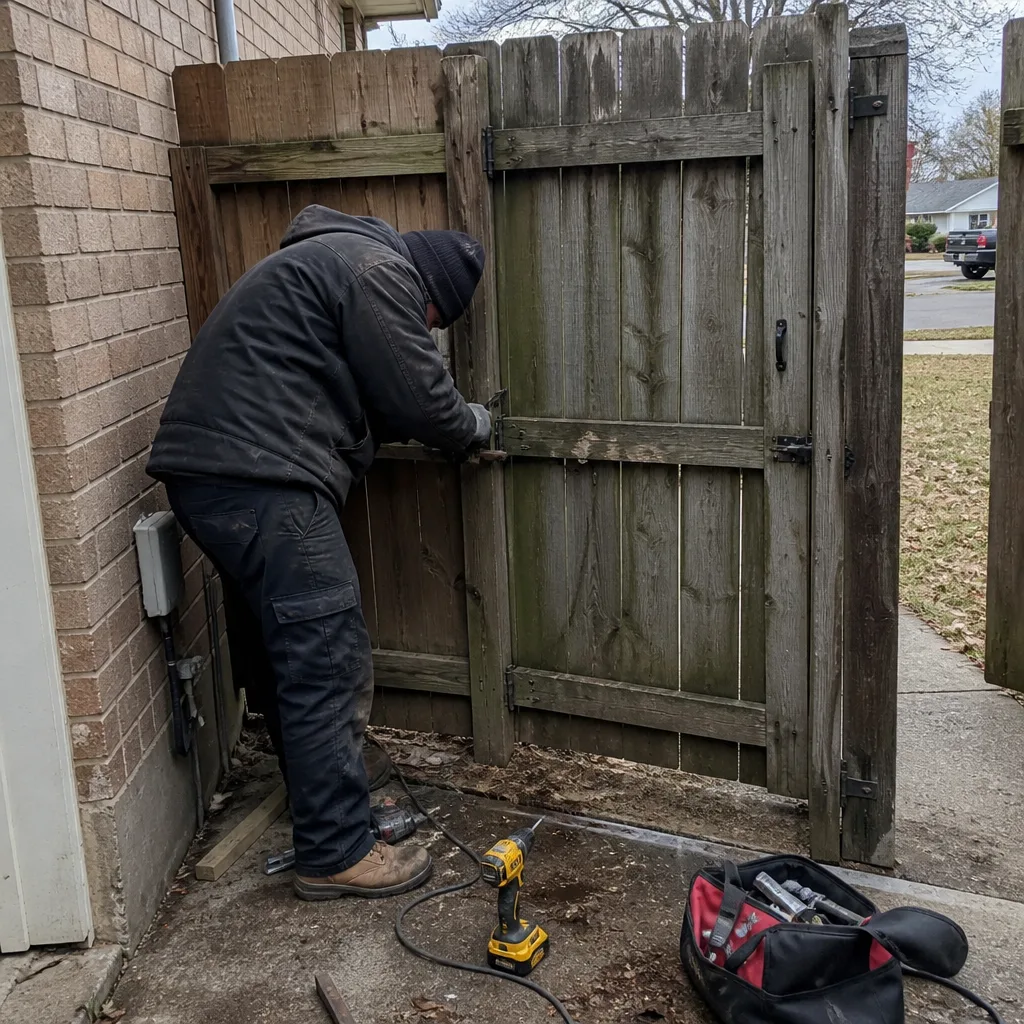 Before
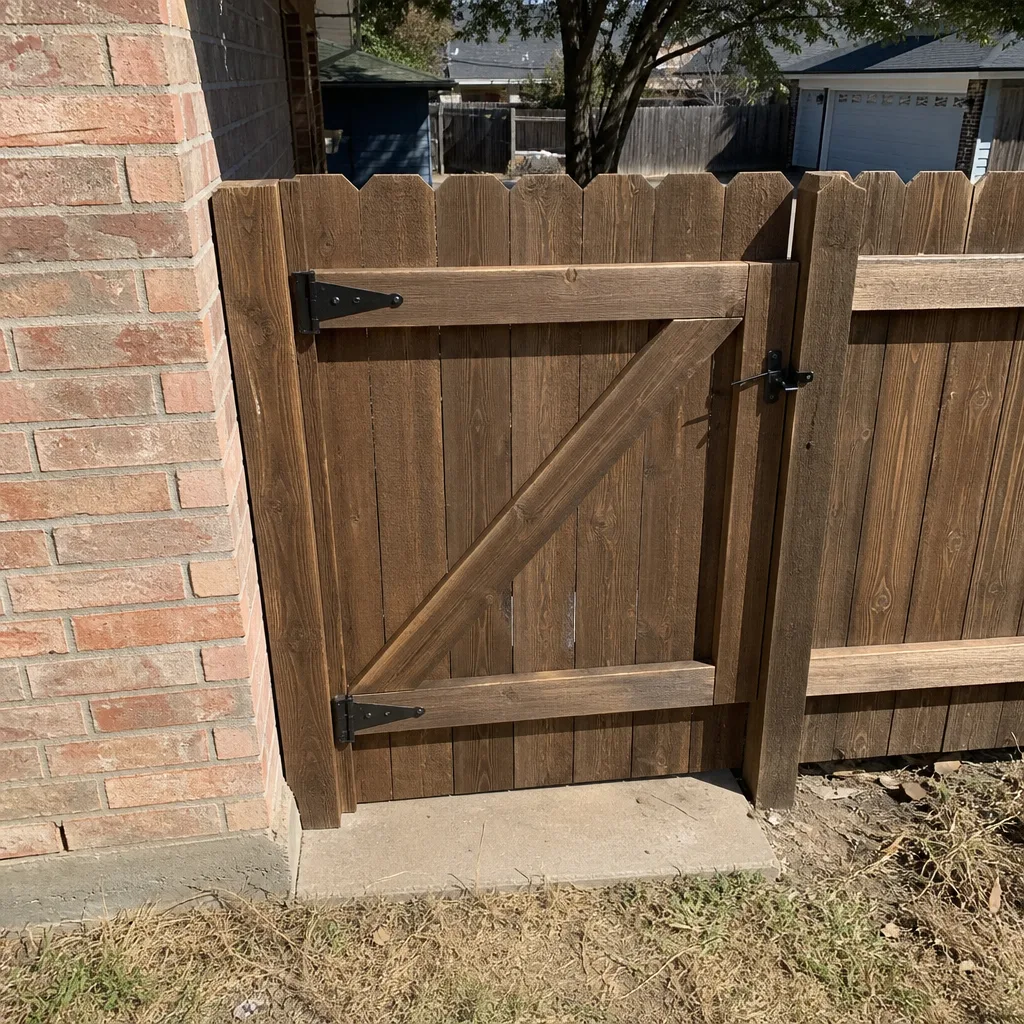 After
After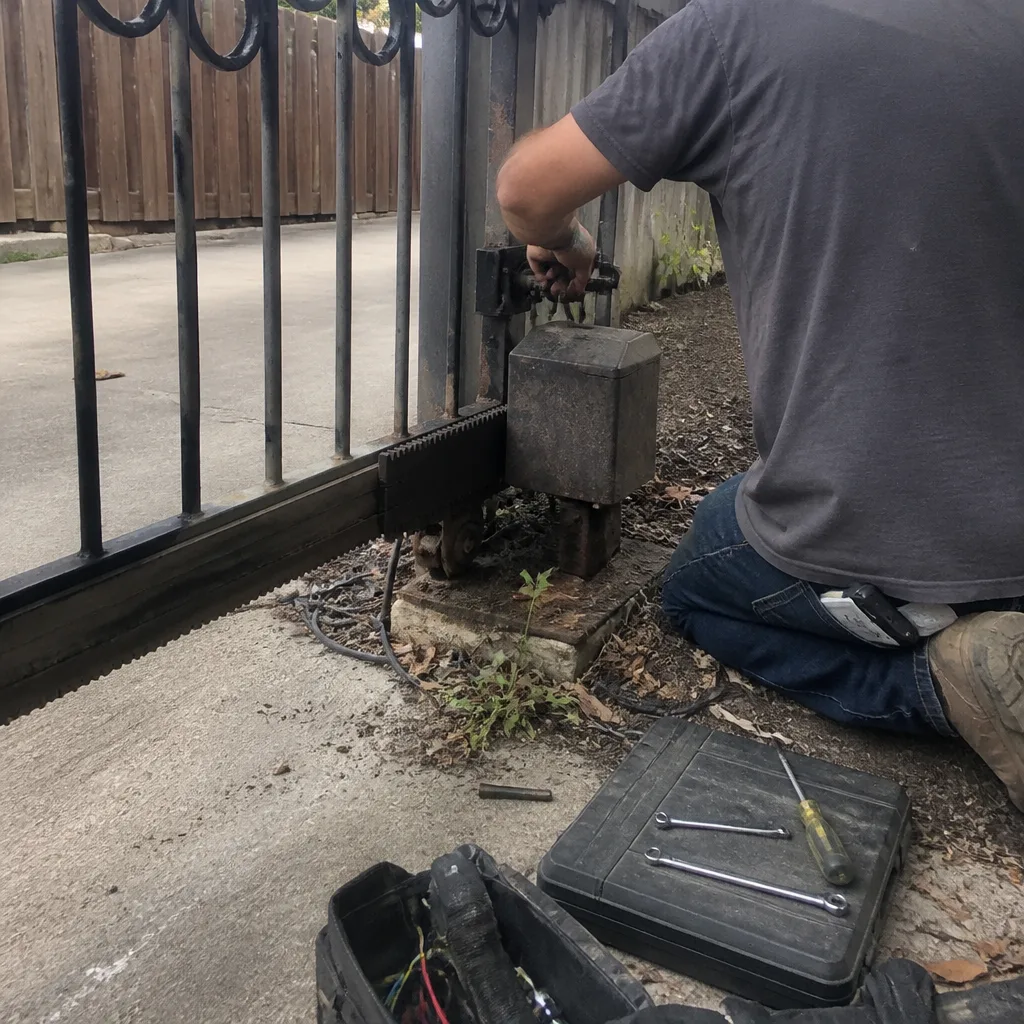 Before
 After
After Before
 After
After