
Last updated October 16, 2026
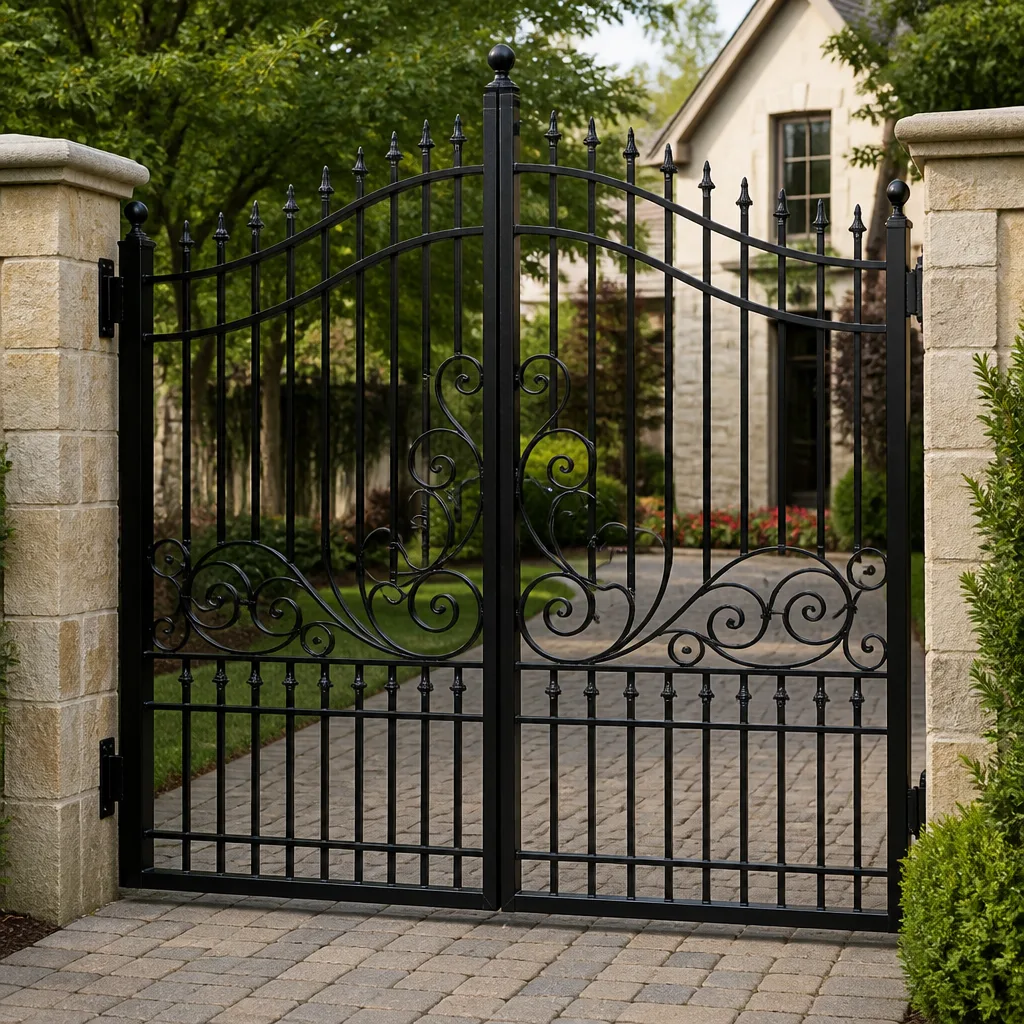 Wrought iron
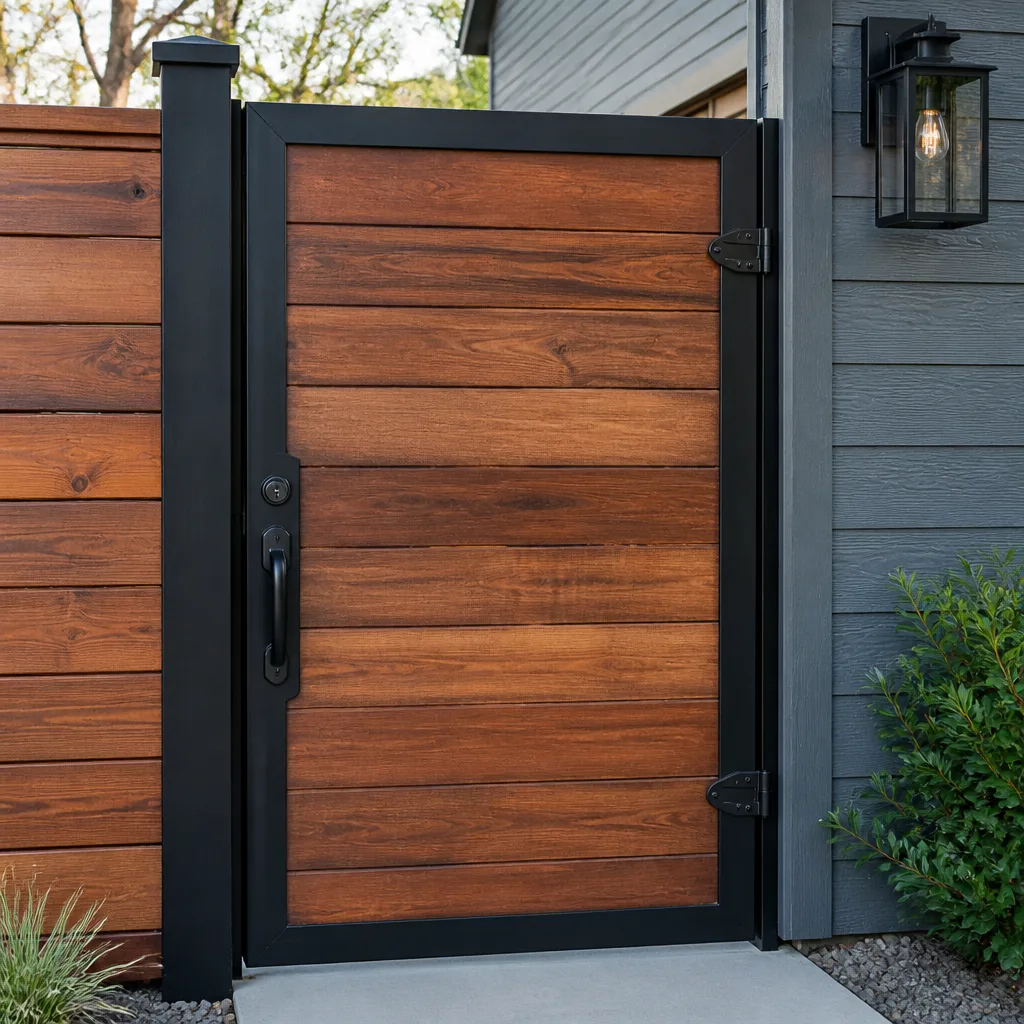 Wood & steel frame
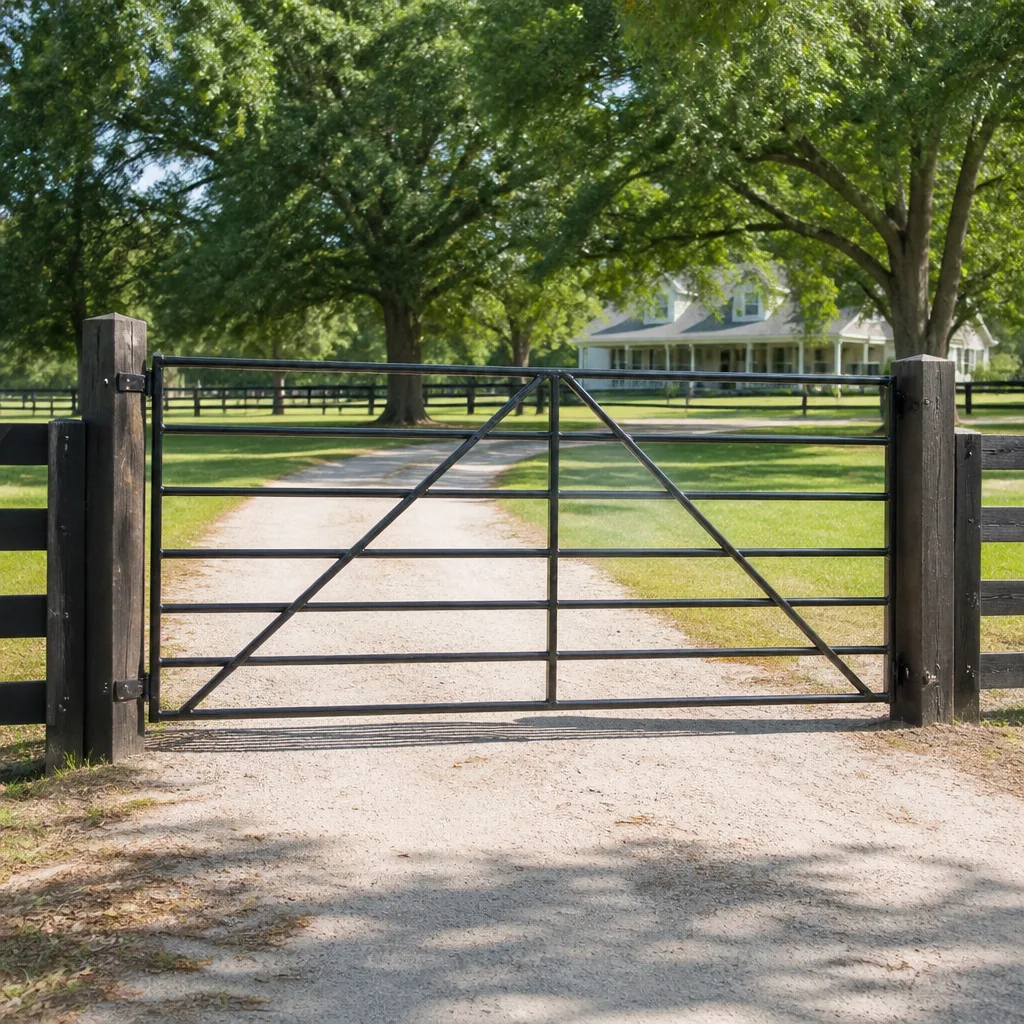 Farm & ranch
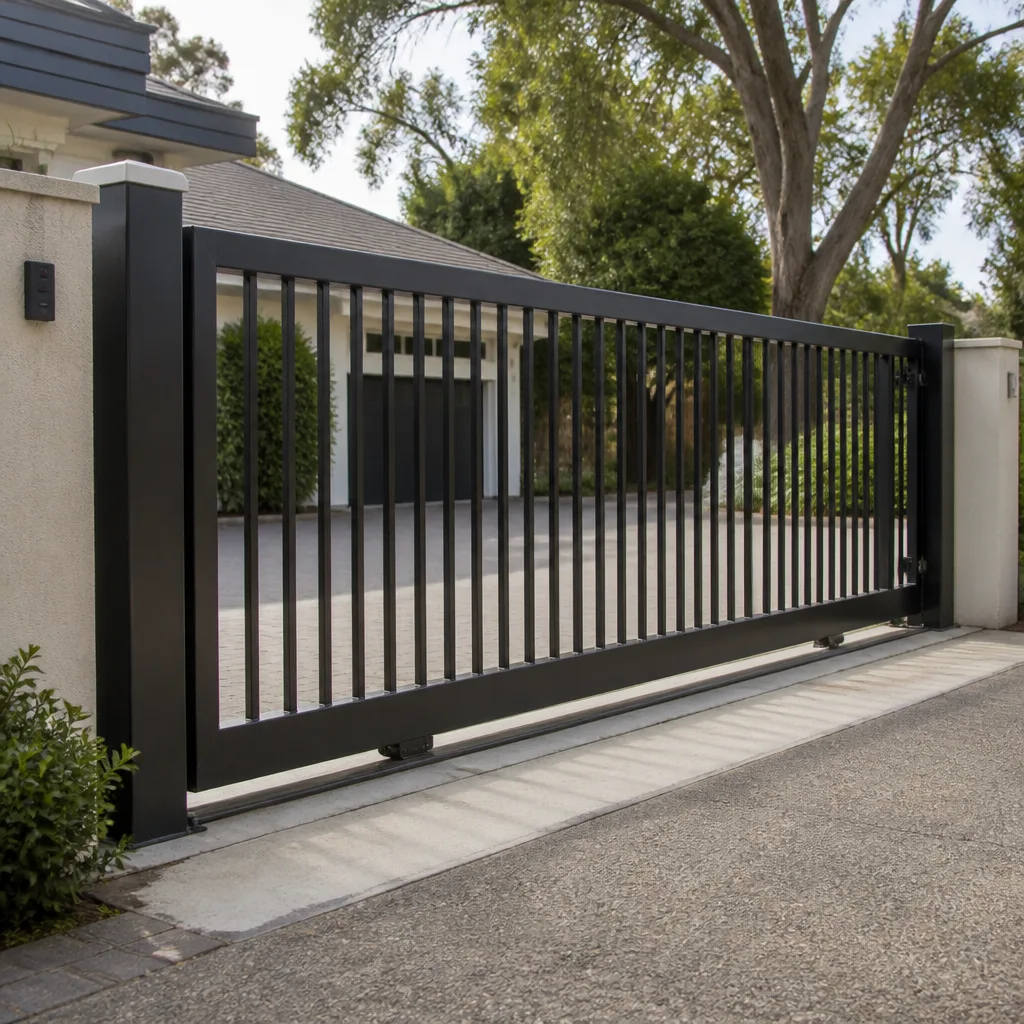 Sliding driveway gates
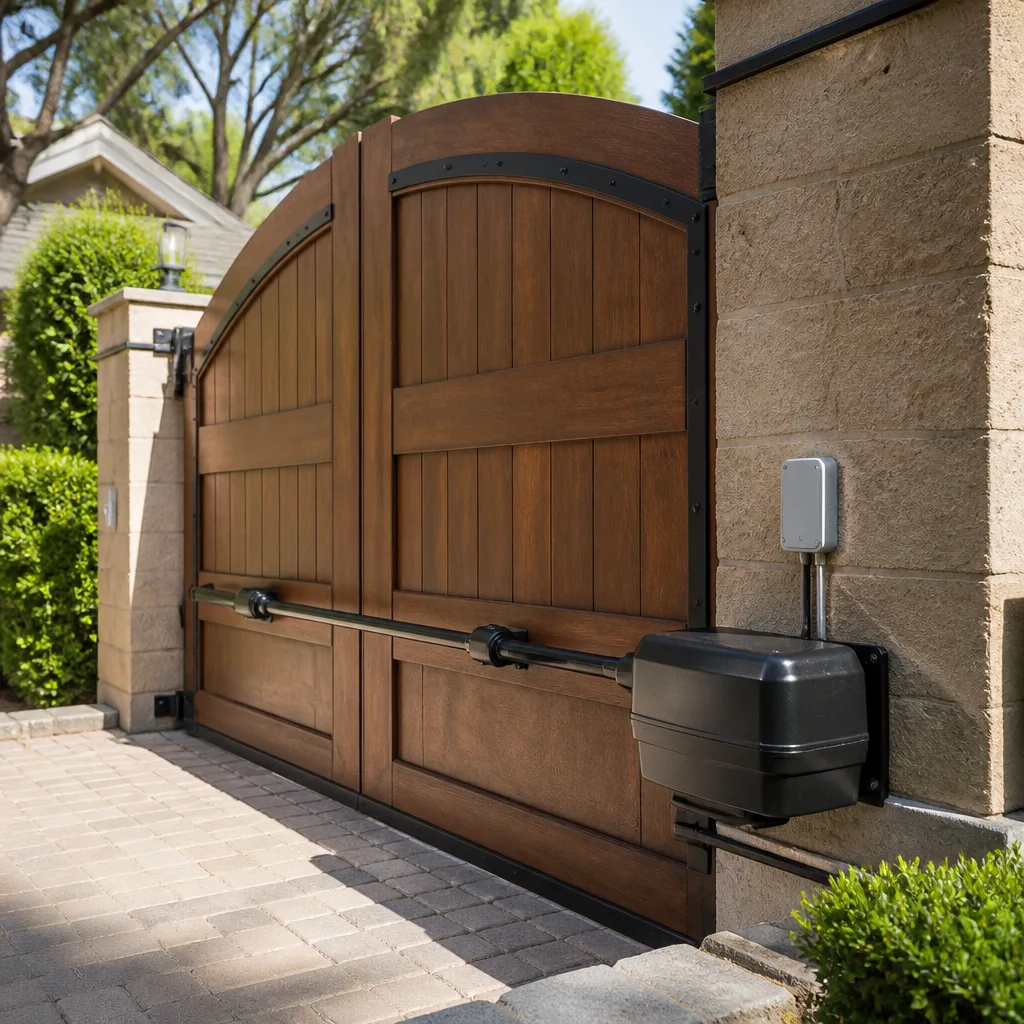 LiftMaster operators
Free on-site gate assessment - hinges, posts, and your LiftMaster or Nice gate operator checked before anything is quoted
The assessment is free and the quote is the invoice.
Get your free estimateThe Complete Guide to Gate Repair in Fort Worth
Here’s a statistic that surprises most Fort Worth homeowners: a gate that opens slowly is not a motor problem 60% of the time. It’s a structural issue the motor is working overtime to compensate for. Replace the motor without addressing the hinge load or post alignment, and you’ll be buying a second motor within 18 months. This guide walks through the full anatomy of a Gate Repair services job, so you understand exactly what you’re paying for, why certain failures repeat, and what a thorough technician should check before declaring the job done. It’s written from the perspective of a Fort Worth gate repair company that sees these failures every week.
Quick Answer
Gate repair in Fort Worth typically costs between $150 and $600 for most mechanical and electrical fixes, with full gate motor replacement running $650 to $1,800 depending on the operator brand and gate weight. For a detailed breakdown, see our Gate Repair Cost Breakdown: The Fort Worth Homeowner’s Reference for 2026. The three systems that cause the majority of repeat failures are hinge load, operator alignment, and ground clearance. Most repairs can be completed in a single visit when the right parts are on the truck, and any reputable company will provide a written price before work begins.
Styles & brands we work with
Table of Contents
- The Three Systems That Keep Every Gate Working
- How Fort Worth Soil Causes Post Shift and Cascading Failures
- Gate Repair vs. Gate Adjustment: The Difference That Causes Repeat Calls
- What Gate Repair Costs in Fort Worth, Line by Line
- Operator Brands: Which Have Local Parts and Which Don’t
- What a Complete Repair Scope Looks Like
- Three Tests to Run Before the Technician Leaves
- A Seasonal Inspection Schedule for Fort Worth Gates
The Three Systems That Keep Every Gate Working
Every gate, whether it’s a 300-pound ornamental steel driveway gate in the Fairmount district or a lightweight aluminum pedestrian gate in the new developments west of Loop 820, depends on three separate systems working together. When one fails, the other two start absorbing stress they weren’t designed to carry. Understanding these three is the foundation for everything else in this guide.
The hinge load
Hinges carry the full weight of the gate leaf. When a hinge begins to wear, sag, or pull away from the post, the gate drops at the latch end by a half-inch or more. That drop throws off the latch alignment and forces the gate motor to push against friction it was never rated for. On a slide gate, the equivalent is the roller assembly and track: a flat-spotted roller or a bent track creates drag that reads as a “motor problem” but is entirely mechanical.
The operator alignment
Swing gate operators use an articulating arm to connect the motor to the gate leaf. Slide gate operators use a chain, belt, or rack-and-pinion. Either way, the operator’s mounting position must stay in exact geometric relationship to the gate’s travel path. A quarter-inch shift in the mounting plate, often caused by that same Fort Worth soil movement we’ll get to below, changes the torque curve and overheats the motor.
The ground clearance
Gates are designed with a specific gap between the bottom rail and the ground, usually 2 to 4 inches on a swing gate. When soil swells, concrete settles, or post shift occurs, that gap closes. The gate starts scraping, the slide gate’s bottom rollers bind, and the operator strains. In Fort Worth, where expansive clay soil is the rule, ground clearance changes are not a matter of if but when.
None of these systems fails in isolation. A sagging hinge changes the ground clearance. A shifted post changes the operator alignment. The repair bill grows because each system’s failure accelerates the next one. That’s why a competent gate repair technician in Fort Worth checks all three even when the complaint is just “the gate is slow.”
How Fort Worth Soil Causes Post Shift and Cascading Failures
Fort Worth sits on a foundation of expansive clay, particularly in established areas like Wedgwood, Ridglea Hills, and the older sections of Arlington Heights. This soil expands measurably when wet and contracts when dry, cycling through that pattern dozens of times a year. A gate post set in concrete is effectively a vertical anchor holding a 200- to 400-pound load against that moving soil. Over three to five years, the post can drift out of plumb by as much as an inch without anyone noticing visually.
That single inch of post shift is the root cause of many repeat repair calls we see. When the hinge post leans, the gate’s center of gravity moves. The latch post, if it stays vertical, no longer meets the latch cleanly. The gate leaf transfers that misalignment into the hinges, which wear faster. The operator, mounted on the shifted post or the adjacent structure, now pushes or pulls at an angle slightly off its design plane.
Here’s the cascade in order:
- Clay expands after rain; post shifts a fraction of an inch.
- Gate no longer hangs perfectly level; latch begins to catch or fail to seat.
- Homeowner tightens the latch or adjusts the closing force, masking the structural issue.
- Operator works harder; limit switches are readjusted to compensate.
- Motor windings overheat or gears strip within 12 to 24 months.
- Gate is now a full structural and operator failure, not a simple adjustment.
This is why a proper Fort Worth gate repair begins with checking post plumb, not with opening the operator cover. A technician who skips that step is treating the symptom. In the clay-heavy corridor from Benbrook to White Settlement, post shift should be expected and evaluated on every single service call.
Gate Repair vs. Gate Adjustment: The Difference That Causes Repeat Calls
This distinction matters because homeowners pay for both, but only one fixes the gate.
A gate adjustment is a tuning procedure: tightening hinge bolts, resetting limit switches, adjusting the closing force, repositioning the latch striker, or lubricating the rollers. These are legitimate maintenance tasks and they typically run $75 to $150 in the Fort Worth market. They do not replace any parts. A gate that only needs an adjustment will hold that adjustment for six months or more.
A gate repair involves replacing or rebuilding a component: new hinges, a reinforced post, a new operator arm, replacement rollers, a new limit switch, a rebuilt gearbox. Repair costs run higher for a reason: you’re paying for parts with measurable service life and the labor to install them correctly against a gate that weighs hundreds of pounds.
The problem arises when a company charges repair prices for adjustment work, or worse, performs an adjustment on a gate that has an underlying structural failure. The gate works for a few weeks. Then the same symptom returns. The homeowner calls a different company, pays another service fee, and hears the same story. This is not coincidence. It’s the result of not distinguishing between tuning a functioning system and rebuilding a failing one.
Here’s a practical test: if a technician “fixes” your gate without replacing a single part, it was an adjustment. There’s nothing wrong with that, so long as the invoice reflects it. A written invoice from a Fort Worth gate repair company should state what was replaced, the part brand and number, and the labor hours. If it doesn’t, ask for it before paying.
What Gate Repair Costs in Fort Worth, Line by Line
Prices in Fort Worth are shaped by the same forces as any other Texas metro: parts availability, labor rates, and the physical weight of the gate. Heavier ornamental steel gates cost more to work on because everything takes longer and requires more handling.
- Service call and diagnostic: $75 – $125. A trained technician evaluates the gate, identifies the root cause, and gives you a written repair price before any work starts.
- Hinge replacement (swing gate, per hinge): $40 – $120. Depends on gate weight and hinge type. Ball-bearing hinges run more than sleeve hinges.
- Latch and lock hardware replacement: $60 – $180. Includes mechanical latches, magnetic locks, and keypad-integrated locksets.
- Limit switch replacement: $85 – $200. A small but critical component on nearly every operator brand, including Linear and BFT models common in Fort Worth.
- Articulating arm replacement (swing operator): $120 – $300. The arm connects motor to gate; when it wears, the gate stutters or fails to fully open.
- Roller replacement (slide gate, per roller): $45 – $110. Slide gates run on steel rollers inside the track; flat spots create drag.
- Loop detector replacement: $130 – $260. The underground sensor that detects a vehicle waiting at the gate.
- Full operator replacement (motor and control board): $650 – $1,800. Range depends on brand, horsepower, and whether new safety sensors are required.
- Post re-setting or replacement (structural): $250 – $900. The most involved repair, requiring concrete work and while the gate is safely supported.
These are the numbers we work with across Fort Worth, from newer gated communities near Alliance to established properties in TCU-area neighborhoods. The final invoice should match the written quote. Any gate repair company operating to a defined standard will put the price in writing before touching a wrench. If they won’t, you’re taking a risk you don’t need to take.
Operator Brands: Which Have Local Parts and Which Don’t
Parts availability is a real factor in repair time and cost here. Fort Worth has strong local distributors for some gate operator brands and almost nothing for others. If your operator needs a replacement control board and that board has to ship from a regional warehouse or the manufacturer, you’re looking at three to seven extra days.
LiftMaster and Linear operators have the deepest local parts inventory in the DFW metro. These are volume brands, carried by multiple distributors in Fort Worth and Dallas, which means a failed control board or gear assembly can often be sourced same-day. DoorKing and Elite sit in the second tier: most components are available within one to two days. BFT, FAAC, Viking, and Ghost Controls are more specialized. Certain boards and arms for these brands will require a ship-in from a regional hub, which adds days to the job.
None of this means you should avoid any brand. It means you should know going in whether your repair will be a one-visit job or a two-visit job. A repair company that stocks parts for multiple brands, or has standing relationships with local distributors, can often compress that timeline. We keep common parts and diagnostic equipment on our trucks for the brands we work on most in Fort Worth, and we’ll tell you clearly when a part needs to be ordered and exactly how long it takes.
What a Complete Repair Scope Looks Like
A gate repair is not complete until four systems have been checked. Any technician who fixes the reported symptom and walks away before checking the other three is leaving money on the table, yours.
- Structural check: Post plumb on both the hinge and latch side, gate level, all hinge and bracket bolts torqued, slide gate rollers and track inspected for wear, ground clearance verified at the low point of the gate’s travel. In Fort Worth’s clay soil, this is the step that catches post shift before it becomes a motor failure.
- Mechanical check: Hinge lubrication, latch alignment, articulating arm or chain tension, drive sprockets, rack-and-pinion mesh on slide gates. Mechanical friction is the most common root cause of burned-out motors. If the gate doesn’t move freely by hand with the operator disengaged, the motor is doing double duty.
- Electrical check: Control board diagnostics, capacitor condition, limit switch repeatability, photo-eye alignment, loop detector sensitivity, battery backup function if equipped. This step combines what the operator’s manual specifies with what experience in Fort Worth’s summer heat and spring storms has taught us about which components fail first.
- Safety sensor check: Photo-eye beam alignment and response, reverse-on-contact function, and manual release operation. These are not optional inspections. They’re what prevents a gate from closing on a vehicle or a person. Every UL 325 compliant operator must have functioning safety devices, and a repair that bypasses them is a repair that should never have been signed off.
Expect all four checks on any substantial repair, not just the one that matches the complaint. A technician working to a documented standard will have a checklist, and they should be able to walk you through what they found in each category.
Three Tests to Run Before the Technician Leaves
You shouldn’t have to be an expert to verify that your gate repair was done right. You just need to run three simple tests. Do these while the technician is still on site, so any issue gets addressed immediately rather than triggering another service call.
- The hand-cycle test: Disengage the operator using the manual release, then push the gate through its full travel by hand. A properly balanced gate moves with steady, moderate resistance. Any binding, scraping, or stalling indicates a mechanical issue the repair didn’t address. This test catches the majority of “motor was replaced but gate is still slow” complaints before the technician’s truck leaves the driveway.
- The safety reverse test: Place a rolled-up jacket or a cardboard box in the gate’s path, then operate the gate normally. The gate should stop and reverse before making solid contact. Run this in both directions if your gate is bi-parting. Test the photo-eyes separately by breaking the beam and confirming the gate halts. If it doesn’t, the safety system isn’t functioning regardless of what the control board says.
- The full-cycle repeat test: Cycle the gate open-close-open-close-open four full times without pausing. Listen for any change in motor pitch, watch for any drift in the open or close limit position, and confirm the gate seats fully in the latch or end stop every time. Limit switches that were adjusted but not tightened down will drift within the first few cycles, and this test exposes that immediately.
If the gate passes all three, you’re in good shape. If it fails any of them, ask the technician to correct it before they leave. No reputable gate repair company in Fort Worth should object to you verifying the work. A guarantee is only as good as the verification that backs it.
A Seasonal Inspection Schedule for Fort Worth Gates
Fort Worth’s climate doesn’t allow a one-and-done approach to gate maintenance. The summer heat bakes wiring and control boards. Spring storms saturate the clay around posts. Fall brings the first dry shrinkage of that same soil. Winter, while mild, still cycles enough temperature swings to stress welds and fasteners. A simple seasonal check catches most failures before they become repairs.
Spring (March-April): After the rain season begins, check post plumb and gate level. Look for new scraping at the ground line, which indicates soil movement. Test the safety reverse function. This is the most important inspection of the year given Fort Worth’s expansive clay.
Summer (June-August): Heat is hardest on electronics. Check the operator housing for proper ventilation; clear away dust and debris. Listen for changed motor pitch, which can signal overheating windings. Touch the housing after a cycle; excessive heat means the motor is working harder than it should.
Fall (September-November): Re-check ground clearance as soil dries and shrinks. Lubricate hinges and rollers. Inspect the articulating arm or chain for wear and tension. This is also a good time to test the manual release so you know it works before the winter’s occasional ice.
Winter (December-February): Check weather seals, wire conduits, and battery backup. Cold snaps stress batteries that have been draining in the heat all year. Verify the photo-eyes remain aligned through freeze-thaw cycles.
An hour per season, four times a year. That’s the difference between a gate that lasts 15 years and one that eats a motor every two. Find more guides & resources on keeping your gate running smoothly. For Fort Worth homeowners who’d rather have a professional run these checks, most gate repair companies offer a seasonal inspection visit at a flat rate.
Common Mistakes to Avoid
- Replacing the operator without checking post plumb. If the post has shifted, the new motor will fail the same way the old one did. In Fort Worth’s clay soil, this is the single most expensive mistake a homeowner can make.
- Accepting a verbal quote. A verbal estimate that grows once the job is open is not an estimate, it’s a negotiation with your money on the table. Always require a written price before work starts, and confirm the final invoice matches it.
- Confusing an adjustment with a repair. Paying repair prices for what was really a tune-up means the underlying issue is still there. Ask what parts were replaced and be shown the old ones.
- Skipping the safety sensor verification. A gate that reverses on an obstruction is the difference between an inconvenience and a liability. Test the reverse function after any repair and at least once a season.
- Welding a sagging gate back into alignment without addressing the hinge wear. Welding masks the symptom for a few months. The hinges are what carry the load, and worn metal doesn’t heal itself.
- Ignoring slow operation as “just how it’s always been.” Slow operation is not a personality trait of your gate. It’s measurable friction, and that friction is killing your operator.
- Hiring the lowest bid to save money on a heavy gate repair. A 400-pound steel gate is not where you want to discover your contractor skimped on parts or skipped the structural check. The repeat visit costs more than the premium would have.
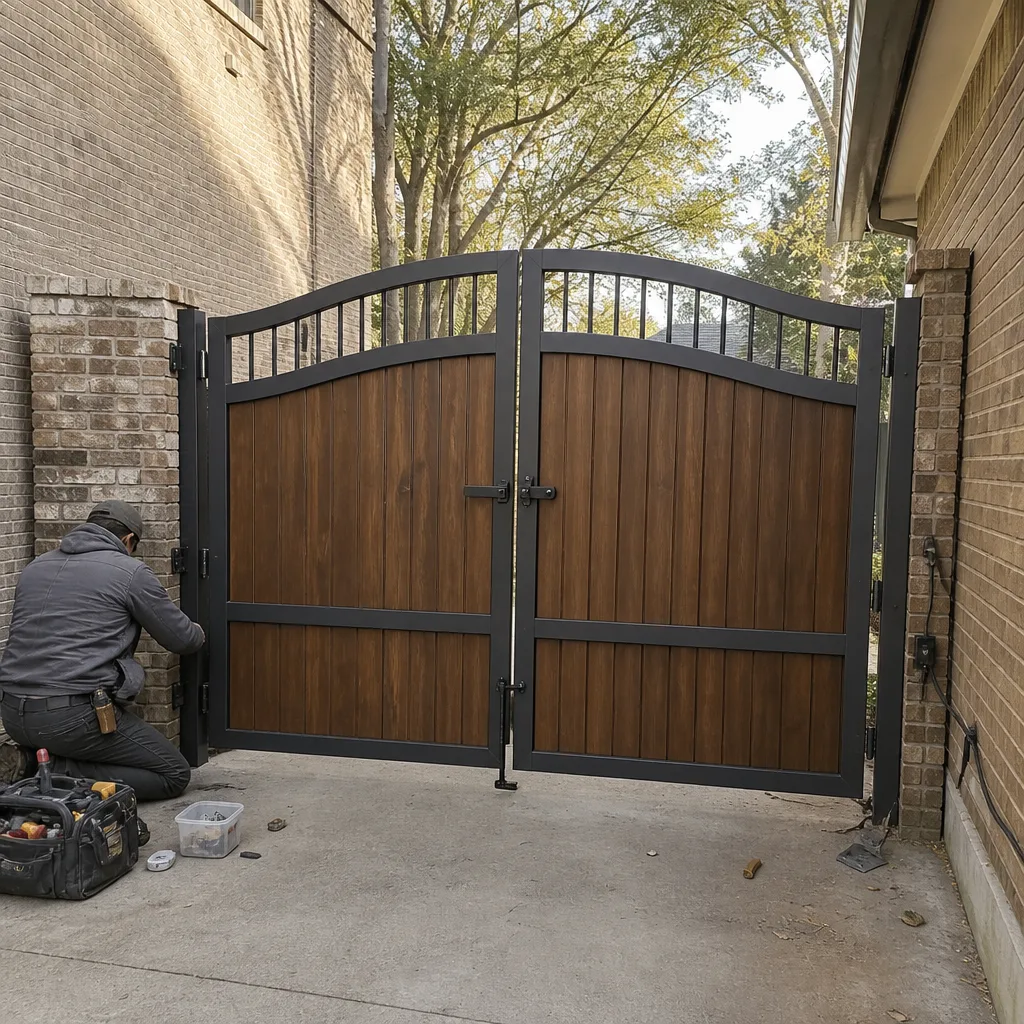
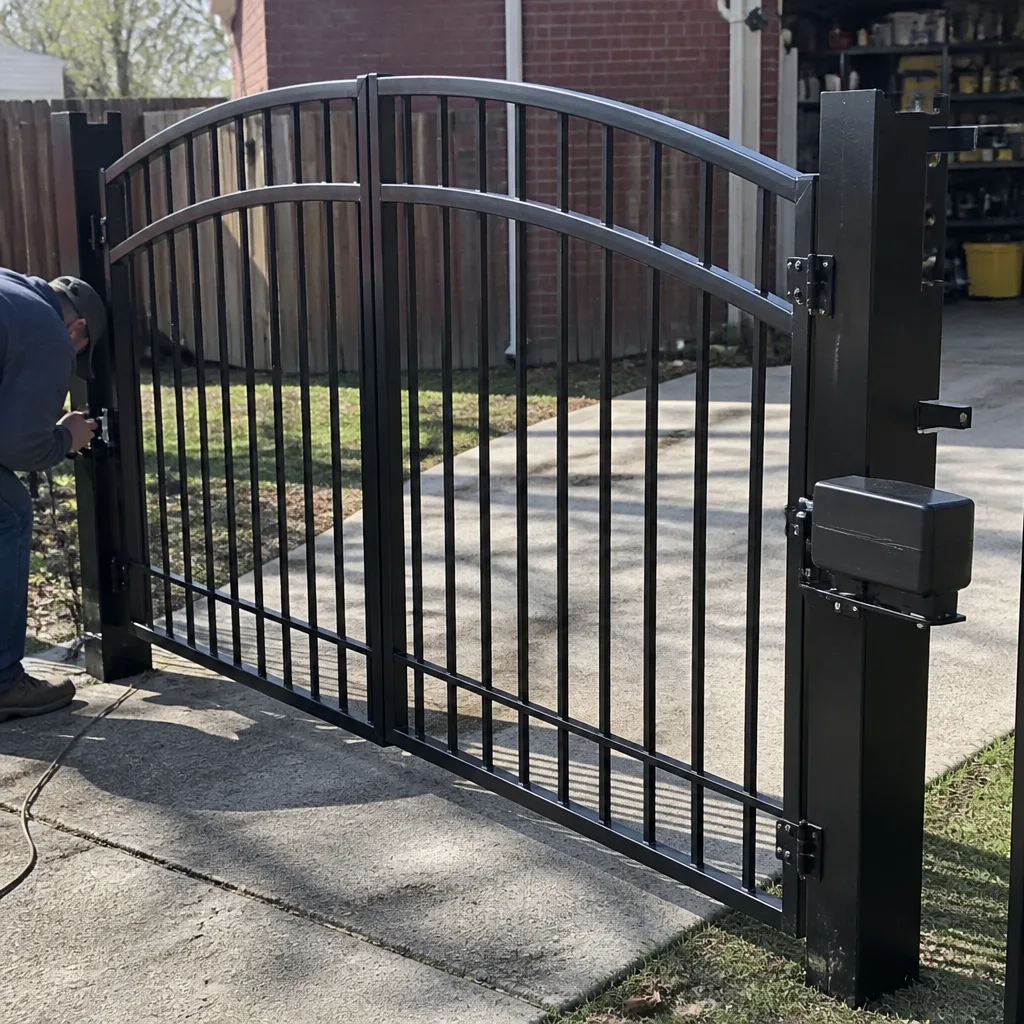
See the difference
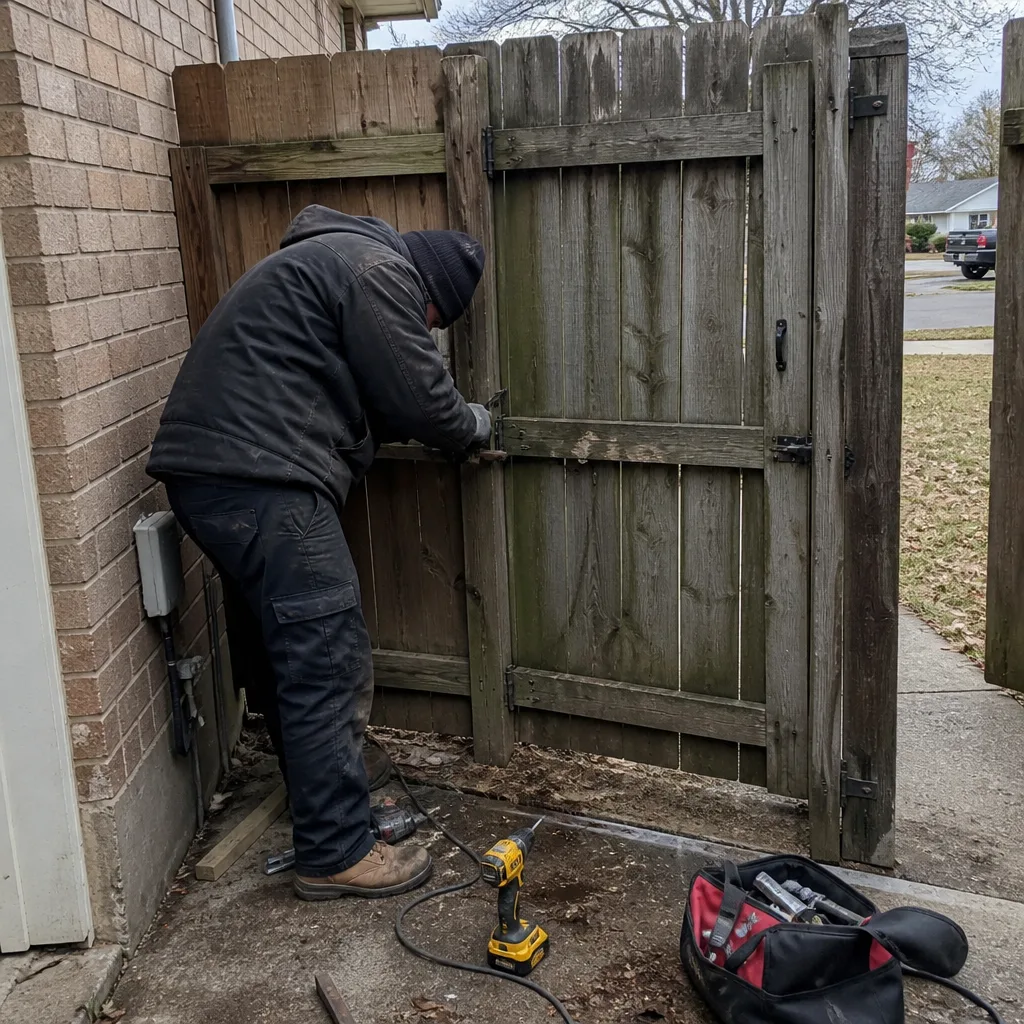 Before
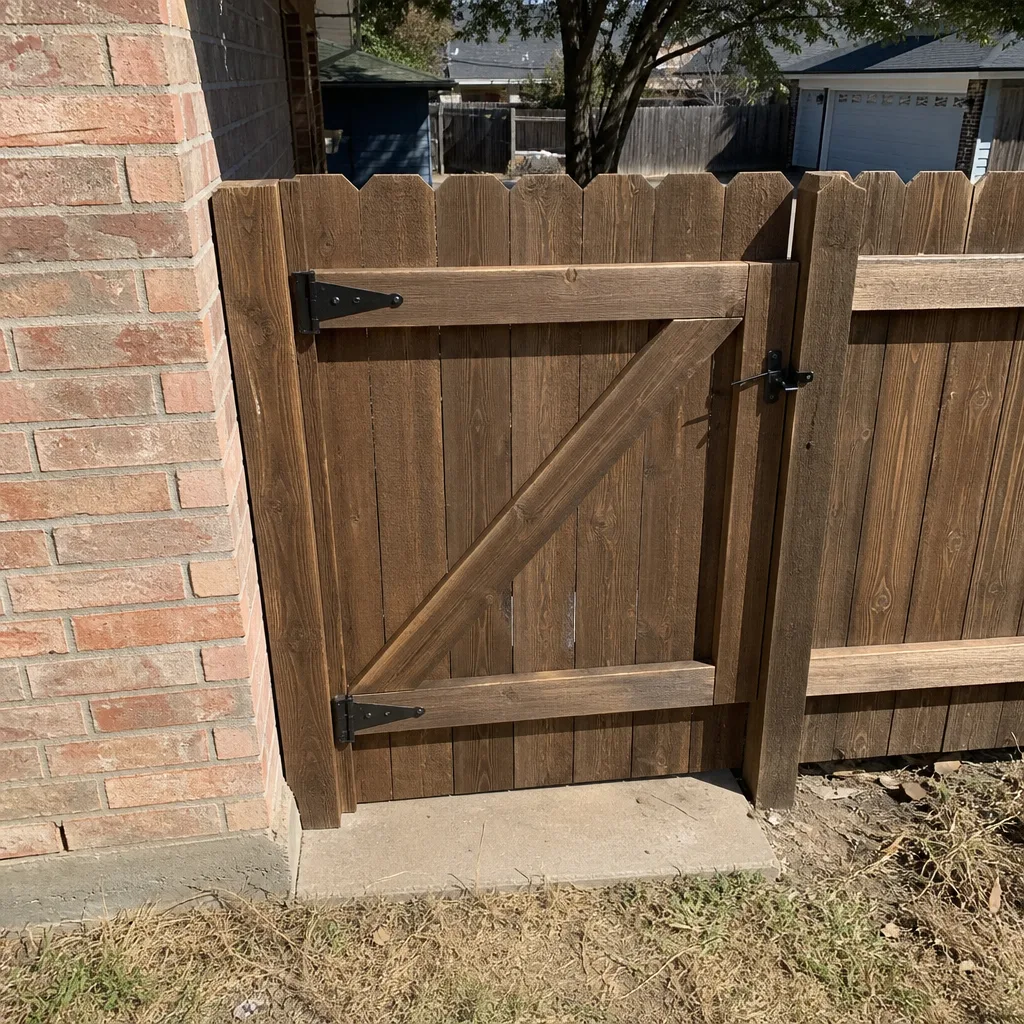 After
After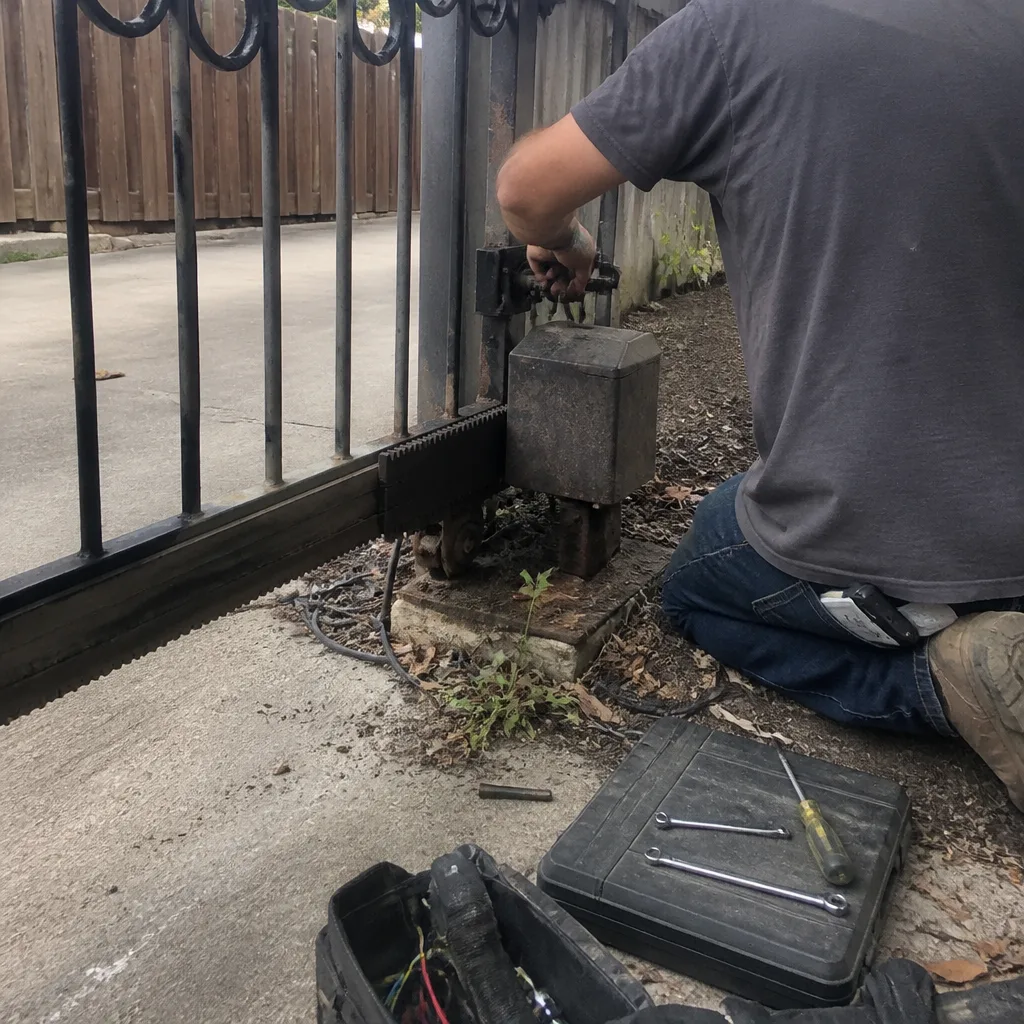 Before
 After
After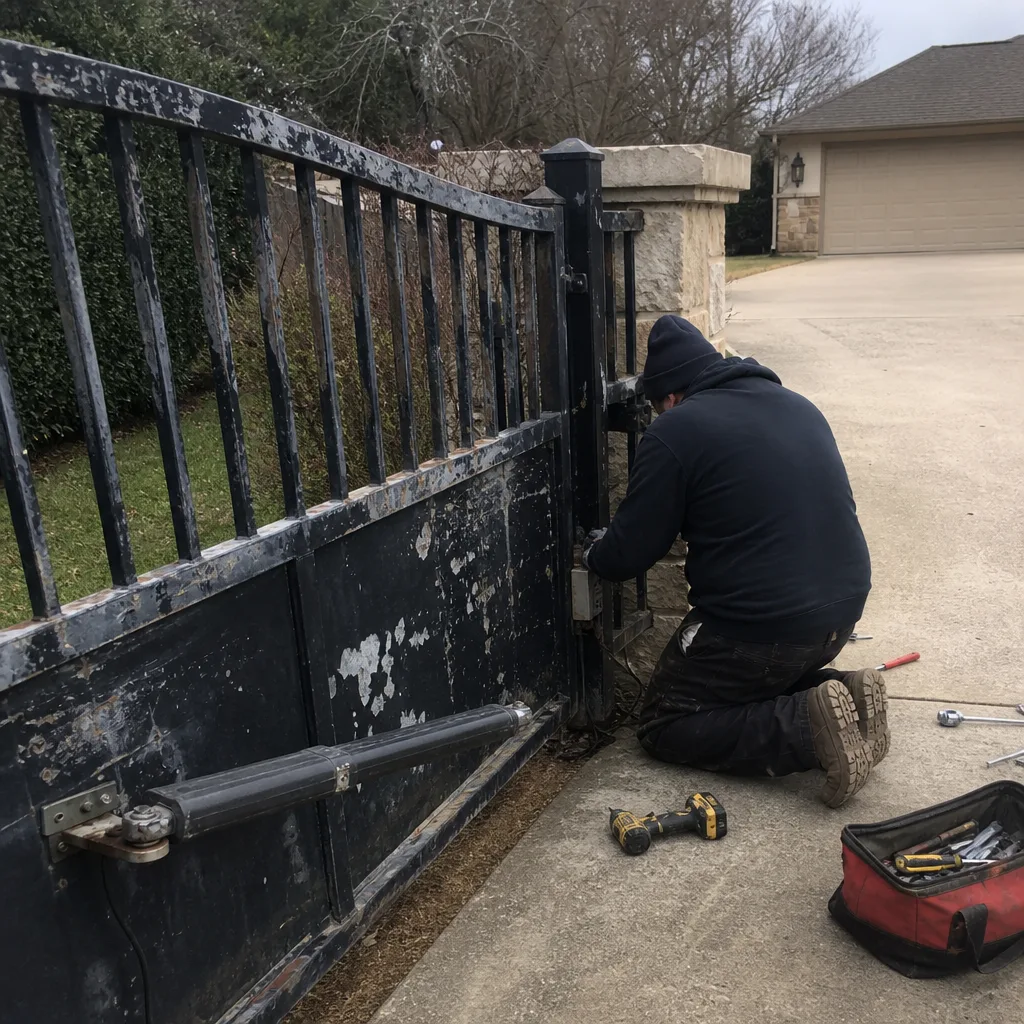 Before
 After
AfterWhen to Call a Professional
A gate that scrapes, binds, fails to latch, or reverses without command is a gate that needs a technician. A gate that has shifted enough to drag on the ground needs a professional with the equipment to safely support the leaf while the post is re-set. Structural work on a heavy gate is not a DIY project; the stored energy in a twisting gate leaf can cause serious injury. The same goes for any electrical work on an operator: line voltage and capacitor discharge demand a trained hand. Carver Gate Repair Fort Worth offers free estimates in Fort Worth. Our technicians work to The Garrison Standard: written prices before any work starts, a written full-year guarantee on every repair, and background-checked, uniformed technicians on every call. Gate Repair in Fort Worth begins with a diagnostic, and the price you’re quoted is the price you pay. Call (817) 840-7067 to schedule.
Frequently Asked Questions
Most gate repairs in Fort Worth run between $150 and $600, with full operator replacement landing between $650 and $1,800. The spread depends on what failed, what brand of operator you have, and whether structural work like post re-setting is needed. A written quote given before work starts locks the number down so it doesn’t grow with the job. Call (817) 840-7067 for a free estimate specific to your gate.
In most cases, repeat repairs trace back to an unresolved structural issue, typically post shift from Fort Worth’s expansive clay soil. If the underlying hinge load or alignment problem isn’t fixed, every new part installed downstream inherits the same stress. A thorough diagnostic always starts with checking post plumb and gate level before touching the operator.
Many mechanical and electrical repairs can be completed same-day, especially when the failure is a limit switch, a hinge, a latch, or an articulating arm. Repairs that require a shipped part for a less common brand like Viking or Ghost Controls may take three to seven days. A good repair company tells you up front whether your job is same-day or needs a part order.
A full operator replacement includes the motor, the control board, the articulating arm or chain drive components, mounting hardware, safety sensor integration, and limit switch calibration. It should also include a post-replacement system check to confirm the new operator isn’t fighting a structural issue. Gate Motor Repair in Fort Worth from our team includes a written full-year guarantee on every installation.
Look at the gap between the gate and the latch post at both top and bottom. If the gap is wider at the top than the bottom, or the gate scrapes the ground where it didn’t before, the post has likely moved. Hold a level against the post face to confirm. Fort Worth clay makes this more likely every year, and early detection keeps a $250 repair from becoming a $1,500 one.
At Carver Gate Repair, every repair carries a written guarantee, good for a full year from the date of service. If the repair fails inside that year, we return and fix it at no charge. That guarantee is part of The Garrison Standard and it’s on paper with every invoice. Always ask what a company’s guarantee covers and get it in writing before paying.
The Bottom Line
A gate is a mechanical system living in a hostile environment: Fort Worth’s clay soil shifts, the Texas sun bakes electronics, and a few hundred pounds of steel has no sympathy for worn hinges. The homeowners who get the most life from their gates are the ones who treat the three core systems, hinge load, operator alignment, and ground clearance, as connected rather than separate. Catch a failing hinge before it stresses the motor. Check post plumb before replacing an operator. And demand a written price and a written guarantee on every repair. That’s the difference between a gate that lasts and a gate that becomes a recurring expense. For Fort Worth homeowners ready to stop chasing repeat failures, Carver Gate Repair Fort Worth home is where you start. For a complete breakdown of what full-system replacement costs and involves, see our Gate Installation in Fort Worth page. Call (817) 840-7067 for a free estimate, answered by a live person, around the clock.
Written by Lonnie Burke, Owner at Carver Gate Repair Fort Worth, serving Fort Worth since 2008.